The Dragon Age series has been going through rough times ever since the disappointing release of The Veilguard, the latest entry in the fantasy RPG franchise. However, fans have been hoping that more Dragon Age projects are under development, despite the very long time and shifting plans it took to get Dragon Age: The Veilguard released at all. Some players have been asking for remakes, remasters, or ports of older games from the series, but it seems like that route is far harder than anyone could have expected.
Videos by ComicBook.com
Dragon Age series producer Mark Darrah was recently involved with an interview at FRVR, where several questions were asked and answered in relation to the franchise’s future. During this conversation, Darrah mentioned how there were originally plans for a trilogy of remasters, which would have not featured the first Dragon Age, but rather Dragon Age 2, Dragon Age: Origins, and Dragon Age: Inquisition. That being said, several technical issues have prevented this plan from ever working out for developer BioWare, mainly due to how those games were made.
BioWare No Longer Has The Understanding Of Past Dragon Age Engines To Bring Back Older Games

Originally, the three Dragon Age games that BioWare were possibly looking to remaster would have been put together in a “Champion’s Edition” collection of sorts. Yet, Darrah explained that BioWare creators no longer had an understanding of the engine that powered games like Dragon Age 2 and Dragon Age: Origins, preventing any changes from taking place tied to a remaster of any kind. To provide some context, those two Dragon Age games used something called the Aurora Engine, an in-studio engine from BioWare that “no one outside BioWare understands anymore,” according to Darrah.
If you want to get technical, the first two Dragon Age games ran on Aurora Engine, with Dragon Age: Origins adopting its successor, the Eclipse Engine. Eclipse was an enhanced version of the Aurora Engine, but later turned into the Lycium Engine in time. Only with Dragon Age: Inquisition did BioWare use EA’s Frostbite Engine, meaning that many of the older games in the series run on engines that were highly personalized from creators at BioWare who helped develop them. This is similar to the Id Engine, the program built by Id Software to power Doom, Wolfenstein, and Quake games.
Layoffs and older staff leaving BioWare over the years has likely led to fewer and fewer creators at the company who remember the intricate systems that tied the Aurora, Lycium, or Eclipse Engines together. A statement from Darrah’s interviews claims that “There’s basically no one outside of BioWare anymore that understands the Aurora Engine. While Unreal Engine is an industry standard that’s easy to work with, no studio outside BioWare has ever used the Aurora Engine or its evolved counterparts.” This suggests that the technology tied to Dragon Age‘s early iterations might as well be lost knowledge.
As a result, remastering any of the older Dragon Age games would be a herculean effort, as creators would have to manipulate at least three different engines to make anything work. This includes the Aurora Engine, a far older system that what BioWare uses today. EA would have to hire a brand-new team at BioWare to fully dedicate themselves to learning the older engines, or re-locate plenty of workers from BioWare’s existing staff to do the same thing. Considering the state of the gaming industry and EA’s buyout, these decisions are highly unlikely.
Other Remasters Don’t Have Nearly The Same Number Of Problems Tied To Updating Dragon Age’s Past
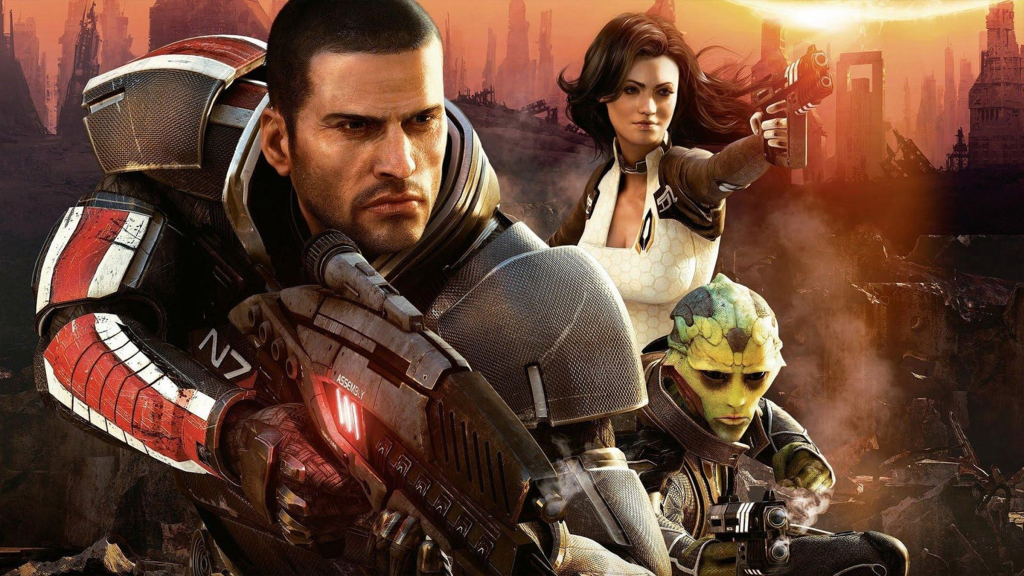
The difficulties that any potential Dragon Age remasters would face are a very singular problem within the studio. The remastered collection for Mass Effect, for example, was able to put all three games from its trilogy into a single bundle due to how much easier its engines were to approach. Every Mass Effect game used some version of Unreal Engine, a standardized game making software whose iterations are far easier to go back to due to their similarities.
By contrast, Aurora, Eclipse, and Lycium Engine all have subtle differences that probably take a lot of effort to learn, even for the most talented game creators. It doesn’t help that games like Dragon Age: Origins are not as refined at a base level compared to something like Mass Effect 2, which has tons of polish to its visuals and gameplay. Remastering or remaking a game like Dragon Age 2 or Dragon Age: Origins would be incredibly difficult, no matter who was directing or working on such a project at BioWare.
Ultimately, it’s no wonder why Mark Darrah isn’t hopeful on the idea of a remaster, port, or remake series for BioWare’s beloved RPG franchise. With the negative treatment of game studios around the industry as a whole right now, EA is also not a company that can be trusted to green light the resources required for a project fans of the series would want to see. The Dragon Age games of the past might remain as memories forever, unless major changes prioritize re-learning old engines with a dedicated team focused on bringing nostalgic experiences back.
Do you think there will ever be a Dragon Age remaster collection? Leave a comment below or join the conversation in the ComicBook Forum!
More Gaming
-

Image Courtesy of Electronic Arts/Bethesda Softworks/Double Fine