2026 is packed full of potential Game of the Year contenders, from sprawling open-world RPGs to feature-rich indies bursting with creative potential. Frankly, as painful and heartbreaking as the tragic events befalling the industry have been, it is remarkable to see such phenomenal art still being created amidst all the strife. Of course, if you’re even remotely invested in the world of gaming, you’ll be aware of some of the bigger titles releasing in 2026, one of which is a truly enormous RPG the likes of which we have simply never seen before.
Videos by ComicBook.com
I am, naturally, referring to Crimson Desert, the game seemingly destined to win over everyone’s hearts with its unbelievably gorgeous visuals and plethora of legendarily good influences that it has accumulated as if they were the Dragon Balls. It very much has the potential to win both the somewhat official GOTY award at the Game Awards and the broader, more figurative award from the gaming public in general. However, there is one aspect that is getting in the way of it steamrolling the competition and, at the very least, becoming the best RPG of 2026. Alas, while certainly palatable for some, this fundamental issue may prove too divisive for many.
Crimson Desert’s Onboarding May Be A Little Much For Some
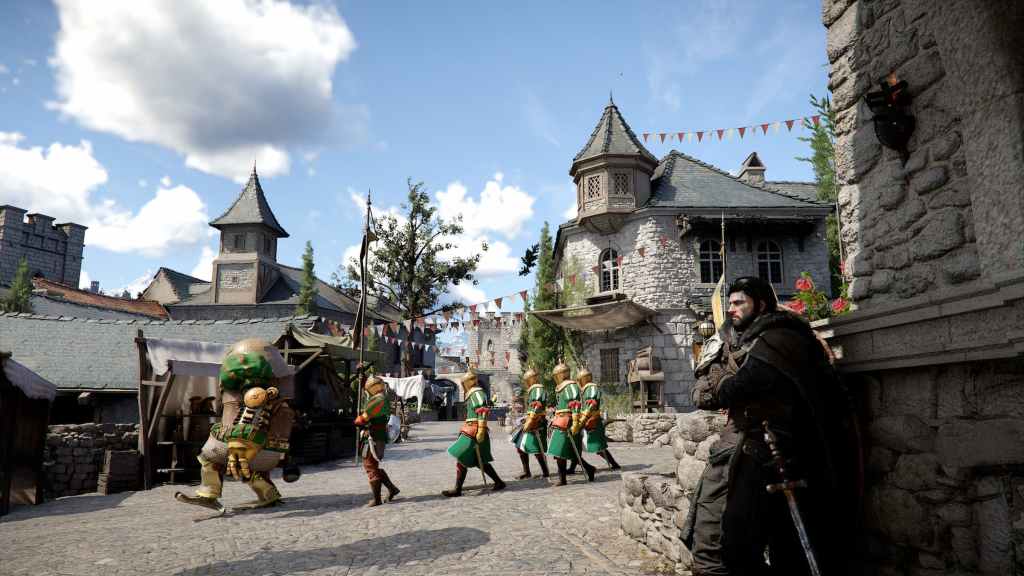
Crimson Desert was always going to be an enormous game, but the sheer scale of it has only recently been made apparent. Exploring the entirety of Crimson Desert’s ridiculously huge map will take hours, and even then, you’re unlikely to see absolutely everything on offer. That sense of scale is something that a lot of open-world fans covet, and understandably so, but could prove to be a rather significant issue when combined with the game’s rather confusing onboarding process.
While it is certainly encouraging to see how confident Pearl Abyss is in Crimson Desert’s numerous confusing and convoluted gameplay systems, they nevertheless create a rather frustrating opening few hours that are sure to turn people off almost immediately. The laborious nature of the game’s UI and endless menus required merely to do the most simple of tasks is something that will inevitably annoy players over time, as too are the unintuative controls for jumping from one platform to another, the onslaught of new features, many of which have hidden purposes, and the complexity of using certain items, such as the helmet that allows you to view memories (it’s a whole thing, don’t think about it too much).

From an objective standpoint, it isn’t hard to see why much of this would be considered not just bafflingly annoying game design, but outdated, too. There’s simply no need for such complexity, especially in a game this long and this large. As a result, I can imagine many writing the game off in the first few hours, branding it a bizarre experience at best, and moving swiftly on to whatever incredible new RPG is around the corner. However, and I appreciate this may be considered a stretch by many, but the unintuitive nature coupled with the tactile nature of each elaborate mechanic is not only extremely endearing and novel, but also facilitates a better connection between the player and the world.
Crimson Desert’s Bizarre Controls Will Make It A Better Game

I’m not about to wax lyrical about the merits of bad game design and pass it all off as merely misunderstood and intentional, at least not entirely. I completely understand the inherent flaws in such convoluted systems and how their objectively bad qualities will lead to many not enjoying an otherwise great game. It is a shame if the intricate nature of Crimson Desert’s most controversial features leads to those who may have enjoyed it being forced to give it up.
However, I believe that not only is Crimson Desert’s approach to certain game mechanics unique and pushing the boundaries of what we’ve come to expect from video games, but it also encourages a greater level of investment from the player that will ultimately enrich their experience. The stamina bar in Breath of the Wild would often lead to players being unable to surmount giant cliff faces, and thus force them to trek the long way around. That is, inarguably, annoying at first and feels like a convoluted obstacle that prohibits freedom. However, by forcing the player to take the long route, it empowers them to search off the beaten path, to take the road less traveled, and uncover numerous mysteries along the way that they may have otherwise never seen.
Of course, I’m not implying that forcing players to sift through several menus to find the right item or equip a magical helmet that allows you to see memories is equivalent to Breath of the Wilds’ innovative utilization of the stamina bar. However, I believe that it similarly forces players to forgo the easy methods they’ve become accustomed to and invest their full, undivided attention in the experience. There is a rising trend in games that complicate mechanics to make them feel more tactile and responsive, such as Sunset Devil’s approach to reloading revolvers or Kingdom Come: Deliverance’s more nuanced combat mechanics. Crimson Desert’s mechanical complexity is merely an evolution of that, at least in theory, anyway.
Bold New Approaches To Game Design Should Be Encouraged
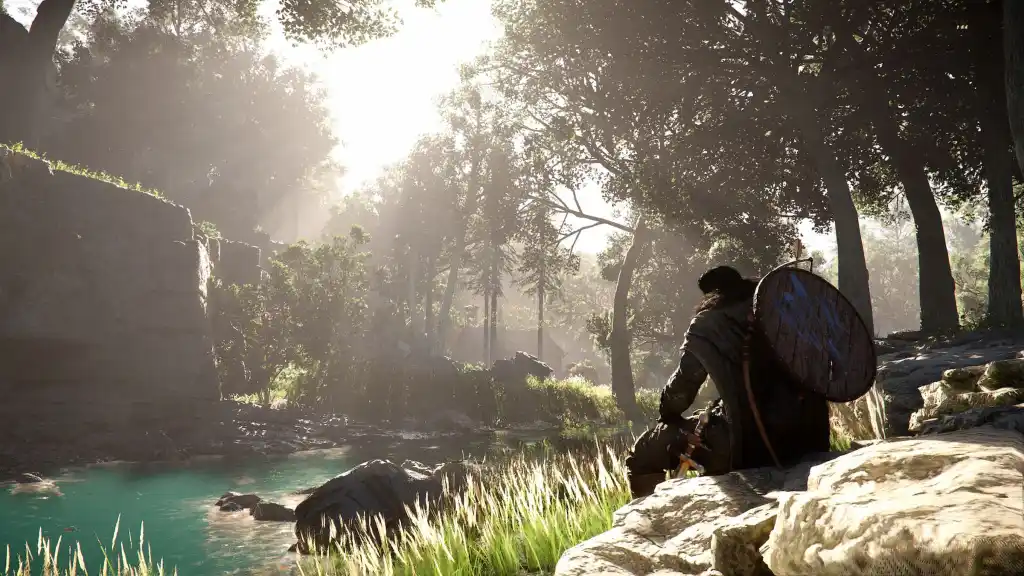
Frankly, I believe risking alienating some players in order to deliver a bold and unique approach to game design, regardless of whether it works, is worthwhile. I completely concede that there’s every possibility Crimson Desert’s design is utter nonsense and not the potentially genre-defining creation I am making it out to be. However, considering just how meticulously designed the rest of the experience is, one has to assume that there is some level of intentionality behind Crimson Desert’s complex design.
Additionally, by all accounts, Crimson Desert’s onboarding will only take upwards of six hours. That is, in the grand scheme of things, not particularly long for an open-world game of this size. Even with Crimson Desert not being an RPG, it is still estimated to take players roughly 60 hours to beat its campaign. Spending a 10th of that time figuring out the world, controls, and general systems feels fairly normal, especially when compared to the amount of time players need to spend figuring out just how Baldur’s Gate 3 works or watching endless cutscenes to try and discern exactly what any of the Yakuza games are about.

Honestly, regardless of how long it takes to figure it all out, or if it is intentional or not, I fully buy into the concept of complicating gameplay mechanics to make them more gamified, a facet of video games ironically underexplored, and also encourage the player to invest more in their individual actions. For too long, we have sat back and been content with pressing a handful of buttons to perform the most complex of tasks. While Crimson Desert’s onboarding process may be made all the more challenging as a result of these complicated mechanics, I believe they will not only help enhance the experience for those willing to persevere but should inspire future developers to find a way of implementing similar ideas.
What do you think of Crimson Desert’s complex controls? Leave a comment below and join the conversation now in the ComicBook Forum!
Most Viewed
-

Image Courtesy of MAPPA -

Image Courtesy of DC Studios -

Image courtesy of Tor Books/Macmillan -

Image courtesy of Nintendo