Every video game genre developed from something more basic than what’s available today, and fighting games are no different. Initially, fighting games were sports titles focused on boxing. As the concept of player-on-player violence developed, martial arts and other forms of combat became the basis for several popular titles. This continued for years, and nowadays, we have a diverse genre that’s filled with some of the most successful video games ever made. Instead of looking all the way back to boxing games like 1976’s Heavyweight Champ, we’ve dug through the genre’s history and highlighted ten non-sports games that significantly innovated with new mechanics, diverse capabilities, and dynamic options.
Videos by ComicBook.com
1) Warrior (1979)

The first game that could be considered part of the fighting genre is 1979’s Warrior. The arcade game uses vector graphics to depict two knights dueling over an intricate background. The cabinet allowed two players to fight each other with a single controller and a single button. While rudimentary and not the look of a modern fighting game, Warrior stands out as the first non-sports title to pit two human player characters against one another in combat, and it laid the groundwork for the games that followed in the next decade as the genre developed.
2) Karate Champ (1984)
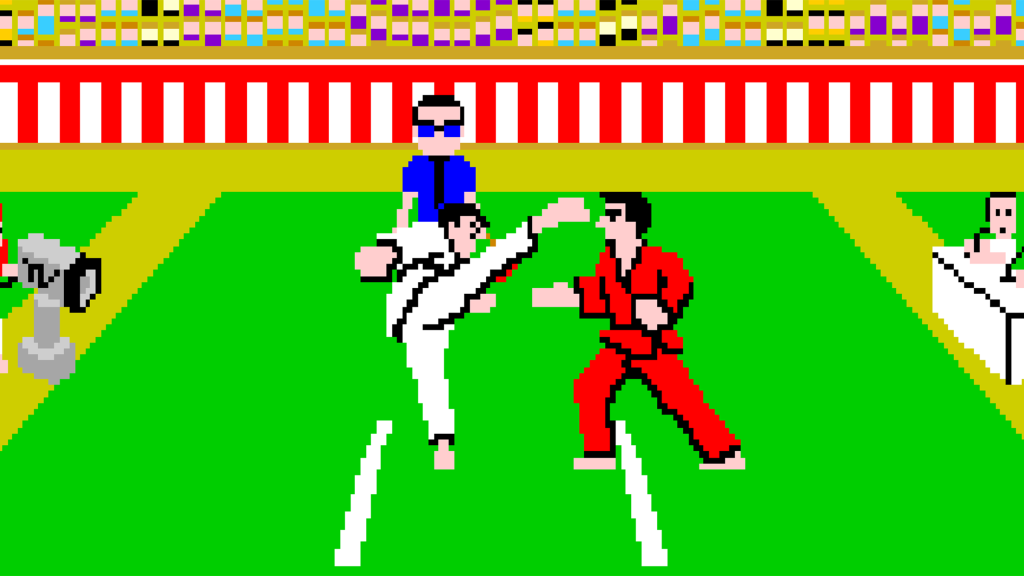
Initially, Karate Champ lacked multiplayer, so players competed against a computer opponent in a karate match. This helped set Karate Champ apart by focusing on specific matches, popularizing the concept as graphical options improved in the early 1980s. The game doesn’t include a health meter or any other system, and instead awards points in rounds for making contact with one of 24 available moves. Soon after its release, Data East released Karate Champ — Player vs Player, which offered two-player one-on-one capabilities, further enhancing the options for multiplayer fighting games.
3) Yie Ar Kung-Fu (1984)
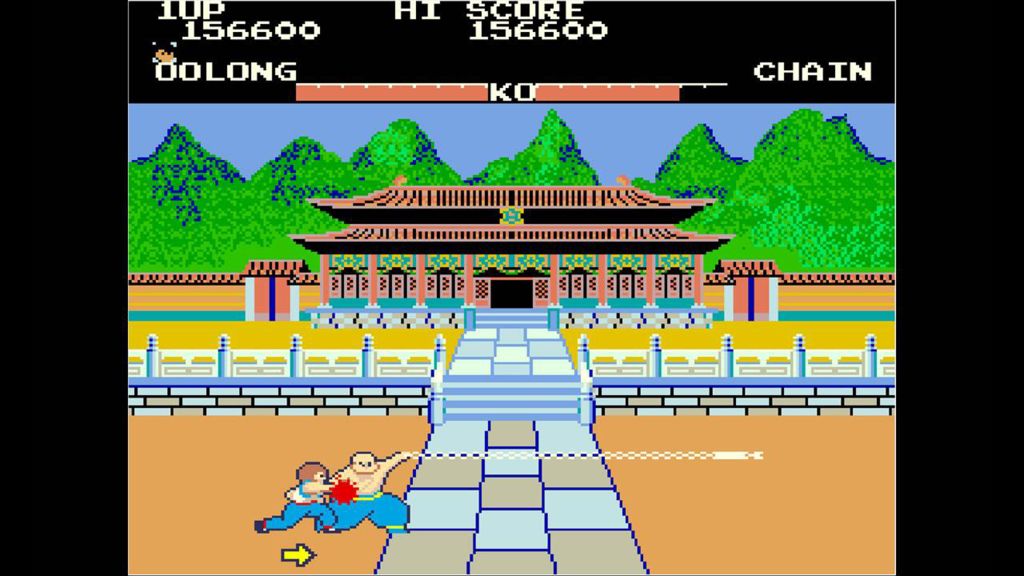
While it’s not the most well-known game these days, Yie Ar Kung-Fu did something in 1984 that hadn’t been done in fighting games: it included health meters. The success and style of Karate Champ directly influenced its style and mechanics. Its inclusion of a health meter was monumental for the genre, as that’s never really gone away, as pretty much every fighting game released in the years since features something similar. Yie Ar Kung-Fu included a more fantastical setting and faster action. It also featured special moves, higher jumps, and multiple characters, making it incredibly innovative.
4) Street Fighter (1987)

Takashi Nishiyama developed Street Fighter, basing its core gameplay on the boss battles of his earlier game, Kung-Fu Master, a beat-’em-up released in 1984. Street Fighter completely changed the fighting game genre, as it was the first commercially successful and first competitive fighting game released by Capcom. It introduced a six-button control layout and command-based special moves, which would become standard in many fighting games. Street Fighter was successful in Japan, though it didn’t catch on in the United States. Fortunately, that didn’t stop Capcom from launching a franchise, but more on that in a moment.
5) Reikai Dōshi: Chinese Exorcist (1988)
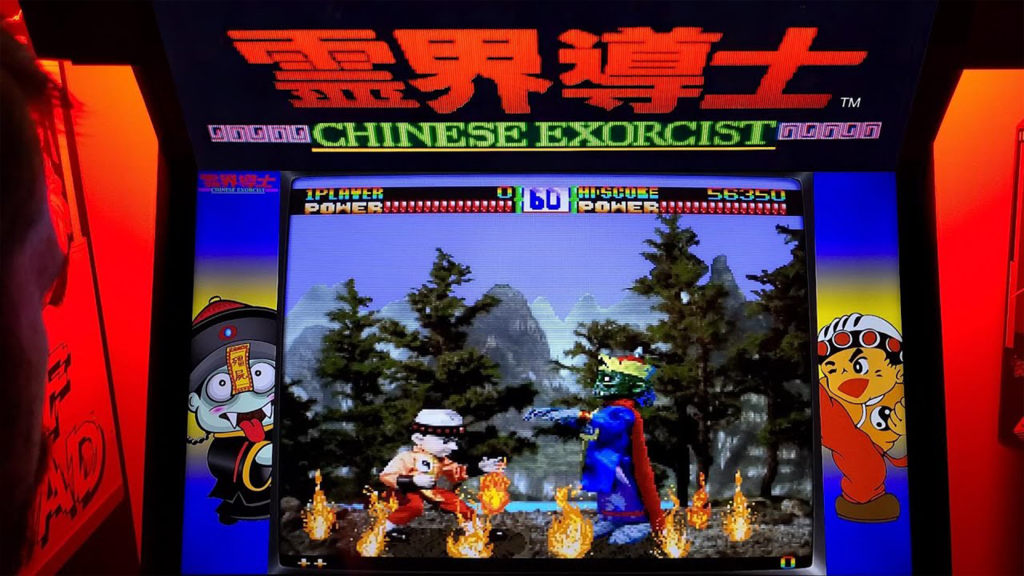
The 1988 release of Reikai Dōshi: Chinese Exorcist (Sometimes titled Last Apostle Puppet Show) is notable for being the first fighting game to use motion capture animation and digitized sprites. This was a major graphical innovation in 1988, and it would lead to further development of both processes within and beyond the fighting game genre. It’s a one-on-one fighting game, where the protagonist is an exorcist who battles demons by fighting and then decapitating them. It included an odd mechanic in which the screen’s edges function as a teleporter, but it is otherwise a typical fighter of the period.
6) Street Fighter II (1991)
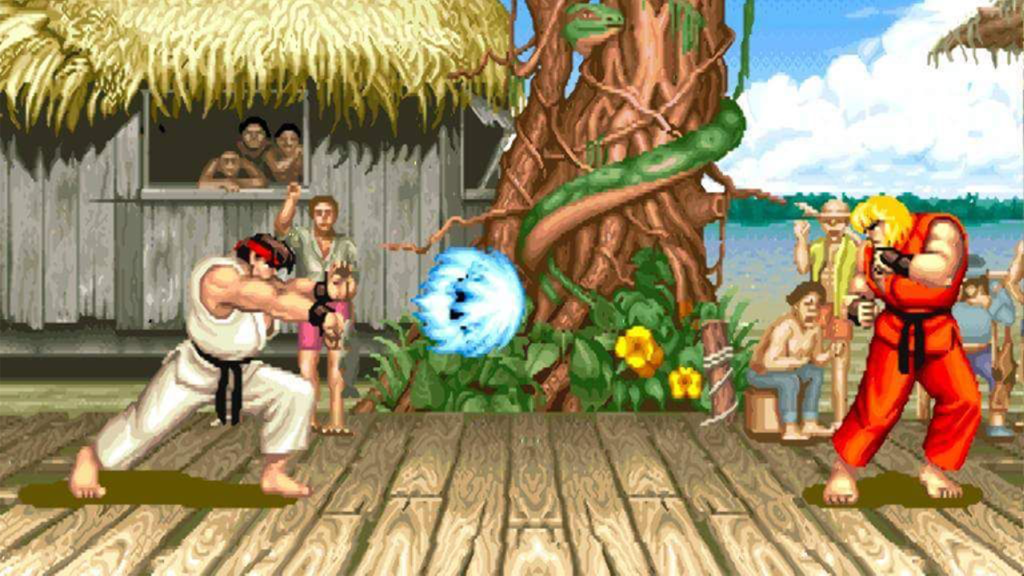
When Street Fighter II was released in 1991, it completely redefined the fighting game genre, becoming its archetype. The game took every element from its predecessor and improved on them significantly, adding new options to make it bigger and better. It offered a large number of characters for players to choose, each with their own special command-based moves. On top of that, the combo system was more refined and fully employed the six-button layout, offering better controls. Street Fighter II is easily one of the most important fighting games of all time, not to mention one of the best video games ever made.
7) Mortal Kombat (1992)

Fighting games are inherently violent, seeing as they feature two or more people fighting one another, usually until one falls unconscious. Mortal Kombat went a bit further, introducing levels of violence previously unseen in arcades. This sparked widespread controversy, leading to the creation of the Entertainment Software Rating Board and other issues. Putting that aside, Mortal Kombat made digitized violence incredibly fun! You could beat up your buddy and then literally rip his pixellated head right off, earning more points in the process. In terms of mechanics and the like, Mortal Kombat didn’t move the needle much, but its embrace of violence unquestionably did, showing that fighting games could be more mature.
8) Virtua Fighter (1993)
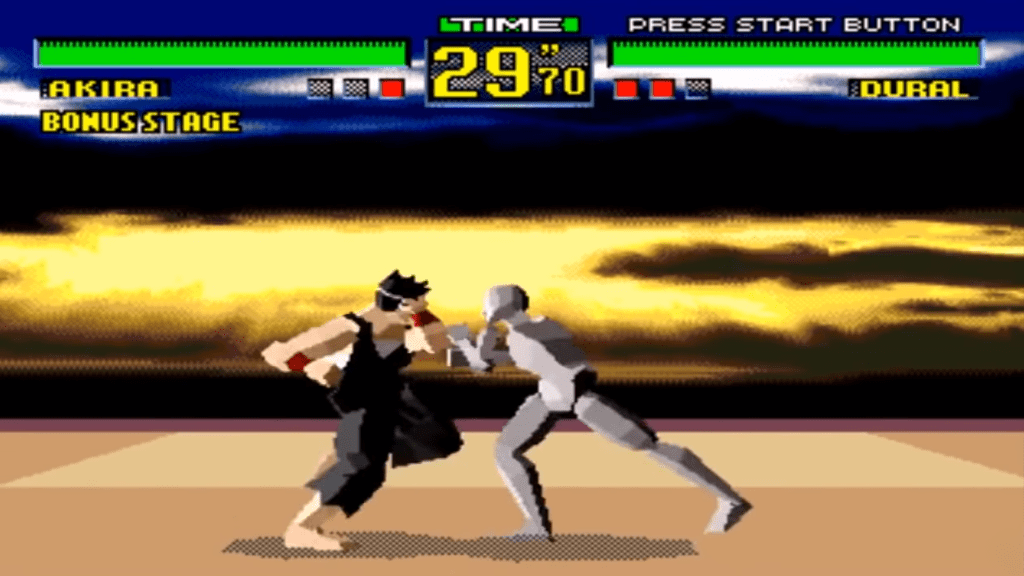
The first arcade fighting game to feature 3D polygon graphics was Sega’s Virtua Fighter. It successfully brought the previously flat world of fighting games into a new dimension in 1993, showing that the genre still had plenty of room to expand. The viewpoint also zoomed in and rotated with the action on screen, offering a new way to play. The game looked great upon release, but it’s not the most complex, as it only features a three-button layout, making it easier to learn while offering less competition to a larger group of players. Regardless, it was innovative and incredibly popular, launching a franchise that influenced everything that followed, especially Tekken.
9) The King of Fighters ’94 (1994)
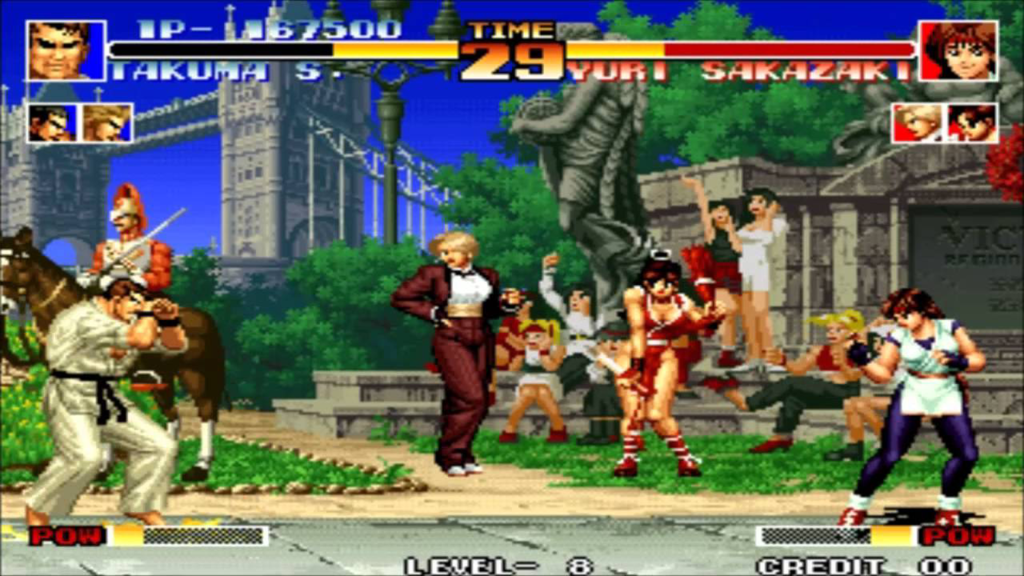
SNK released a ton of amazing fighting games on the Neo Geo, and one of the most innovative and influential was The King of Fighters ’94. One of the game’s most important characteristics was the concept of tag teams. Gameplay involved players building teams of three characters from several other SNK titles, making The King of Fighters ’94 a crossover fighting game. Once they chose their teams, they would fight each other in 3v3 matches, eliminating opponents’ characters one by one. This style of fighting has remained prevalent in many games since The King of Fighters ’94 arrived in arcades, making it highly influential.
10) Battle Arena Toshinden (1995)
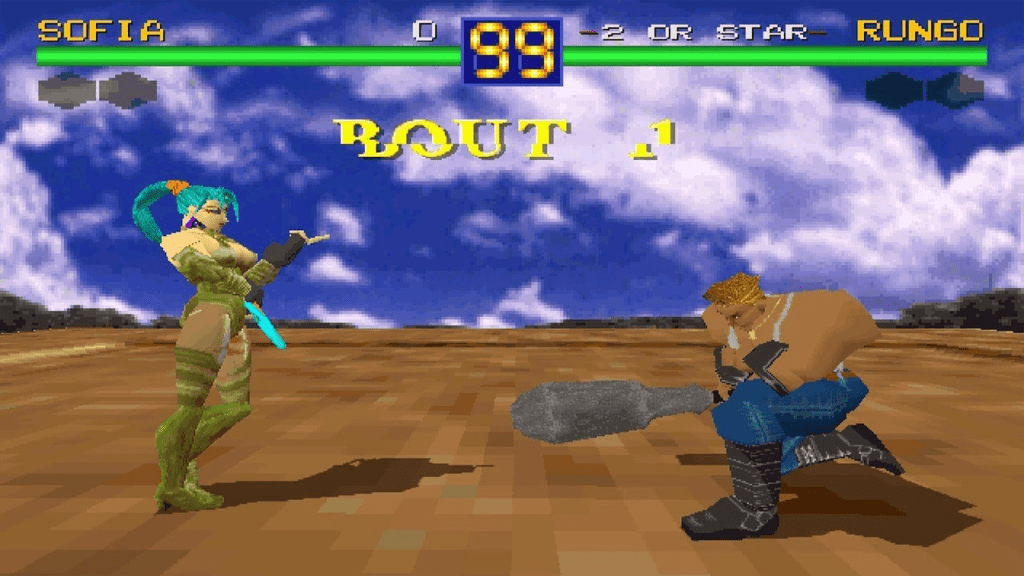
While Virtua Fighter demonstrated the possibilities of 3D gaming in 1993, it was Battle Arena Toshinden that transitioned the genre from a flat plane to a truly 3D experience. It accomplished this by introducing the sidestepping mechanic. Before Battle Arena Toshinden, players had to block, dodge, or jump to avoid getting hit, but with sidestepping, they could move out of the way and counter. This new mechanic completely changed the fighting game genre forever, and while small, it shook things up. Tekken 2 would later refine this move, and others would tweak the formula, but it all started in ‘95.
Which fighting game do you think innovated the genre the most? Leave a comment below and join the conversation now in the ComicBook Forum!
More Gaming
-

Courtesy of Midway -

Image courtesy of Keen Games