For the past decade, arguably no studio has been on a greater hot streak than Insomniac Games. Between its various releases in its Ratchet & Clank and Marvel’s Spider-Man franchises, virtually everything the studio has worked on has ended up being a critical and commercial hit. These past successes, when combined with the studio’s consistent output, have made Insomniac one of the most recognizable developers in the world, in addition to being one of PlayStation’s most important.
Videos by ComicBook.com
Sadly, Marvel’s Wolverine doesn’t continue this momentum that Insomniac has built up. While its latest Marvel title is gorgeous to look at and is quite fun to play, especially in its early hours, its narrative and new takes on classic X-Men characters are a big step backward for this veteran studio. The result doesn’t just make Marvel’s Wolverine the most disappointing superhero game from Insomniac so far, but it makes me question if the studio should continue down this path with more X-Men games in the future.
Rating: 3 out of 5
| Pros | Cons |
|---|---|
| Combat is fast-paced and engaging but… | …it gets repetitive very quickly. |
| Visuals and performance are fantastic, especially on PS5 Pro | Narrative is not nearly as compelling as it should be, with most “twists” being far too easy to see coming |
| Fun nods to Wolverine and the X-Men’s history are scattered throughout | Character choices made with Wolverine, Jean Grey, and others are at times baffling |
Wolverine’s Story Is a Predictable Mess
Far and away the worst aspect of Marvel’s Wolverine is its writing, both in regard to its overall story and its characters. Although Insomniac is a studio long known more for gameplay than compelling narratives, the story in the first Marvel’s Spider-Man, in particular, is one of the best to come from PlayStation Studios over the past 10 years. Wolverine does almost nothing to meet this level of quality, though, which greatly dampened my own excitement and drive to keep playing.
What hinders Wolverine’s story more than anything is that it’s incredibly predictable. Within just a couple of hours, I felt like I knew everything that the game would have to offer, and my assumptions didn’t prove to be incorrect by the time I had rolled credits. Insomniac does try to shake up the world that this version of Wolverine resides in, primarily through the inclusion of Team X and the nature of some of his relationships with other characters, but Logan’s core character traits are, more often than not, a retread of what’s been seen countless other times in X-Men media.
When Insomniac tries to deviate from expectations and create some genuine plot twists, it also results in some of the lowest moments in all of Marvel’s Wolverine. Specifically, the key relationship at the center of the game between Logan and Jean Grey is one that doesn’t work for me in the slightest. Insomniac isn’t the first to try and pair Logan and Jean with one another, but it’s the manner in which the studio goes about linking them together in Marvel’s Wolverine that I was left baffled by. This, combined with some of the core changes at the center of Logan’s character, left me feeling equal parts confused and annoyed about the direction that Insomniac ultimately pushed the story in.
Chopping Enemies to Bits as Wolverine Is Very Enjoyable, But Not Diverse
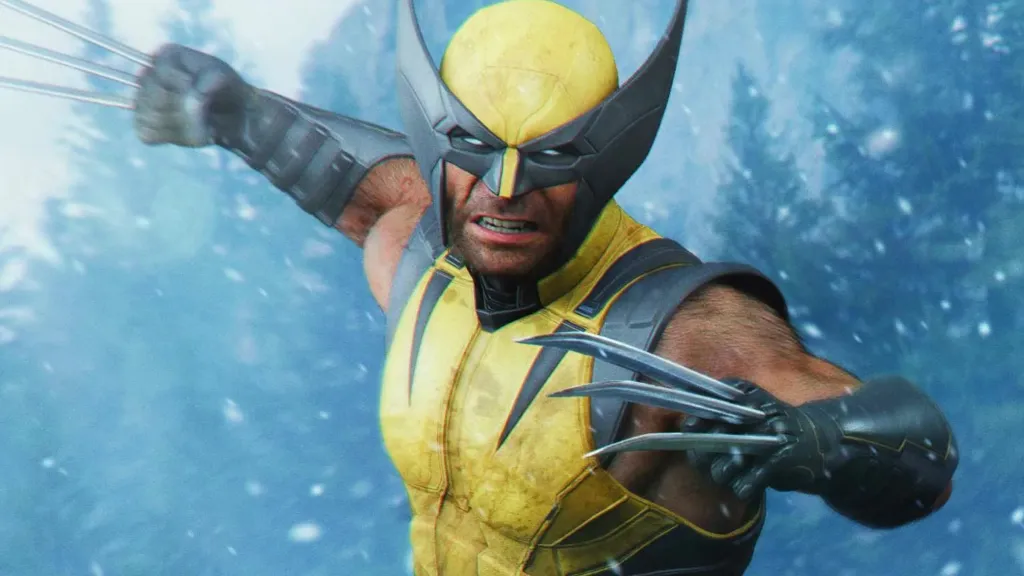
Even though Marvel’s Wolverine greatly fails on a narrative front for me, the act of playing it is more often than not great. Combat in Wolverine is incredibly fast-paced and gory, and puts an emphasis on Logan’s ability to leap across the battlefield. This leads to skirmishes where Wolverine is constantly jumping from one foe to the next, sinking his claws into one enemy before darting to the next.
As you continue to fight, Wolverine also builds up a rage meter, which, upon being filled, allows him to quickly execute foes. Managing this rage meter by ensuring that you’re continuing the assault while also parrying incoming attacks makes for a fun dance and gives Wolverine an added layer of strategy. The complexity of combat also grows over the course of the experience, as new enemy types are introduced which force you to recalculate your approach to combat situations.
As an action game, though, I was greatly surprised by the lack of attack combos that are present in Marvel’s Wolverine. While Insomniac does include a handful of special abilities (spinning claw strikes, knee attacks, etc.) that can be activated when off cooldown, the majority of what you’ll be doing is spamming the Square button or pressing Triangle to pounce on another assailant. For the most part, what you experience in the early hours of the game never really changes once you cross the 12-hour mark.
Coming into Marvel’s Wolverine, I expected there to be a much deeper combo system, similar to what is seen in action franchises like Devil May Cry or God of War. Instead, what’s here is rather rudimentary and greatly lacks any sort of depth. This is often most apparent during boss fights, as most of the game’s biggest villains just end up being meatbags with expansive health bars that Wolverine will have to strike hundreds of times over in order to take down. When combining this with its over-reliance on QTEs during cinematics, Wolverine’s gameplay definitely could have been so much better than it is, even if there’s still plenty of enjoyment to be had.
Wolverine Is a Technical Showpiece on PS5

The one aspect of Marvel’s Wolverine that is without question fantastic is its technical prowess. Throughout my time with the game, I was consistently awestruck at the level of fidelity that it features. The lighting and ray tracing in Wolverine, in particular, were some of the best I’ve seen to date, with the game’s overall performance being incredibly stable throughout. Playing on a PS5 Pro, Wolverine has been one of the few games to date that I feel like really greatly improved the overall experience. I can’t imagine not playing it with the ability to reach heights of 120fps.
For as good as Wolverine looks in motion, though, some of the game’s artistic choices fall quite flat. This is primarily true with Wolverine’s character designs, as some characters in the game look much more realistic than others. This problem with the uncanny valley is one that has plagued Insomniac in both Marvel’s Spider-Man 2 and Wolverine, and I’m not sure why. Hopefully, more strides can be taken with its next release on this front.
As a longtime X-Men fan, there was a ton of stuff that I loved in Marvel’s Wolverine. The game is chock-full of Easter eggs and references to different aspects of the Marvel universe, and it more or less executes on the power fantasy of becoming Weapon X. Still, for every element of Wolverine that I enjoyed, there was something that left me equally dissatisfied or frustrated. At best, I’d like to believe that Insomniac could improve on some of these shortcomings with a potential sequel to Wolverine, but at worst, I’m left questioning whether or not the studio should do anything else in the superhero space that isn’t tied to Spider-Man.
Marvel’s Wolverine is set to release later this month on September 15th, exclusively for PS5. An advance copy of the game was provided by the publisher for the purpose of this review.
More Gaming
-
Image courtesy of Bethesda