The double-barreled shotgun is a boomer shooter staple. As beautifully shown in Doom 2, it kicks like a mule yet can put down lesser enemies in most games down rather quickly. It’s a force to be reckoned with and a lifesaver in a pinch. Mouse: P.I. For Hire has a similar powerful double-barreled shotgun, but it flops around with each blast, as if it were made of flimsy rubber instead of cold steel. As striking as that sight is, it’s not an anomaly here. Mouse’s rubber-house animation ripped straight from the 1920s gives everything in the game — sans the environments — this bouncy style, a unique and playful aesthetic that’s fascinating until the credits roll. But the staggeringly long time it takes for those credits to appear does drastic harm to many of the game’s other components.
Videos by ComicBook.com
Mouse’s gunplay suffers the most at the behest of its surprising and unwelcome length. Combat starts out in a middling place because of the limited move set and dinky starting pistol. Additional weapons like shotguns and freeze rays and abilities such as gliding and double jumping are added to the mix, but combat rarely meaningfully benefits because of these new toys. Any gun can solve any issue so there’s not much of a reason to switch around. Arenas aren’t built around the parkour abilities, so they’re easy to neglect. Weak enemies and an abundance of health pickups mean it is almost never required to lock in; a quick rat-tat-tat and swig of any of the many nearby bottles of liquid cheese can easily offset most hiccups. The upgrades, which are mostly boring stat boosts, only make an easy game even easier.
Rating: 3/5
| Pros | Cons |
|---|---|
| Its rubber-hose animation, brilliant big band soundtrack, and snappy noir dialogue give the game plenty of style | …But it suffers greatly because of how slowly each beat is revealed |
| The story is about serious topics and told through some appropriately bodacious personalities… | The campaign is far too long, meaning its story and passable gunplay more than wear out their welcome |
| The desaturated color palette makes it difficult to find collectibles, side mission objectives, and the golden path a lot of the time |
Mouse: P.I. For Hire‘s Gunplay Gets Old Quickly
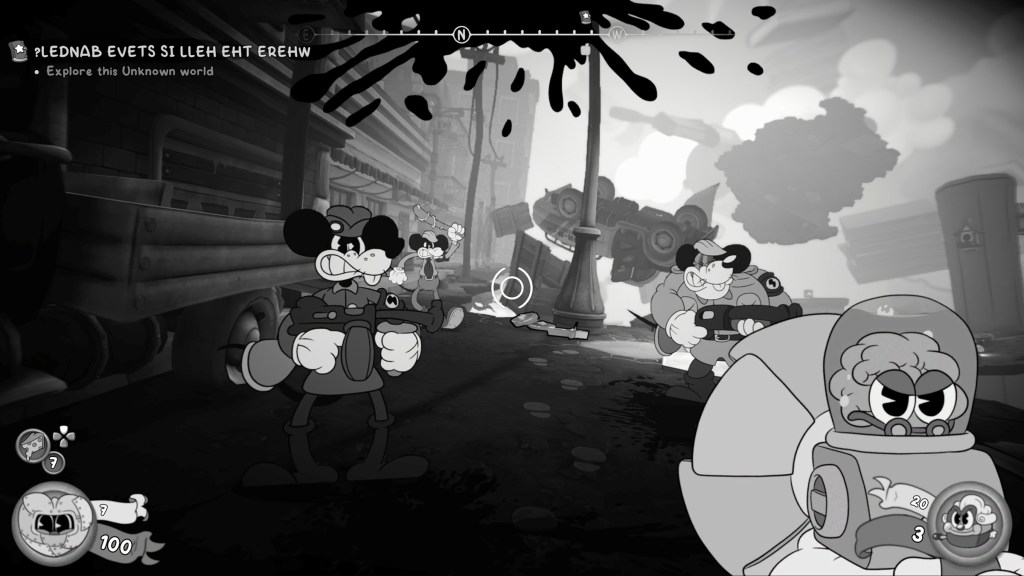
Mouse does so little to push back on players or get them to lock in. It mainly occupies a comfortable and mindless space that mechanically offers little to a three-decade-old genre. This merely passable foundation would likely have issues buoying a game that came in at a more standard length, but absolutely cannot support a title that is almost three times the runtime of the average boomer shooter. What is fine in the first seven hours becomes mind-numbingly boring in the final seven when the game is clearly out of tricks. Even though Mouse has a hub world, moments of downtime, and a disappointingly automated clue-gathering mechanic, the gunplay gets repetitive quickly and illustrates why most boomer shooters are usually just a few hours long.
The novelty of seeing Mickey Mouse’s kin explode to the tune of a fantastic big band soundtrack is at least something new. And while it points out how much Mouse overly fixates on its presentation, it’s at least a striking presentation. Watching the skin melt off a cultist is silly, as is the shotgun reload animation that sees hardboiled protagonist Jack Pepper sloppily slam a bunch of shells in the bottom of the gun, very few of which even make it in the chamber. As audiences discovered in the 1920s, the floppy and exaggerated movements of rubber-hose animation are inherently silly, and this slapstick nature is always charming. Dialogue sequences aren’t even lip synced, and they’re still entertaining to watch most of the time because of how lively the movements are.

It’s unfortunate the environments are simply normal 3D video game levels dipped in gray paint, and the disconnect between those stages and the animated 2D characters is ever-present. This color choice also makes navigation overly difficult because it points out how much other games depend on color to subtly — or not so subtly — guide players around, but Mouse has much less to work with. It is often not obvious where to go and doubly difficult to find collectibles; a gray three-inch baseball card is tough to spot within a sea of gray. Players can spawn a small duster that scurries to the objective or be on the lookout for big bouncing signs in some situations, but these obnoxious pointers are just crutches and add annoying speedbumps. This type of shortcoming was inevitable, so at least its characters are given personality through this bold artistic choice.
Mouse: P.I. For Hire‘s Story Explores Some Mature Topics
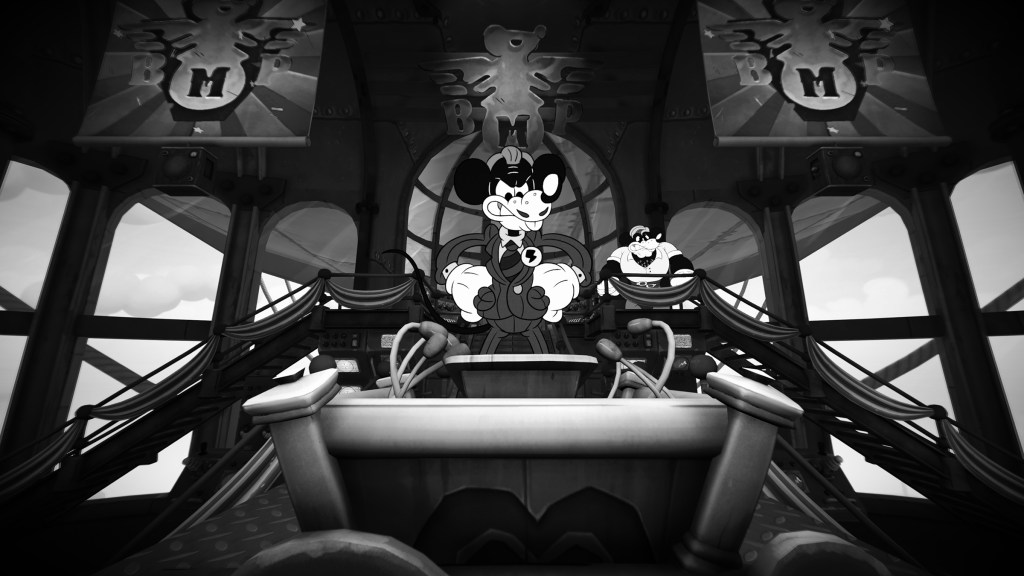
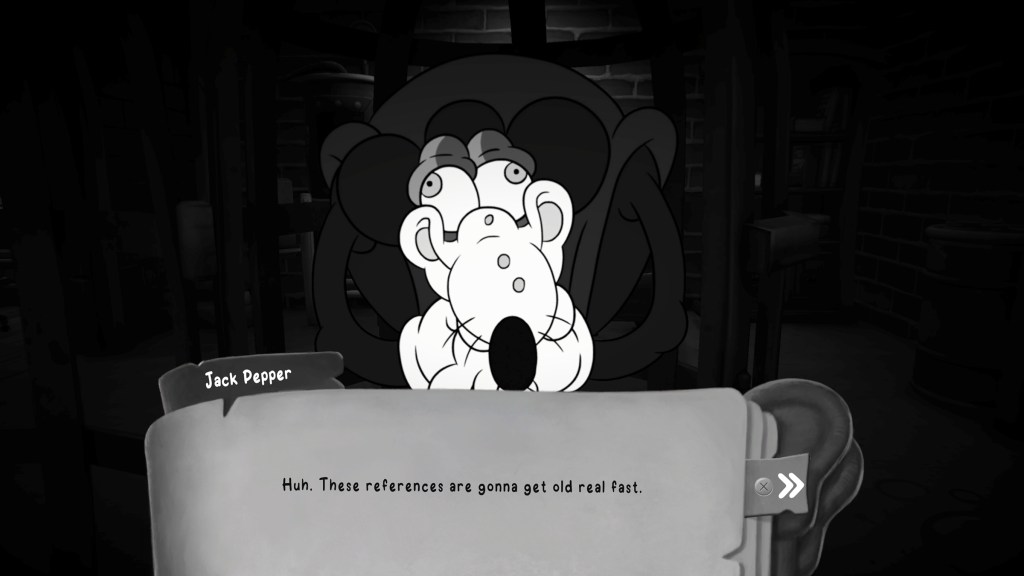
Mouse’s dialogue scenes aren’t just solid because of the animation; the dialogue and story pull enough of their weight, too. Lines are snappy and knowingly lean into noir tropes while poking fun at them. This means Mouse relies far too heavily on cheese puns, which, like a restaurant server with a block of parmesan, is grating, but some of the jokes are worth a chuckle on their own or are delivered in such a ridiculous way to warrant a laugh. Almost everyone is a delightfully named character — Cornelius Stilton, Tammy Tumbler, Cameron Bozo — utilizing some kind of amusing accent, including Troy Baker, who puts on a fantastic against-type performance as Jack. Despite being in so many games, Baker isn’t always given roles that showcase his range, but his portrayal of Jack, like his rendition of Joker in Batman: Arkham Origins, demonstrates the strengths of letting actors do something they aren’t typically known for.
Even with the silly barbs and goofs, Mouse’s story is shockingly serious at times. What begins as a run-of-the-mill missing persons case expands into something more hairy that centers around (or at least brings up) topics like wealth inequality, fascism, war’s ability to further ravage the poor, and how society can turn a blind eye to violence pointed at oppressed minorities. These heavy subjects give way to some unexpectedly poignant lines that have characters talking through trauma or the cruelty in the world without deflecting with irony or yet another cheese pun. Jack reflecting on the brutal war he fought in a few years prior and reading about how riots pushed the shrew population into ghettos are both particularly salient threads that get at real historical or ongoing struggles. Some of these issues aren’t delved into as deeply as they should be, but serious moments like this help round out Mouse and give it a few more welcome layers of depth.
Mouse: P.I. For Hire Takes Too Long to Tell its Story
But, as is the case with the gameplay, Mouse’s story is significantly held back by its excessive length. Every one of its beats is doled out at a glacial pace, which sucks the momentum out of an otherwise decent narrative. Entire levels will spit out one crumb related to its central mystery, and that laborious process repeats until it hits its delayed conclusion. Fewer, shorter levels with multiple revelations packed into each one would likely have given this tale the room it deserved to fully blossom.
Segmenting out these little nuggets of cheese harms much more than its story. Mouse’s ability to successfully channel the golden age of American animation in boomer shooter form is fascinating, as the comedic qualities of this embellished animation style are timeless and not exclusive to just one medium. But that slick presentation can’t make up for unremarkable gunplay and lethargic pacing. It’s common for rubber-hose animation to stretch out various limbs and body parts, but Mouse took that inspiration too far by stretching out its levels, gameplay, and story, too.
A PS5 copy of Mouse: P.I. For Hire was provided by the publisher for the purpose of this review.
What do you think? Leave a comment below and join the conversation now in the ComicBook Forum!