Avatar: Fire and Ash is the third entry in the Avatar series, with the same core uniqueness and idiosyncratic Cameron touches that defined the previous two movies. That influence extends to the music of the film, which was composed by Simon Franglen. A Hollywood veteran who has previously worked with Cameron on the previous films (including Titanic), Franglen’s score for the new movie has to chart a new path forward for the series, all while adhering to the unique landscapes and cultures of the film.
Videos by ComicBook.com
It proved to be a unique and rewarding challenge for Franglen, especially once he was able to bring more of his own immersive approach to scoring into the mix. During an interview with ComicBook, Avatar: Fire and Ash composer Simon Franglen discussed the unique qualities of collaborating with James Cameron, finding a balance between musicality and the massive effects of the Avatar films, and the process of making the music just as immersive as the 3D visuals.
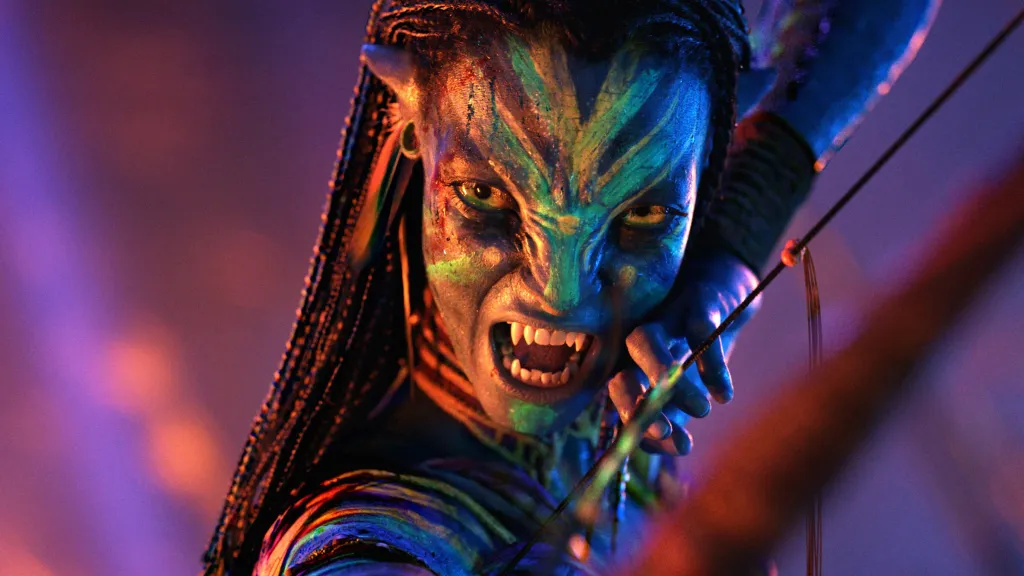
CB: You’ve worked with James Cameron on several projects now, including all three Avatar films. You’ve also been involved in lots of projects over the years with other filmmakers. What is it about James Cameron that makes him unique among collaborators?
Simon Franglen: I think what makes [Jim who he is] is that he cares desperately about everything that goes into his movies. I know some directors will say that, but Jim is at another level. He will say to me, ‘Yesterday, you played this to me, and the French horns were like three decibels louder here. Why have you turned them down?’ He will have conversations like that with you. The level of detail when we are spotting the film, which is when the director and the composer sit there and they work out where the music is going to go across the movie — we were talking about each scene.
I flew to New Zealand to see him, and we had three days of just spotting the movie. In those three days, the telephone never rang once. There were no distractions. Nobody knocked on the door and said, ‘Jim, you need to deal with this.’ This was three days of 100% of his focus. And when I say 100%, I really mean it. He is that intensely focused on everything. I knew everything I needed to know about where we were. Now it might evolve, but when he focuses, he gives 100% to each thing. The problem is, sometimes he has so many things to focus on 100% that sometimes you have to wait for that moment to get him to then refocus on your thing, because he’s also doing the same with the visual effects. He’s doing the same with the acting. He’s doing the same with the sound design. In every regard, he has that level of focus.
What you see sometimes with other directors is they just say, ‘Oh, yeah, just fill in here or something.’ Not with Jim. Jim is laser-focused on what you are doing every beat, which is why, for instance, this is a score that is written specifically to this film. What I mean by that is, I didn’t write a suite of music that was then cut and pasted across the movie. It’s not a groove thing where you can just sit there, and the music can bob along in the background.
He wants me to hit everything; every single part of this three-hour and 15-minute film is specific, and each cue is crafted to what we’re seeing on the screen at that point. He requires everything to be bespoke, to be shaped the way that he wants it. I think he really cares about what music can do for his film. I think that he understands the emotional impact that it can have, and that he can tell that it may give you that feeling underneath. I think in television music, often you’re telling people what to think. Film music, at its best, is telling people what to feel. I think there’s a difference, and Jim understands that.
What lessons did you take from the previous two Avatar films that you made sure to bring to this new movie?
For this film, Jim wanted a different texture. He wanted it to be darker in a lot of ways. We have the family dealing with grief, which is something that we’ve never done before. There’s a really intense family dynamic that I needed to deal with emotionally, but also with a sort of austerity, because Jake and Neytiri are just surviving. There were all these discussions about how emotional we wanted to play it. Avatar has a sonic identity. You can take an Avatar film score, and you know it is Avatar. You couldn’t put that in a Star Wars film. You couldn’t put that in a Marvel film, it wouldn’t feel right. Avatar is very much its own place. It has this sort of sense of the world. On the first Avatar, my job working for James Horner was that I was responsible for those textures that weren’t orchestral.
That indigenous sound, the feeling of the forest, the grooves and the rhythms and the textures and the synthesizers that were an important part of the first film, that was something that I had responsibility for. I carried that with me into Avatar: The Way of Water. It was because of the nature of the DNA. It was kind of like how the child looks different to the parent, and the grandchild looks different to the child. There’s still the same DNA in there. You can look at your grandfather and say, ‘I look a bit like him.’ But there is a difference.
Way of Water had all these new elements. We had a family theme. Jim wanted me to write a more thematic score for a two. For the first film, he didn’t have themes for people or things. We had textures, and there were beautiful tunes, but they would be used once. So you would have James Horner’s work in the first film, like the climbing to Iknimaya, which is a beautiful thing used once. There will be things like that. It wasn’t a thematic score that had repeating beats and used things again.
On Way of Water, Jim said, ‘We need a theme for the family.’ That evolved from writing the song chord for Zoe Saldaña. That became the family theme in its bigger form. At one point, Jim said to me, ‘We don’t have an Imperial March!’ So there needed to be a thing. You’ll hear it in Way of Water; it is called “A New Star.” That was this big sort of militaristic thing. Quaritch has his own theme as well, because Quaritch needs to have a theme. He’s a troubled man.
There is more to Quaritch than it seems, and I think my theme always wanted to hint at that. Now we have a main theme, which I’ve called “The Future and the Past.” I have it in the album sung by Zoe Saldaña at the end. We had that scene in the film, and eventually the scene got cut out. But I always loved the theme, and so I wanted to put her version on the album so that people could understand where the song came from. She sings it so beautifully.
When you look at Fire and Ash, it has all that growth. We start dealing with the past, and then what happens in the future is a very important part. Saldaña had sung this beautiful vocal, which I’d written for her as a lyric in NaVi, and one of the lyric lines was ‘The new future in the past.’ That became the main theme for the film. But then we also have now an expanded Kiri theme, which we didn’t have before. Now, Kiri needed her own variation. We have it beautifully played solo by Alyssa Park, and then Lo’ak, who is our narrator in Fire and Ash, now he has his own theme. And we haven’t even touched on the wind traders, or the Ash.
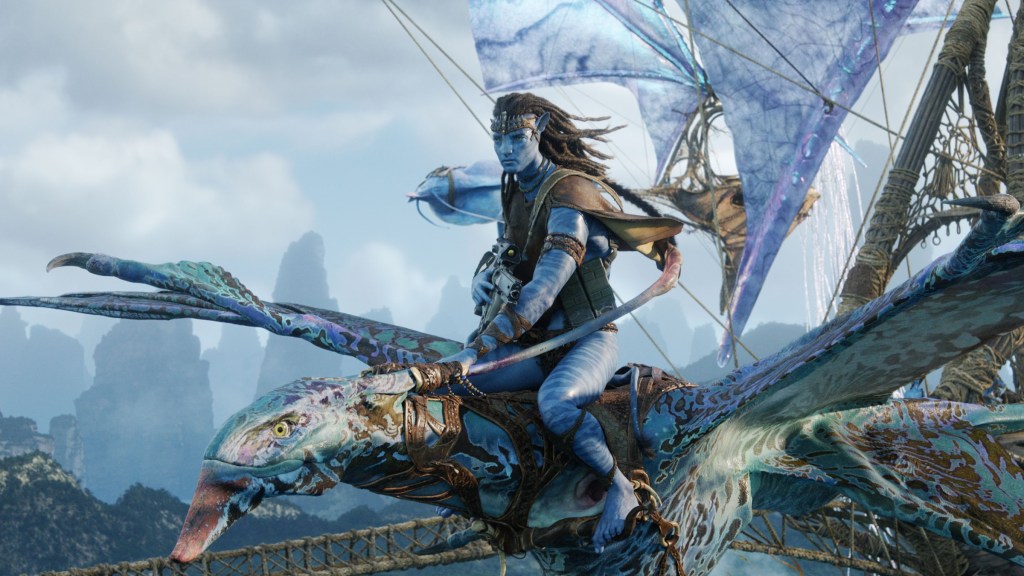
There are so many colors that I’ve had to build up on this. With the wind traders, for example, I just wanted to write a big, 1930s swashbuckling epic theme. Because if you can’t do it for an 800-foot-high galleon with trailing medusoids, when can you? I think the hope is that there is still a place for an epic score. There are so many scores these days that are sort of minimalist, or they tend to be textural-based. I hope that a thematic, epic score still has a place in movies. I think mine may be one of the few this year of that scale.
What were some of the bigger challenges of the film?
The Ash were a whole other challenge, which is that they want to burn the world down. I looked at it initially, I started working with some guitars, and thought, no, this isn’t working. 10 years ago, I’d worked in Inner Mongolia in northern China, and I’d worked with musicians there, and there was a thing called the Morin khuur. It is a two-string nomadic Mongolian instrument, and can be played with real frenzy and real bite. That became the core sound of the Ash, because I wanted something that felt like it was a feeling, not a tune. I wanted it to have that sense, that they want their district’s destructive nature spread. It’s almost straight drums. It goes back to my days of being a pretend punk when I was little. There was a thing when I used to go and hang out with real punks.
I remember there was a great big building in Mount Pleasant in central London that was a squat. There would be all these people, and they were the people who felt society had left them behind. There’s something of a similar feeling to that in the Ash. They feel that Eywa has turned her back on them, that their entire community had been destroyed by this volcano, and they had therefore turned their back on society. It reminded me of my feelings about punkness when I was little, and I wanted that sense of drive.
I wanted that sense of they are. They’re not quite evil. They are in a frenzy of killing to spread their feelings to the world. They just want to destroy. That is the sound of the Morin khuur. It was almost like electric guitars, but not quite. I added electric cellos. Sometimes I would add violas as well, just to give it a bit more color if I needed to. But it was a unique sound for the Ash, and that opened up the palette that we could have for this film.
What would you say were the biggest surprises of Avatar: Fire and Ash?
You have to be very careful about how you do [action music]. Otherwise, it ends up being like one layer too much during the battle scenes, which actually takes your ear away from the fact that you have to engage with the action. I’m very proud of my action music. I think it’s something that I take a lot of care over. I think about these things a lot. If I’ve got 45 minutes of action sequence, as I have at one point here, I’m looking at how I’m going to build it so that you don’t end up just end up overwhelmed. Because I don’t cut and paste, it also means that I have to think about how I shape tempos and keys to get each moment right. I think that what I ended up here with is a much more in-your-face score than I think we had with the previous ones.
A quick shout-out to the sound mixers, we went more immersive because I took the view that now Atmos audio is everywhere. Even three years ago, I couldn’t guarantee that the cinema would have an Atmos room. Now I can almost guarantee that any cinema that has Avatar: Fire and Ash is going to be an Atmos room. That gave me the ability to try and make the music more immersive, just as the visuals are. I’ve taken some risks. You’ll hear the music actually going around your head.
Sometimes you’ll hear things custom-wise, because I have a sideline. My hobby is immersive audio, so I really started playing with some of the things we do. I think people, when you’re going to hear it in the cinema, hopefully you’ll appreciate how we’ve really stretched some of the limits in terms of what we can do acoustically, in terms of making the music so that it is a part of that immersive experience.
The thing that surprised me most is how I could bring it out into the room and make you feel more that you were leaning into the picture. Because Jim’s use of 3D is very much about bringing you in, rather than having pointy things coming out at you. I wanted to be part of that, to allow that sense of the score to grow as you feel as if you’re going into the picture…. For me, as a 3D audio nerd, there are two things it does. One is it allows you that immersion, but secondly, it actually allows you to provide, I think, a more thematic score.
So much of the problem you have when you’re scoring a film is you’re trying to stay out of the way of the dialogue, and you’re trying to stay out of the way of the sound effects. And because I can bring things a little wider, that means you can actually hear the music without it overwhelming everything else.
Avatar: Fire and Ash is now playing in theaters.
What do you think? Leave a comment below and join the conversation now in the ComicBook Forum!
Most Viewed
-
Image Courtesy of Marvel Comics