The MCU’s golden years were arguably between 2011’s Captain America: The First Avenger and Avengers: Endgame in 2019. It may have seemed inevitable, but there’s an alternate timeline out there where Robert Downey, Jr. didn’t continue playing Iron Man—and it almost became a reality. That would have triggered a butterfly effect where storylines, relationships, and scenes would be completely altered. By going in-depth with this deal, it becomes clear that the MCU’s history hinged on this pivotal decision: to keep RDJ or not? After Iron Man 3 premiered in May 2013, Downey’s contract with Marvel Studios had been fulfilled.
Videos by ComicBook.com
It was a hot topic at the time, especially because Disney was prepared to keep moving forward with or without the actor—and Avengers 2 was already confirmed. If Marvel lost this star, the MCU would be radically different and some film analysts at the time predicted that the MCU might not reach the same heights without him. Up until that point, Marvel Studios was still being established and the first Avengers movie became a box office phenomenon that was totally unexpected. The studio now realized its shared-universe plan had worked but all its existing contracts, casting decisions, and individual films had to be reanalyzed. This takes us to the very beginning of Downey’s career with Marvel Studios.
Robert Downey Jr. Dons the Iron Man Armor
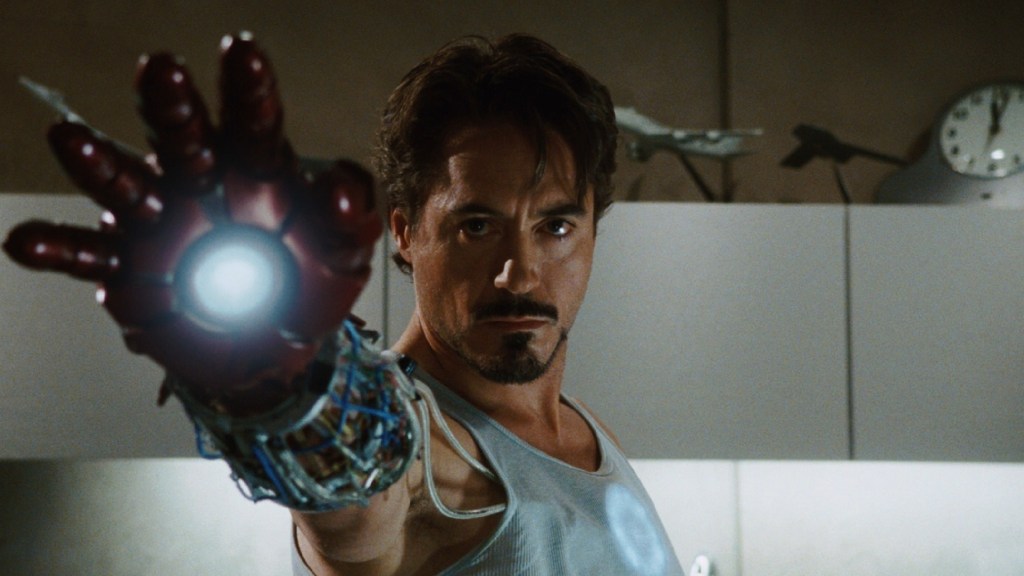
Downey’s origins with Marvel Studios began with a low initial $500,000 salary in comparison to typical productions of that scale. For reference, his co-star Terence Howard was paid $3.5 million upfront for the same Iron Man movie. Downey’s reported upfront salary reflected the risk surrounding both the actor and the unproven property. His history of addiction, arrests and years of professional instability had made him a controversial choice for a major studio blockbuster—making him sound more like a villain at the time.
Though the MCU’s Tony Stark never battled alcoholism, Downey Jr.’s own struggles with alcohol gave an ironic resonance to a character whose comic-book counterpart famously did. But it wasn’t a benefit to the situation—it was a detriment. Iron Man was a major gamble as the first film produced and released under Marvel Studios’ interconnected MCU strategy and might have been the early endgame if it failed for any reason.
Fortunately, RDJ was still signed onto the project and his legal team was able to negotiate a backend profit deal that reportedly gave him a percentage of the film’s box-office success. When his first Iron Man movie did release, it defied expectations and reached over $585 million globally, which was a heroic feat in itself. Reports later estimated that this gave the actor around $2.5 million.
More importantly, the star proved that fans adored him as Tony Stark, and he had great on-screen chemistry with the entire cast. Downey also became synonymous with the quippy humor of the MCU thanks to his natural personality and charisma. Following the release of The Avengers, reports estimated that Downey ultimately received around $50 million through his backend arrangement. He already received a base pay increase with Iron Man 2, and Iron Man 3 was even more successful. Reports later estimated that Downey earned around $75 million from Iron Man 3, further demonstrating just how dramatically his bargaining position had changed since the original $500,000 deal. And while he was pleasantly surprised, the studio apparently was not happy about it. Now, his heroic journey had truly begun.
Tony Stark’s Difficult Return to the MCU After Iron Man 3
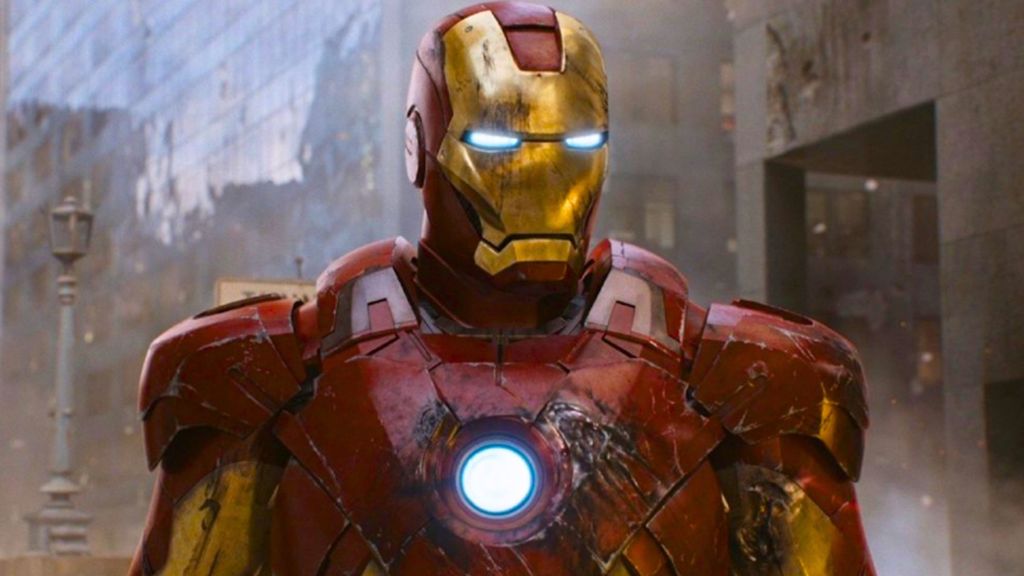
Back at the negotiating table, RDJ knew he had enormous leverage over Marvel Studios as the face of the MCU—and they knew it too. In fact, he admitted in a promotional interview for the third Iron Man film that it made him uncomfortable. The initial gamble of the contract hit the jackpot and then some. Now, the studio wanted to continue its long-term plans for the MCU, and the problem wasn’t just Downey wanting more money; the actor had expressed interest in shifting his career elsewhere. Before the third Iron Man movie was released, the actor was interviewed and asked about his acting future.
Downey wasn’t exactly 100% sure about continuing as Tony Stark. Even while RDJ talked about his satisfaction with success, he realized he had achieved a career milestone and was considering a different game plan during his “back nine” years. In the third movie, the actor explained how he badly injured his ankle in a wire stunt gone wrong and production had to shut down for several weeks. He started to second-guess his physical limits and safety, especially when he considered his age. He also expressed a strong desire to work on other projects with his wife Susan Downey that didn’t include Marvel Studios.
RDJ also explained how he believed it was better for a contract to end rather than continue on indefinitely. He also noted that his agents and lawyers were obviously happy with the financial success his career was having. But Downey also understood that his recently completed contract no longer made sense in the new landscape of the MCU and his growing global influence.
Yet his hesitation was never as simple as wanting to abandon Tony Stark. In interviews around this period, Downey acknowledged that eventually giving up the character would be a “bit of a crisis” because of how much Tony and the Marvel experience had come to mean to him. RDJ went on to say how he loved the character and being in the MCU had become more than just a job and a paycheck. He genuinely enjoyed it and Downey understood that the films had transformed Iron Man’s cultural profile, turning a character who had historically lived in the shadow of Marvel’s biggest icons into one of the world’s most recognizable superheroes.
By 2013, however, one thing was undeniable: Tony Stark had become the MCU’s most commercially proven character. The Avengers had demonstrated that Marvel’s shared-universe experiment could work on a massive scale, and Downey was at the center of it. Losing him would therefore mean more than replacing the star of a single franchise—it could require Marvel to rethink one of the central figures connecting its expanding universe.
The MCU Without Robert Downey Jr. and Iron Man
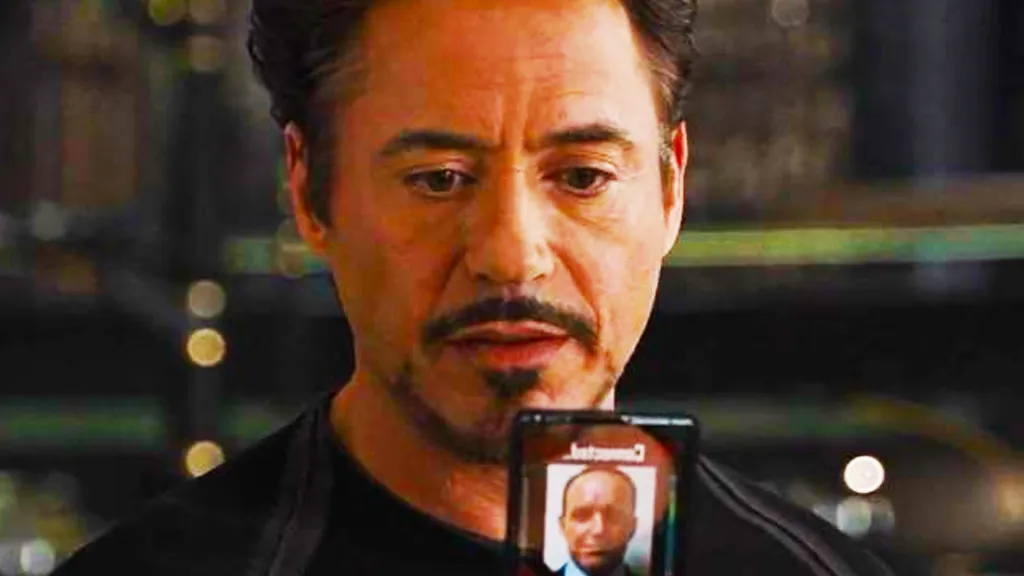
At this critical juncture it was anyone’s guess what would have happened if a new deal with RDJ fell through. Though it seems reasonable to assume that Tony Stark would’ve been recast instead of written out entirely, it was still too early to put the spotlight on Tony’s successors, War Machine or Iron Heart, since neither was as established early on. If a new Iron Man was cast, he might’ve also been written as a less prominent character. No matter what, losing RDJ would’ve been extremely disruptive to Marvel Studios’ plans and could’ve caused major delays while being detrimental to audiences’ perception of the MCU.
Thankfully, all the uncertainty about RDJ’s future in the MCU came to a halt in June 2013 when he finalized his new two-picture deal with Marvel Studios for Avengers 2 and 3. Although exact details of the new deal were not explicitly made public, reports claim Downey received between $50 million and $80 million in total payouts. This unprecedented deal cemented RDJ as Hollywood’s highest-paid actor with a $50 million salary baseline.
The issue was that Avengers 2 and 3 weren’t simply sequels. Marvel still hadn’t fully revealed that they were building to Infinity War so fans had no idea what was in store other than RDJ was back. As the years went on, it was clear the MCU was in snowball mode and Avengers 3 became the two-part Infinity War and Endgame.
But things weren’t exactly ironed out. Downey was still reminding interviewers that he couldn’t play the Marvel role forever. Marvel had made Robert Downey Jr. one of the biggest stars in Hollywood. But that success created a new problem. After taking on the film The Judge in 2014, RDJ once again publicly announced how he was great at being Tony Stark and it was fun, but he was also curious about performing in a wider variety of roles and working with other famous directors who didn’t make superhero movies.
The Legacy of Robert Downey Jr.’s Tony Stark
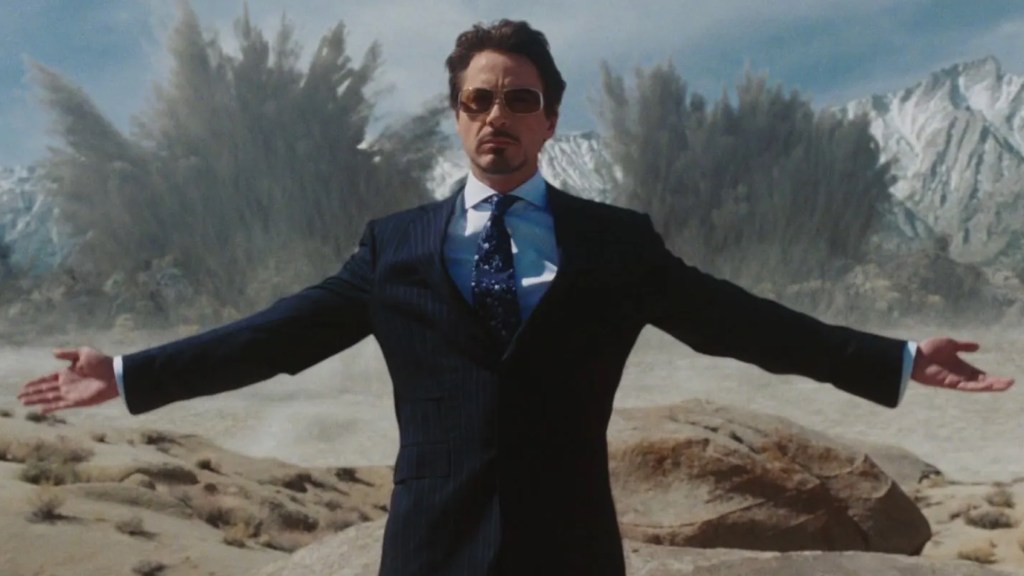
When Captain America: Civil War came to fruition, Marvel Studios’ Kevin Feige had to have Iron Man in the picture, literally. It turned out to be the right call because what followed was a key dynamic between Tony Stark and Steve Rogers (one that might be repeated in Doomsday). But bringing Downey into Civil War created a serious internal battle at Marvel. Ike Perlmutter, then chairman of Marvel Entertainment, was known for pushing aggressively against production costs, while Kevin Feige wanted Downey involved in the film. The dispute became part of a much larger power struggle over Marvel’s creative direction.
To finalize RDJ’s contract extension, a major restructuring took place at Marvel Studios and Kevin Feige almost quit. Disney CEO Bob Iger had to intervene and disband the Marvel Creative Committee to restore order and save the MCU. The irony was that Downey’s involvement in the movie added an estimated $400 million to the movie’s ticket sales. Talk about a superhero move.
After that contentious arc came another landmark development: Marvel’s partnership with Sony to bring Spider-Man into the MCU. This came after the webslinger’s Civil War appearance and the eventual decision to split the Infinity War saga into two parts. Based on multiple sources, Tony’s cameo in Spider-Man: Homecoming meant the actor was paid roughly $1.25 million per minute for his roughly 8-15 minutes of screen time. For Avengers: Infinity War and Avengers: Endgame, RDJ made about $20 million up front and about $75 million with bonuses for each picture.
Then, after more than a decade, the story finally reached its ending. Tony Stark—once the reckless billionaire who could barely imagine sacrificing himself for anyone—used the Infinity Stones to save the universe. And with those words, ‘I am Iron Man,’ Robert Downey Jr.’s original MCU journey came to an end.
But just when it looked like RDJ was finally done with the MCU, he shocked fans at San Diego Comic-Con 2024 when he revealed he was back on board as Victor von Doom in Avengers: Doomsday and Avengers: Secret Wars in 2026 and 2027, respectively. Reports estimate a staggering $50 million baseline salary per film, plus additional undisclosed bonuses as of this writing.
Perhaps the most fascinating part of Robert Downey Jr.’s MCU story is that, for a brief moment in 2013, it could have ended before it had even locked in. There was a version of the Marvel Universe where RDJ walked away, the armor went to someone else, and the cultural phenomenon that followed took an entirely different shape. Instead, Downey stayed—and in doing so, became inseparable from the MCU. More than a decade later, it’s an unbelievable kind of full circle: the man who once made Marvel’s greatest gamble work is now returning to reinvigorate it. What happens next may never recreate what came before, and perhaps it shouldn’t. The MCU without Robert Downey Jr. once seemed unimaginable; now, the more intriguing question is what Robert Downey Jr. can become within it after Iron Man.
More Movies
-
Courtesy of 20th Century Studios -
IMAGE COURTESY OF SUNBOW -

Image Courtesy of Overture Films and Relativity Media