In celebration of the 20th anniversary of Star Wars: A New Hope, all three installments of the original Star Wars trilogy were re-released in theaters. The main selling point of this cinematic event, however, was not simply the chance to see the industry-defining blockbusters on the big screen again. As most fans know, George Lucas went back and made changes to each film, adding new scenes and refining the visual effects. Some of these alterations (expanding Cloud City in The Empire Strikes Back) actually improved the movies, but many of them were very controversial. Star Wars: Return of the Jedi sports probably the most annoying change in the whole trilogy — give or take Greedo shooting first.
Videos by ComicBook.com
On March 14, 1997, the special edition of Return of the Jedi opened in theaters. Perhaps the most noteworthy change in the re-release was the new musical number in Jabba the Hutt’s palace, where Sy Snootles and the Max Rebo Band perform the song “Jedi Rocks.” It was one of the more baffling decisions Lucas made when working on the special editions, and even after all these years, it’s a choice that still doesn’t really make sense.
Why George Lucas Changed Return of the Jedi‘s Musical Scene (and Why It Doesn’t Work)

In the original 1983 theatrical cut of Return of the Jedi, the Max Rebo Band plays a catchy, funky tune called “Lapti Nek” in a short sequence that shows viewers how Jabba was entertained at his palace. The scene is very effective and fits perfectly within the film, but Lucas always envisioned it as a much more elaborate musical number. In a featurette included in the 1997 VHS release of the special editions, he explained that the sequence became truncated during production. With the crew running behind schedule, they only had time to get “a couple of shots,” which ultimately forced Lucas to cut the scene down.
Technical limitations of the time also played a factor here. As highlighted in the VHS featurette, the practical puppets and animatronics used to film the musical number in Jabba’s palace could only do so much. They were very stiff in their movements, and producer Rick McCallum noted in particular that Sy Snootles’ mouth and eyes didn’t move properly. For the special edition, Lucas was able to redo the scene with CGI, turning Sy Snootles into a fully digital character with a full range of movement and an expressive face. He was finally able to realize his dream of putting a big musical number in the middle of a Star Wars movie.

Unfortunately, many consider this to be one of the worst changes in the special editions. Some of that boils down to favoring “Lapti Nek” over “Jedi Rocks” as a song; the latter is a much louder, extravagant track that some could find obnoxious. The addition of the Yuzzum Joh Yowza, who performs “Jedi Rocks” as a duet with Sy Snootles, was especially off-putting. Those who dislike this change find the character’s vocals to be grating, a critique Lucasfilm would later amusingly work into the canon novel Beware the Power of the Dark Side!, where it’s revealed many of the galaxy’s underworld dreamed of murdering the Yuzzum just to shut him up.
In a vacuum, the “Jedi Rocks” song is fine, but it doesn’t really fit in the context of the overall film. Perhaps the biggest critique of the redone musical sequence is that it disrupts the pacing of the first act, essentially pausing the action so viewers can watch a Max Rebo Band music video that drags on. The original “Lapti Nek” sequence was quite simple, doing enough in a shorter period of time to convey meaningful information (Jabba’s cruelty, the existence of the rancor pit) without being so distracting. “Lapti Nek” felt much more organic, while “Jedi Rocks” stands out like a sore thumb — both musically and in the execution of the new scene.
The Return of the Jedi Special Edition Didn’t Need “Jedi Rocks”
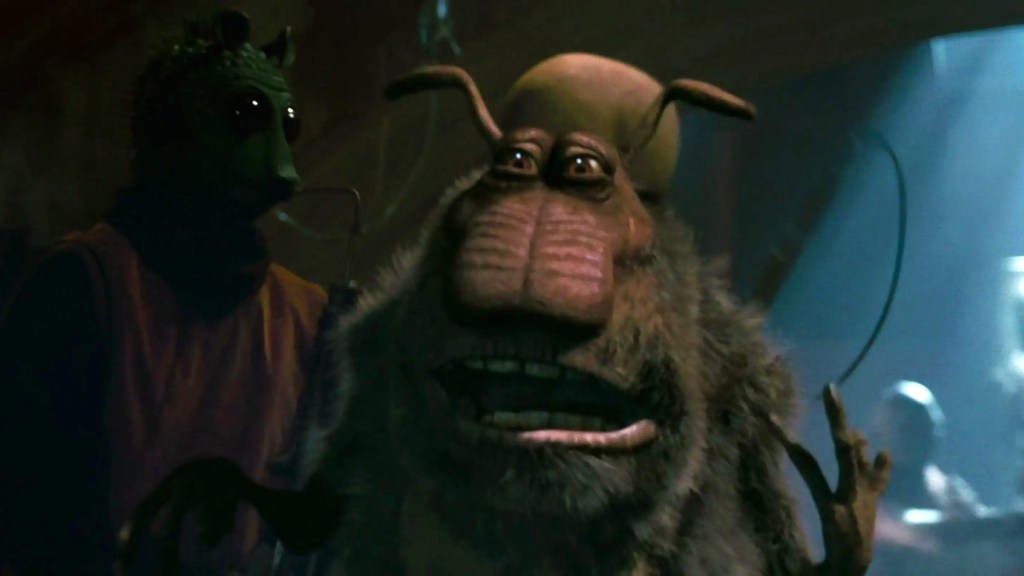
Lucas’ desire to go back and change the musical sequence in Jabba’s palace is somewhat understandable. As a filmmaker who was always interested in pushing the boundaries of technology, he was excited by the endless possibilities presented by the new digital effects and wanted to experiment with his new toys ahead of making the prequel trilogy. And while the original puppets from the theatrical cut were certainly impressive for their time, McCallum’s points about Sy Snootles hold true. Even though the character is presented as singing in the “Lapti Nek” sequence, she arguably doesn’t feel fully alive due to the limited movement.
If all Lucas did was use CGI to touch up Sy Snootles by enhancing her lip syncing and making her eyes more life-like, there’s a good chance fans wouldn’t have nearly as many problems with the changes. That would have been a far more subtle blending of the old with the new, using modern tools to enhance the viewing experience for audiences while still honoring the spirit of the original version. As it stands, Lucas went a bit too far, arguably getting carried away with the unlimited potential of the new special effects. He was so intrigued by the possibilities CGI presented that he didn’t stop to think if Return of the Jedi really needed an extended musical sequence.
The “Jedi Rocks” sequence is basically Return of the Jedi‘s version of A New Hope‘s reinserted Jabba the Hutt scene in the sense that it essentially exists as a demo for the new tech and doesn’t serve a greater purpose in the movie’s story. In A New Hope, Han Solo’s encounter with Jabba comes off as redundant because it primarily covers the same information learned in the Greedo confrontation (Han is in debt to a powerful gangster). Similarly, “Jedi Rocks” feels like change for the sake of change because it doesn’t do anything to add to the narrative. It’s just a showcase for the flashy new visual effects when “Lapti Nek” worked fine as it was.
Lucas has actually gone back and undone some bizarre special edition changes before, such as Luke Skywalker’s unintentionally comical scream after he jumps off the Cloud City platform. However, since 1997, “Jedi Rocks” has appeared on every new home media format, so it would appear this alteration is here to stay forever despite the protests of fans. The “Lapti Nek” sequence will likely be lost to time, but since Lucasfilm is surprisingly screening A New Hope‘s theatrical cut for the 50th anniversary re-release next year, perhaps they’ll do something similar for Return of the Jedi and give “Lapti Nek” one last hurrah on the big screen.
What do you think? Leave a comment below and join the conversation now in the ComicBook Forum!
Most Viewed
-

Image courtesy of Wizards of the Coast -
Image courtesy of Daybreak Game Company -

Courtesy of Bones Film