Mel Brooks made a career out of lampooning everything around him. His first TV series as a creator was Get Smart, the espionage parody that roasted the likes of the nascent James Bond films. From there, the parody only got more and more specialized. After the success of his first feature film as a director, The Producers, Brooks would deliver the likes of Blazing Saddles, a parody of epic-scope westerns; High Anxiety, roasting Alfred Hitchcock’s classic thrillers; and Silent Movie, whose source material should be obvious. Perhaps one of his best parodies didn’t stray all that far from what it was making fun of, which might be its secret weapon.
Videos by ComicBook.com
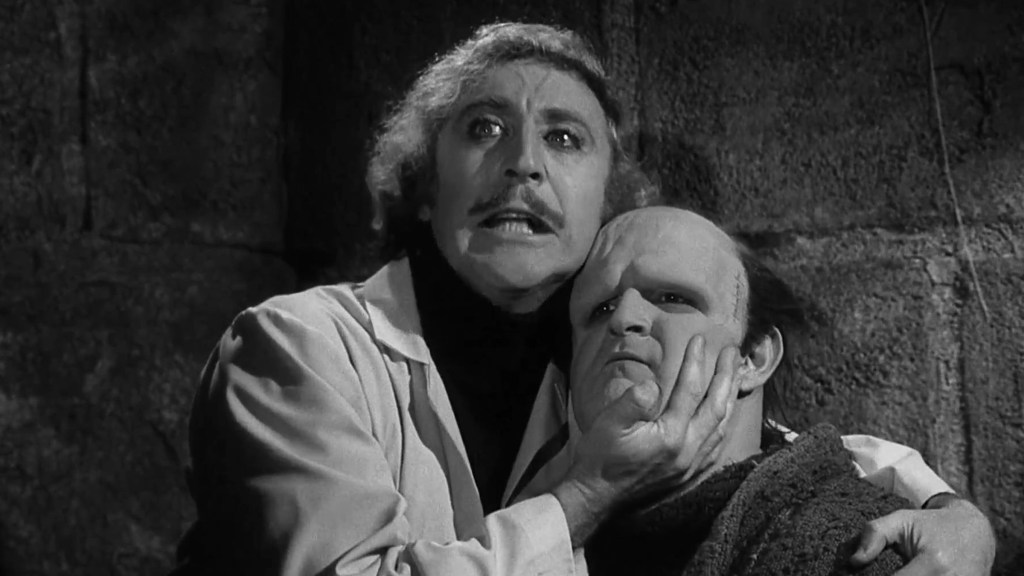
Today, fifty-one years ago, on December 15, 1974, Mel Brooks’ Young Frankenstein was officially released by 20th Century Fox. The film would go on to become a box office sensation, grossing over $80 million at the time (a figure that adjusted for inflation is well over $500 million). Young Frankenstein would also be nominated for an Academy Award for Best Adapted Screenplay, and in the years since, it has only continued to thrive culturally. Some of the best jokes in the movie, though, aren’t too different form Universal’s classic monster movies of the 1930s and 40s, which adds an even funnier layer.
Young Frankenstein Isn’t That Far Removed From What It’s Making Fun Of
Though film fans may know James Whale’s 1931 Frankenstein and 1935’s Bride of Frankenstein, the series didn’t stop there as Universal continued to pump out new movies with the name of Mary Shelley’s creation, including 1939’s Son of Frankenstein. On its surface, there’s a lot about that film, directed by Rowland V. Lee (The Count of Monte Cristo) and starring Basil Rathbone as the titular character (Baron Wolf von Frankenstein), that is translated immediately into both the setup of Young Franksntein as well as the aesthetic function of many sequences.
Gene Wilder‘s Frederick Frankenstein may be the grandson of the original doctor in the Brooks’ parody, but Rathbone’s character is revealed as the actual son as the action begins. Both have nearly identical physical appearances, including thin mustaches and snappy, noir-inspired dress that stands out from the larger “vague European village” look of the rest of the cast. Son of Frankenstein has the title character eager to clear the family name, unconvinced of the tall tales of the preceding movies, while film fans know good and well that Frederick Frankenstein believes his grandfather’s work was doo doo.
Other key characters are pretty close as well, like Teri Garr’s Inga whose appearance is remarkably similar to Josephine Hutchinson’s Elsa von Frankenstein, the wife of Wolf, down to the bouncing blonde hair. Both Frankenstein men also have lab assistants, with Marty Feldman as hunchback Igor in Young Frankenstein and none other than Bela Lugosi as Ygor in Son of Frankenstein. Though neither looks all that similar beyond their humps.
Beyond the aesthetic similarities, there are scenes that have the same setup as well, like one where Frankenstein plays darts with an inspector, the town holds a meeting about what they should do about a new Frankenstein, and even an extended close-up of the original Frankenstein’s grave. The biggest difference in Son of Frankenstein and Young Frankenstein, beyond the intentional yucks, is the use of the monster itself. In the former, it’s Ygor that uses the monster as his puppet, sending him out into the world to kill in an act of revenge, whereas the Brooks movie maintains its silly demeanor throughout, with Igor never quite making a full heel turn and the monster stumbling his way through different scenes that are themselves direct parodies.
Young Frankenstein’s Direct Parody of Universal’s Monster Movies Is Underrated
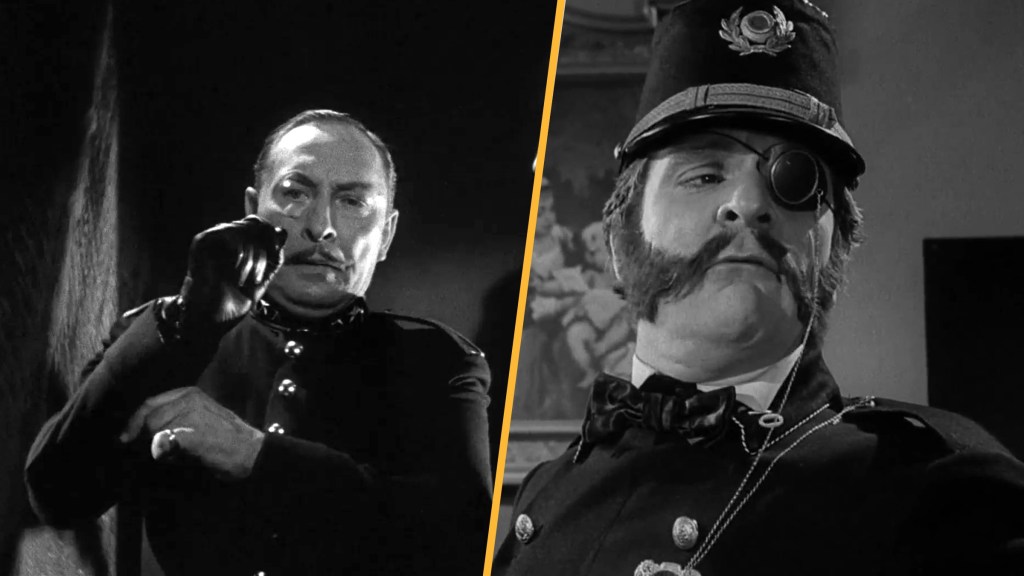
Some of the funniest moments in Young Frankenstein are not only rooted in direct parody of key scenes from the Universal monster movies, but they also take instances that are incredibly grim in context and make them hilarious. The biggest example of this is Inspector Kemp in Young Frankenstein, the wooden-armed policeman of the village who clicks and clacks his appendage about throughout the movie, using it to light a cigar and even hold his darts.
Viewers may assume that this was just a clever invention by Brooks and Wilder, but no, it comes directly from Son of Frankenstein. In that film, Lionel Atwill stars as Inspector Krogh, a policeman with a wooden arm and a monocle who tries to protect the younger Frankenstein. Naturally, the wooden arm of Inspector Krogh is not played for laughs in Son, but is rooted in tragedy, as he reveals his arm was ripped clean from its socket by Frankenstein’s monster during the events of the original film (this is a retcon as it’s unseen in either of Whale’s movies). That said, Brooks used the setup of “cop with wooden arm” in the most memorable way possible, taking a small detail from the movie he was parodying and pushing it to its limits.
Another key sequence is after the creature has escaped in Young Frankenstein and comes across a young girl. Film fans no doubt know the sequence in the original Frankenstein where the monster meets Maria and unknowingly throws her to her doom despite trying to play with her. Young Frankenstein uses this scene being a cinematic classic to its advantage. In the parody, a young girl, Helga, is throwing items into a well with the monster, only to ask, “What shall we throw in now?” prompting the monster to break the fourth wall and look directly at the audience. Once again, it’s rooted in a grim, dramatic moment, which only makes the joke itself even funnier as the young girl flies through a window and lands softly in her bed.
Finally, Gene Hackman’s uncredited appearance as the blind man in Young Frankenstein is almost directly the same scene as what occurs in Bride of Frankenstein, when the monster stumbles upon a cabin where a blind man seeks only the solace of a friend (much like the original Shelley novel). Once again, though, the blind man feeding his newfound friend and even offering him a cigar is taken directly from the original movie, but Brooks knows the exact ways to push it two degrees in a different direction to make it hilarious (Hackman spills piping hot soup on the monster’s crotch, and lights his finger on fire instead of the cigar).
To gain a better appreciation for Mel Brooks’ Young Frankenstein, it would be best served as the second film in a double bill with Son of Frankenstein. What makes this pairing so special is not only showing off just how similar the two movies really are in the end, but in revealing how much Brooks and his team paid attention to the details of the original Universal monster movies, and clearly loved them.
Most Viewed
-
Image courtesy of Virgin Films -

Pierrot Films / Viz Media -
Image Courtesy of Netflix