In the late 2010s, the Marvel Cinematic Universe had cemented itself as the premier blockbuster franchise of its era with a plethora of box office hits under its belt. Whether the headlining hero was one of Marvel’s most popular characters (Spider-Man: Homecoming) or a group of obscure space adventurers (Guardians of the Galaxy), seemingly anything Marvel touched turned to gold and was a major success. As the wins continued to pile up, there seemingly was nowhere left for Marvel to go, but unbeknownst to most, the MCU still had some incredible heights to scale. In 2018, Marvel released a movie that made all kinds of history.
Videos by ComicBook.com
No, we aren’t talking about Avengers: Infinity War. On February 16, 2018, Black Panther debuted in theaters. Going in, the film was envisioned as a precursor to the massive crossover that was Infinity War, but Black Panther quickly became the defining cinematic event of the year and a towering achievement that exceeded even the rosiest of expectations.
Black Panther Broke Several Box Office Records

A couple of years before Black Panther came out, Chadwick Boseman made his first appearance as the character in Captain America: Civil War. The actor made a memorable impression in his supporting role, fueling interest and excitement in seeing him headline a solo movie. While Marvel fans were certainly looking forward to seeing Boseman in the spotlight, few could have predicted what Black Panther was going to accomplish. Receiving universal acclaim, the film grossed $202 million domestically in its opening weekend, which is still the all-time record for February. Over the extended Presidents Day weekend, Black Panther‘s haul increased to $242.1 million in the United States.
Black Panther ended its run with $700 million domestically and $1.346 billion worldwide. It became the first MCU movie to reach $700 million in the U.S. alone, a feat that has only been accomplished by two franchise installments since: Avengers: Endgame and Spider-Man: No Way Home. Yes, Black Panther made more than Infinity War ($678.8 million) and topped the 2018 domestic chart. Globally, Black Panther was the first Marvel movie that didn’t feature an original Avenger to reach the $1 billion milestone, showing that the MCU could thrive even without Iron Man or Captain America. Ryan Coogler’s blockbuster is also the highest-grossing film by a Black director in history (domestically and internationally), narrowly edging out F. Gary Gray’s The Fate of the Furious ($1.236 billion).
Black Panther didn’t just break records at the box office. It also set a new standard for the MCU in terms of critical reception. It still boasts the MCU’s highest Rotten Tomatoes score (96%) and was the first MCU movie to win an Oscar (taking home three: Best Original Score, Best Production Design, and Best Costume Design). However, the most notable bit of history Black Panther made at the Academy Awards came in a category where it didn’t win. It became the first superhero movie to be nominated for Best Picture, demonstrating that Oscar voters were capable of looking past the genre elements and comic book sensibilities to embrace a blockbuster that became a pop culture phenomenon and resonated with audiences around the globe.
The combination of unprecedented commercial and critical success is what makes Black Panther such a monumental moment in film history. Box office numbers are not always indicative of film quality, but in Black Panther‘s case, the figures were an illustration of how strongly the movie connected with audiences. Black Panther is a great film — not just a great comic book film — and it’s deserving of all the records it holds. In many ways, Black Panther was a flashbulb moment for Hollywood, and it’ll be difficult for any upcoming film to challenge its marks. Even its sequel, Black Panther: Wakanda Forever, fell short.
The Legacy of Black Panther Continues To Be Felt in the MCU

Black Panther was much more than just a big-budget studio tentpole. It was a very important landmark for the MCU because of what it meant — not in terms of the story of the Infinity Saga but fans and the world. Prior to Black Panther, there had been comic book adaptations with a Black lead (Blade), but this was the first MCU installment to put an African-American character front and center. It was a significant step forward with regard to representation in Hollywood blockbusters, one that was long overdue. The success of Black Panther immediately dispelled any notions some had about the box office prospects of Black-led tentpoles, demonstrating international audiences were hungry for a fresh and fascinating take on the superhero movie formula.
What sets Black Panther apart from its contemporaries is its storytelling approach. The narrative is thematically rich, exploring pertinent societal issues and concerns that are still relevant today. Though Coogler was painting on the very large canvas of a major comic book blockbuster, he told a tale about the Black experience in America that felt intimate and personal, elevating Black Panther the same way he elevated fellow IP film Creed. There’s a tremendous amount of depth in the film, which is why Killmonger remains one of the finest villains in MCU history. He wasn’t just a one-note antagonist; he was a well-rounded character who represented something significant, and even if the audience didn’t necessarily agree with all of his methods, they understood his powerful message.
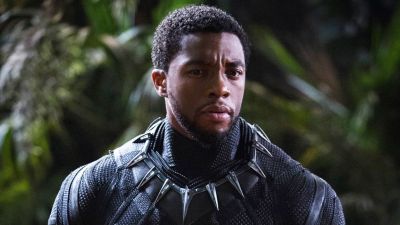
It’s hard to imagine Black Panther being as successful as it was without the presence of Boseman. He proved to be the perfect actor to portray T’Challa, commanding the audience’s attention with a regal and authoritative screen presence. Boseman should have been one of the faces of the MCU in the post-Endgame era, but he tragically passed away in 2020 after a private battle with colon cancer. Though Boseman’s time in the MCU was cut short, he left behind a legacy that’s still felt to this day. Black Panther: Wakanda Forever was reshaped in the late actor’s memory and served as a rousing tribute to the impact he made on his colleagues and the franchise. Rumors persist Marvel could be looking to recast T’Challa now, but it’s understandable why they haven’t yet. Boseman became so synonymous with the character, the void is impossible to fill.
The enduring legacy of Black Panther is still present as we approach the end of the Multiverse Saga. Shuri, M’Baku, and other Wakandans were a key part of the fourth and final teaser for Avengers: Doomsday. So far, the Doomsday marketing campaign has leaned heavily on Marvel legacy elements like Steve Rogers, Thor, and the X-Men — characters who mean a lot to general audiences. That the Wakandans fit under that umbrella is a testament to Black Panther and the incredible effect it had on people. It’s firmly established as one of Marvel’s premier properties, and it should have a fruitful future in the years to come.
What do you think? Leave a comment below and join the conversation now in the ComicBook Forum!
More Movies
-

Image Courtesy of Netflix