Years go by, and horror remains one of the most popular genres out there, but like any other, it has gone through several changes over time. And one of the earliest turning points happened almost a hundred years ago with a very specific film about monsters. But in reality, it wasn’t about a creature appearing out of nowhere just to scare people — it was about an Egyptian priest who returns to life after centuries of punishment, driven by an obsession that blends love, revenge, and power. The film’s intention wasn’t purely what audiences expected from the genre, because it also wanted to mix in adventure, romance, and fantasy. Everything was carefully constructed, from subtle glances and shadows to the physical presence of terror itself, which somehow managed to be fascinating even though everything was in black and white.
Videos by ComicBook.com
In 1932, a new figure arrived who would become iconic and timeless alongside Dracula and Frankenstein. Scary, alluring, and strange are what would define him from that point on. And if today we have horror characters who leave a mark through the way they look, touch, and manipulate those around them, a lot of that can be traced back to this old production. This is about a masterclass in pure tension that’s hard to believe was made back then and not today.
The Mummy Revolutionized Horror Cinema in 1932

Many people today are familiar with The Mummy remakes, but everything actually began in the ’30s, directed by Karl Freund and starring Boris Karloff as the now-famous Imhotep, a priest condemned to death who returns to life in search of his lost love. The story revolves around archaeologists who unearth his tomb, causing him to awaken and begin hunting down anyone who stands in his way. And yes, even if it sounds too old to be scary, there are still people today who watch the classic and find themselves impressed and genuinely unsettled by it. But it goes further than that, because the movie is hypnotic and proves that long before more emotionally bold horror productions existed, with suspense and even a touch of romance, this one already paved the way.
The original The Mummy didn’t just introduce one of the most memorable villains in cinema history; it also helped solidify what we now call the Universal Classic Monsters. Imhotep brought something different, both physically and emotionally, by reshaping the idea of a monster: he wasn’t just a creature meant to be feared, but someone with clear, obsessive goals, full of emotion and mystery. On top of that, the film showed that horror could be more sophisticated if it wanted to be, relying on atmosphere and a cohesive narrative.

In the early ’30s, many productions leaned heavily on cheap scares, cartoonish monsters, or simple tricks. The Mummy proved that tension and fear could also come from shadows, sets, lighting, and music — all working together to create discomfort, along with a well-structured story meant to support the overall narrative and even develop the villain. In other words, there was no need to rely on screams or exaggerated monsters; the horror came from the story, the character’s presence, and how everything was carefully connected.
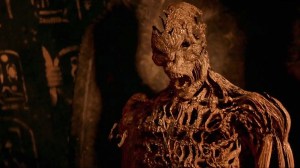
Today, that kind of approach feels normal — because it is. If you look at IT by Stephen King and the series IT: Welcome to Derry, for example, you can clearly see the depth behind Pennywise, but that type of character work only exists because pioneers like The Mummy came before it. The classic has a serious legacy, and you can see its influence even in adventure movies built around supernatural elements, such as Pirates of the Caribbean: The Curse of the Black Pearl and Prince of Persia: The Sands of Time. It became a foundational formula for many modern productions, especially in the way it allowed the 1999 remake to turn into a full-blown franchise and explode in popularity.

The success of the newer The Mummy came from knowing how to apply the classic concepts while updating them just enough to turn it into a blockbuster. Rick O’Connell (Brendan Fraser) is the kind of hero you naturally root for: funny, confident, and constantly getting himself into impossible situations without feeling like a cliché. Evelyn (Rachel Weisz), on the other hand, isn’t just a “damsel in distress” — she’s a smart archaeologist with real presence. Together, they created a chemistry that keeps the audience engaged, while the film delivers action, impressive visual effects for its time, and a story that manages to be both fun and intriguing. It’s the perfect balance that later sequels tried (and often failed) to recreate.
After 1999 came The Mummy Returns in 2001, expanding the universe with the Scorpion King and a more fantastical tone, followed by the third installment in 2008, which moved the story to ancient China but completely lost the charm of the first two films. In 2017, the Tom Cruise reboot attempted to reinvent everything as part of the failed Dark Universe, but it didn’t connect with critics or audiences. So the lesson is pretty clear: trying to change too much strips away the essence that the 1932 film established — the very spark that keeps the name The Mummy relevant to this day. And the upcoming The Mummy 4 seems to finally understand that.
The Mummy 4 Is Exactly the Movie Fans Have Been Waiting For

Now, 26 years after the beloved and unforgettable remake, the fourth film is officially in development and expected to be released next year. Expectations are high, especially because Fraser and Weisz are set to return — the true core of the franchise. But what’s drawing even more attention is that Fraser himself has said this is the project he’s been waiting years to make. In a recent interview with Associated Press, he revealed that while he had a good experience making The Mummy: Tomb of the Dragon Emperor, it wasn’t the movie he truly wanted. “The one I wanted to make is forthcoming. And I’ve been waiting 20 years for this call. Sometimes it was loud, sometimes it was a faint telegraph. Now? It’s time to give the fans what they want,” he shared.
Not much is known about the plot yet, but it’s already confirmed that the script will respect the continuity of the first two films while largely ignoring the third (which is a strong sign that the production understands what worked and what didn’t). Essentially, the fourth movie aims to correct the ending that the third one delivered — and not in a good way. In recent years, we’ve seen countless franchises get derailed by unnecessary reboots and shared universes that feel more focused on merchandising than storytelling. Here, the goal is to make audiences care again and deliver a conclusion worthy of The Mummy‘s legacy, with the characters fans fell in love with, real danger, action, humor (something the overly serious 2017 version lacked), and a villain that actually feels threatening. It sounds obvious, but the truth is, very few movies get the basics right.
If done properly, this new film could even redefine the franchise for a new generation. Modern audiences want strong action, but they also want to feel the weight of the situations and believe the characters aren’t just moving through a checklist of plot points. That balance has always been part of The Mummy at its best (including the 1932 classic), and it’s exactly what this new production promises to bring back. It’s an approach that respects the past while still delivering something fun and fresh, without unnecessary excess. The Mummy 4 is shaping up to be exactly what fans have been waiting for all these decades.
Are you a fan of The Mummy? How excited are you for the new movie? Leave a comment below and join the conversation now in the ComicBook Forum!
Most Viewed
-

Official art by Bastien Lecouffe-Deharme -
Image courtesy of Tor Books/Macmillan -

A photo of the Retrovolt Arcade taken in 2017, showing several classic arcade cabinets and stools. -

Courtesy of Saber Interactive -

Courtesy of TOHO Animation