A new trailer for Avengers: Doomsday reveals a major Marvel Cinematic Universe return — and reignites an Endgame debate that even the writers and directors couldn’t agree on. Avengers: Doomsday is set to hit theaters on December 18, 2026, bringing Robert Downey Jr. back to the MCU as the infamous Doctor Doom. And he’s not the only star making a comeback after an emotional send-off in Avengers: Endgame. After much speculation, it’s confirmed that Chris Evans’ Steve Rogers will also appear in the upcoming film.
Videos by ComicBook.com
Marvel’s campaign to build excitement for Avengers: Doomsday saw it releasing four different teasers ahead of theatrical screenings of Avatar: Fire and Ash. And one Doomsday teaser tells us Steve Rogers will be back after showing him with a baby (presumably his and Peggy Carter’s). Marvel hasn’t revealed much else about Evans’ return, but there’s a good chance it will revive Endgame‘s biggest unresolved argument. Unfortunately, it has the potential to make it worse, too.
Steve Rogers’ Return in Avengers: Doomsday Will Reignite Endgame’s Time-Travel Debate
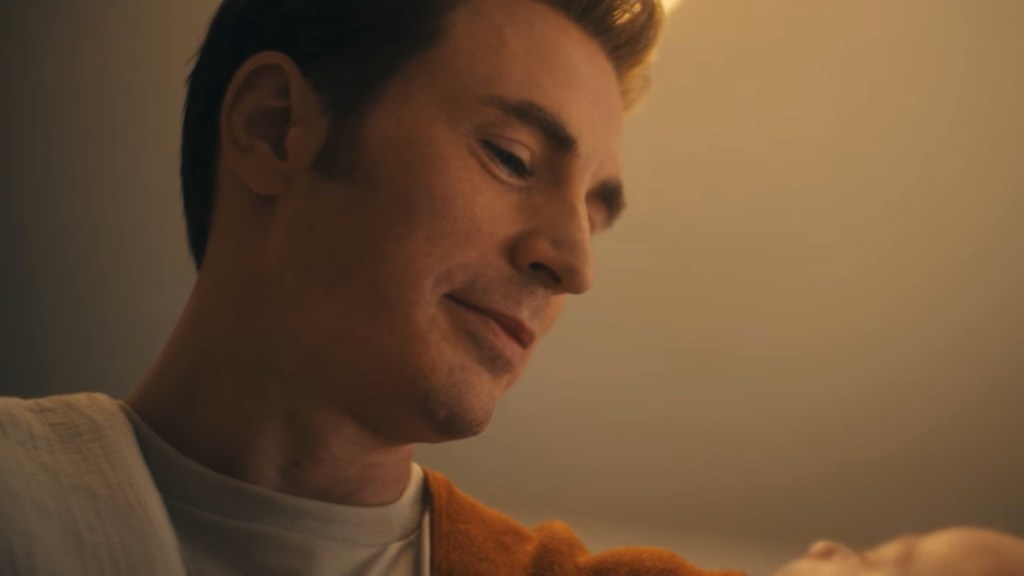
There’s a lot to love about Avengers: Endgame, but its biggest criticism comes from its approach to time travel. Utilizing time travel in any fictional story is risky, as it requires careful planning to get it right — and even then, franchises tend to create paradoxes and break their own rules when the time comes for a sequel. The MCU doesn’t even wait that long to throw its time-travel mechanics into chaos, however. Avengers: Endgame contradicts itself by the end of the movie.

Prior to this, we’re told that the MCU’s version of time travel doesn’t impact a timeline’s past or future. Instead, the act of changing something in the past causes the timeline to branch off, creating a new reality that unfolds without affecting the original. This is murky on its own, but it’s passable. However, it gets messier when it comes to returning the Infinity Stones to their rightful timelines — a fix that seems iffy at best — and especially when Steve chooses to remain in the past with Peggy Carter.
The latter is the cause of a major debate, as it’s not initially clear how this works. There are two options: either Steve goes into his own timeline’s past, when he’s frozen in the ice, and lives out a very different version of his life with Peggy. Alternatively, he could remain in one of the alternate universe’s pasts with her. Both of these options come with their own sets of problems, and the wildest thing is that Endgame‘s writers and directors don’t even agree on which is correct.
Even Avengers: Endgame’s Writers & Directors Couldn’t Agree on the Time Travel Mechanics

The finer details of Steve Rogers’ trip through time aren’t just a hot topic of debate among the MCU’s fan base. The argument is one that even the creatives behind Avengers: Endgame are on different pages about. Back in 2019, directors Joe and Anthony Russo told Entertainment Weekly that Steve had traveled to an alternate universe to be with Peggy. This seems like the cleanest scenario in terms of staying consistent, but it still raises questions and problems. For one, why would another universe’s Peggy want to be with the original timeline’s Steve, and where is that universe’s Captain America? There’s also the mystery of how and why Steve returns to the main timeline as an old man. And after seeing Loki, it’s obvious the Time Variance Authority should have intervened.
Perhaps this is why screenwriters Christopher Markus and Stephen McFeely disagree with the directors about Cap’s ending. Not long after Endgame‘s release, they told Fandango:
“We are not experts on time travel, but the Ancient One specifically states that when you take an Infinity Stone out of a timeline it creates a new timeline. So Steve going back and just being there would not create a new timeline. So I reject the ‘Steve is in an alternate reality’ theory. I do believe that there is simply a period in world history from about ’48 to now where there are two Steve Rogers. And anyway, for a large chunk of that one of them is frozen in ice. So it’s not like they’d be running into each other.”
This comes with its own issues, like the fact that Steve would need to never interact with anyone to avoid causing a bunch of branches in the main timeline. After all, even small actions can have larger consequences, changing things unexpectedly. No matter how you shake it, Steve’s conclusion comes with contradictions. And his return in Avengers: Doomsday isn’t just going to spark this conversation again; it’s probably going to make it more complicated as well.
Doomsday Has the Potential to Make Endgame’s Time-Travel Problems Worse

With the Russo brothers directing Avengers: Doomsday, we can probably assume they’re going with their version of Steve Rogers’ ending: the alternate timeline. The 2026 film has the potential to make the arguments surrounding Steve’s Endgame fate worse, however, as it will likely need to jump through hoops to properly explain his return. Such explanations often make complex plot devices like time travel even more confusing, and it’s likely the movie will wind up contradicting itself again somehow. Although Steve’s initial send-off has its issues, it might have been better to leave it as-is.
What do you think of Steve Rogers’ upcoming return in Avengers: Doomsday? Leave a comment below and join the conversation now in the ComicBook Forum!
Most Viewed
-

Image Courtesy of HBO Max