Ever since Godzilla Minus One became an international blockbuster in 2023, becoming the highest-grossing Godzilla movie produced by original studio Toho and the only film in the seventy-year history of the kaiju to win an Academy Award, fans have been very eager for the next entry in the series. The good news is that filmmaker Takashi Yamazaki was quickly confirmed to return for the sequel movie, which will carry the title Godzilla Minus Zero. Though the film isn’t set to arrive in theaters until this November (with a simultaneous global release), the first look at the sequel was finally released this week with plenty of teases and reveals about the film.
Videos by ComicBook.com
The first footage from Godzilla Minus Zero confirmed a few things, namely that the setting is now two years after the events of the last movie. Furthermore, it seems like the American military will play a part in the film in some way, as tests for new nuclear weapons appear to create a brand new threat, one that causes gravity distortions and even reveals Godzilla himself has slightly mutated from the last time we saw him. Most importantly, though, and how it connects to the franchise at large, was the final scene of the trailer, revealing Godzilla has made his way to New York City, his first trip in decades.
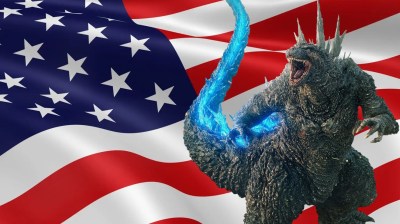
Godzilla Minus Zero Ends a Near 60 Year Drought of Trips to New York

Despite international appeal, Godzilla’s time on the big screen has largely been about attacking cities in Japan, fighting aliens on other planets, or the goings on on Monster Island. There have been times in Toho’s original movies when the kaiju or his cohorts travelled internationally, but it’s largely uncommon. Some fans may assume that Godzilla’s ventures to American cities happen with frequency thanks to the Legendary movies, which show him attacking O’ahu, San Francisco, Boston, and even Pensacola, but it’s rare.
The last time that Godzilla made his way to New York City in a Toho-produced feature film was 58 years ago, in Ishiro Honda’s kaiju mash-up movie Destroy All Monsters. Released in 1968, the film features an alien race called the Kilaaks who gain control of all the kaiju on Earth and hold the planet hostage unless they agree to their terms. When humanity doesn’t agree, they let the monsters loose on the planet and have them attack a slew of cities, with Rodan smashing Moscow, Mothra attacking Beijing, Gorosaurus stomping on Paris, and most importantly, Godzilla making a trip to the Big Apple, New York City.
The sequence of Godzilla in New York is less than 30 seconds across the entire run time of Destroy All Monsters, and shows the king of the monsters standing in a harbor and blowing up buildings from the water (as he is wont to do). In truth, the scene only features the Empire State Building and the UN Building as recognizable landmarks to even make it clear that it IS New York City. Between the quickness of that scene from 58 years ago and the 1998 remake of Godzilla, Godzilla Minus Zero has the chance to make history for the kaiju.
Godzilla Minus Zero Can Fully Correct the 1998 Remake
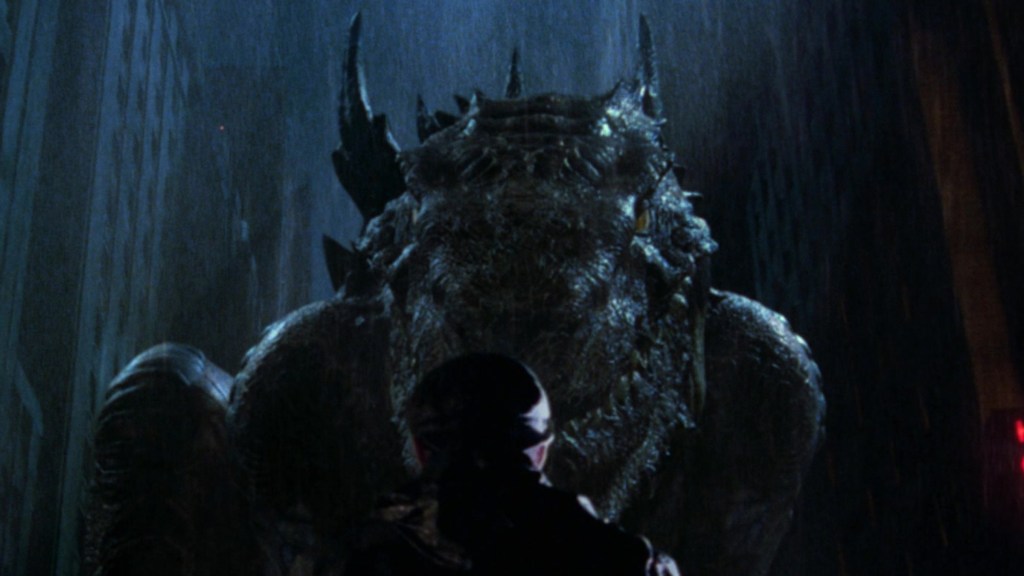
One of the darkest marks on the larger Godzilla franchise is a movie that Toho themselves had no hand in making, Roland Emmerich’s remake, which took a critical drubbing upon release (it stands at 20% approval). Though the film generated a ton of revenue at the global box office and through product tie-ins (with an iconic Taco Bell collab) and an animated series, it still remains a lowpoint for the monster for a slew of reasons, namely, being a big dumb blockbuster that left behind a lot of what made Godzilla movies interesting.
Though hardly the biggest issue with Godzilla (1998), one of its biggest problems is that, despite having the entire framework of New York City as a playground for the monster at a scale that Toho never dreamed of, it didn’t do much at all with it. In fact, a ludicrous assertion across the 1998 movie is that the army, and the entire population of New York City, completely lose track of Godzilla multiple times as it runs around the city, leaping out to attack briefly, and then hiding once again in some kind of unseen tunnel. It’s an absurd development and a plot convenience that the film leans on too many times, with the city itself seldom feeling the effects of his presence (save for Madison Square Garden being leveled, and the Brooklyn Bridge being flattened).
To that end, Godzilla Minus Zero has a great opportunity to correct the errors of the 1998 movie, and build on the ideas briefly seen in Destroy All Monsters, by showing Godzilla actually attack New York City. Though it hardly has the skyline it does now, New York City in 1949 had its fair share of skyscrapers already piercing the clouds, and was a bustling metropolis of people, cultures, and neighborhoods. Not only can Godzilla Minus Zero bring the kaiju to America and have him inflict a level of destruction not seen before on the big screen, but it will adhere to the fact that Godzilla is a force of nature that cannot simply hide in a city of eight million people.
More Movies
-
Courtesy of 20th Century Studios -
IMAGE COURTESY OF SUNBOW -

Image Courtesy of Overture Films and Relativity Media