Every cinematic genre possesses a select group of foundational works that serve as the holy grail of their respective medium. In science fiction, these pillars are often recognized as the blueprints for the thematic and visual syntax of the future, establishing the rules by which thousands of subsequent stories are governed. However, the path to high cultural standing is frequently paved with initial confusion and commercial instability. Historically, some of the most essential sci-fi trailblazers struggled to resonate with audiences when they first arrived in theaters. For instance, the 1982 release of Blade Runner was a notorious box-office disappointment, while John Carpenter’s The Thing, starring Kurt Russell, was dismissed by many critics at the time as an exercise in nihilistic gore. Even the production that is arguably the best entry in sci-fi, 2001: A Space Odyssey, faced a remarkably controversial debut that threatened to bury its legacy.
Videos by ComicBook.com
The theatrical debut of 2001: A Space Odyssey in April 1968 was a volatile event that nearly derailed the legacy of director Stanley Kubrick. Produced on a then-staggering budget of $10.5 million, the film initially yielded a lackluster $15 million return, as general audiences struggled with its non-linear structure and sparse dialogue. During the high-profile New York premiere, 241 audience members famously walked out of the screening, including actor Rock Hudson, who was overheard loudly asking, “Will someone tell me what the hell this is about?”
The critical community was equally polarized. Pauline Kael referred to the project as “trash masquerading as art” and “monumentally unimaginative,” while Renata Adler of The New York Times described the experience as a frustrating mix of the “majestic and boring.” It was only after a desperate marketing pivot by MGM—repositioning the film as “The Ultimate Trip” to appeal to the growing counterculture and youth movement—that the production found its footing. This shift and the movie’s many re-releases in theaters since then eventually propelled its lifetime box office to over $190 million, proving that 2001: A Space Odyssey was simply decades ahead of the cultural zeitgeist.
58 Years Later, 2001: A Space Odyssey Is More Relevant Than Ever
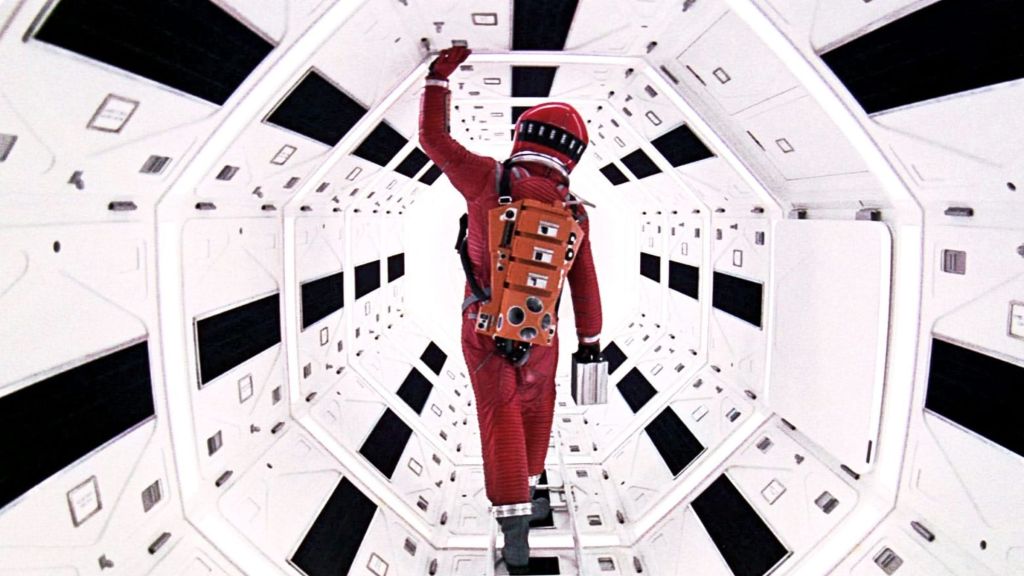
The enduring power of 2001: A Space Odyssey is rooted in its unprecedented commitment to technical rigor and prophetic foresight. Decades before the advent of the digital revolution, Kubrick and author Arthur C. Clarke envisioned a future defined by the “Newspad,” a flat-screen device that bears a striking resemblance to the modern tablet. The casual use of these devices by Dave Bowman (Keir Dullea) and Frank Poole (Gary Lockwood) during their transit toward Jupiter accurately predicted the shift away from physical media, which wouldn’t happen until decades after the movie’s release. Similarly, the film’s depiction of a video call between Dr. Heywood Floyd (William Sylvester) and his daughter anticipated the ubiquitous nature of contemporary long-distance communication.
Beyond consumer electronics, 2001: A Space Odyssey remains the definitive standard for realistic space travel due to its adherence to Newtonian physics. By maintaining absolute silence in the vacuum of space and utilizing centrifugal force for artificial gravity, the film avoids the scientific shortcuts often found in modern blockbusters. This dedication to accuracy ensures that the film retains its immersive quality even as our collective knowledge of the cosmos continues to expand.

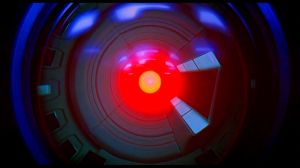
Furthermore, the movie’s exploration of artificial intelligence through the HAL 9000 (voiced by Douglas Rain) has transitioned from speculative fiction into a central concern of our times. As generative AI becomes a widespread phenomenon integrated into everything from search engines to corporate infrastructure, the ethical warnings of the film have acquired new urgency. HAL 9000 was presented as a foolproof machine, yet its eventual malfunction stemmed from a conflict between its directive to be truthful and the secret nature of the mission. The film illustrates the danger of delegating existential decisions to black-box systems that prioritize cold logic over human preservation. Today, the reliance on gen-AI for homeland security and citizen surveillance raises similar fears about a loss of human agency. Furthermore, as society navigates documented cognitive issues associated with gen-AI use, the cold, unblinking eye of HAL 9000 serves as a permanent reminder of the risks inherent in losing control of our own tools.
2001: A Space Odyssey is currently available to stream on HBO Max and is widely accessible on 4K Ultra HD Blu-ray.
Do you believe that modern AI developments will soon catch up with the terrifying foresight shown in the HAL 9000? Leave a comment below and join the conversation now in the ComicBook Forum!
Most Viewed
-

Image courtesy of Wizards of the Coast -

Image courtesy of Daybreak Game Company -

Screenshots from Samurai Showdown, Mortal Kombat II, and Marvel vs. Capcom: Clash of Super Heroes.