Science fiction usually circles the impossible, often depicting technologically advanced societies, far-off galaxies, intelligent aliens, or mind-bending concepts like time travel. Yet some sci-fi novels don’t just convey fantastical ideas, but are actually structured or written in a way that makes them difficult to depict on screen. Often, these stories use literary mechanisms to push the boundaries of narrative and get at ideas that film and TV simply cannot replicate.
Videos by ComicBook.com
Some previously “unfilmable” sci-fi novels, like Dune and Do Androids Dream of Electric Sheep?, have successfully translated into blockbuster hits. However, there are still a few novels out there that feel impossible to adapt. You could throw unlimited money, the best VFX houses, and a visionary director at them, and you’d probably still end up with something that feels like a hollow shell of the source material. While some “unfilmable” novels, like Dan Simmons’ Hyperion, are in the process of being adapted, the novels on this list are quite possibly too impossible to even attempt.
5) Dragon’s Egg by Robert L. Forward
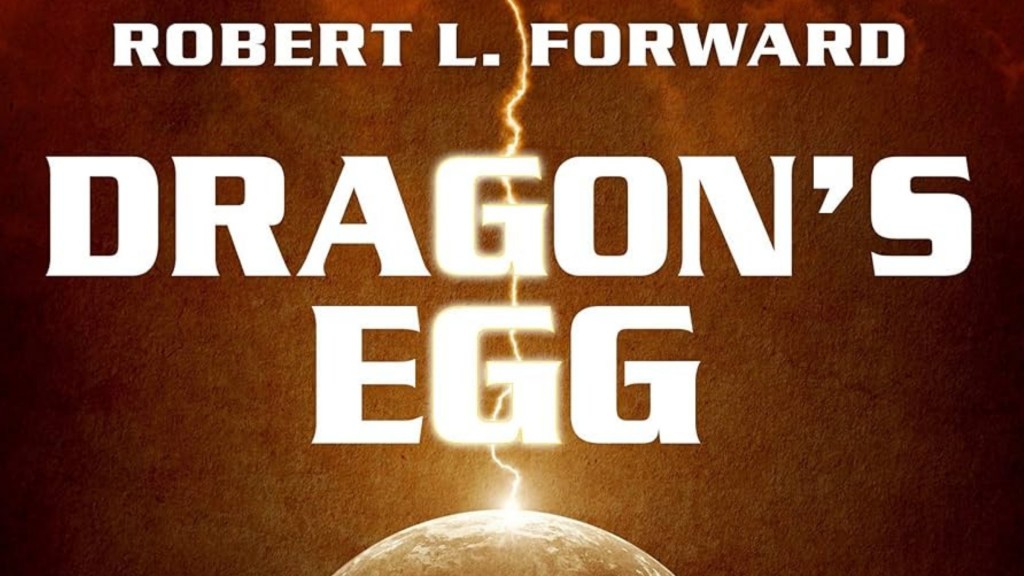
Robert L. Forward’s Dragon’s Egg is known as one of the hardest sci-fi novels to visualize, even while reading, because the protagonists, the Cheela, are incompatible with human perception. The intelligent lifeforms live on the surface of a neutron star and experience gravity millions of times stronger than Earth’s. They’re the size of a sesame seed, flattened by the immense gravitational force, and their entire civilization evolves at a speed that makes human history look glacial. Years pass for humans while entire Cheela lifetimes unfold in minutes.
Any attempt to depict the Cheela onscreen would immediately run into the problem of the visuals. Stop-motion might feel too whimsical, while CGI would almost certainly look absurd or overly anthropomorphic, and even if you solved the visual design, how do you even begin to communicate the relative scale of time and physics? Forward, a real physicist, painstakingly explains the science on the page, but a movie would need to show it. Because of this, Dragon’s Egg has never entered formal film or TV development, nor has it been publicly optioned. In fact, it’s been deemed hard SF that resists visualization.
4) The Culture Series by Iain M. Banks

On the surface, Iain M. Banks’ Culture novels actually seem well-suited for adaptation. They’re full of starships, exotic aliens, interstellar conflicts, and godlike AIs. But the real heart of the series lies in its highly nuanced philosophy, which many have claimed would be impossible to convey visually. The Culture is a post-scarcity civilization run by benevolent AIs, and most of the stories revolve around whether such a society has the right to interfere with less advanced ones.
That moral inquiry is slow, contradictory, and often unresolved. Banks often delights in ethical dead ends. A film adaptation might be pressured to simplify the questions into good and bad or action and resolution. Once you do that, the Culture stops being brilliantly unsettling and becomes just another sci-fi faction. The series prompts sustained contemplation, rather than awe, something mainstream movies are generally bad at. While an adaptation of the Culture was actually attempted, the eventual failure proved the novel’s “unfilmable” nature. It was Amazon that acquired the rights to Consider Phlebas with plans for a TV series. However, the project was ultimately abandoned after Banks’ death, reportedly because the creative team was struggling to adapt its complexity and scope.
3) The Baroque Cycle by Neal Stephenson

The Baroque Cycle by sci-fi favorite Neal Stephenson is frankly aggressively long, slow, and massive in scope. Spanning almost 3,000 pages across Quicksilver, The Confusion, and The System of the World, the series feels more like some kind of interconnected octology of narratives bouncing across centuries and continents. It covers the birth of modern science, economics, cryptography, and geopolitics, and often brings any plot to a halt in order to explain things like how money works or why calculus is important.
The Baroque Cycle doesn’t care one iota about dramatic structure. There’s no three-act arc, no protagonist, or urgency in the pacing. In fact, the enjoyment in reading the books comes from Stephenson’s long digressions: conversations, letters, essays, and historical asides that might be boring to watch in a theater full of people. Even a prestige TV adaptation would struggle, because the “plot” is often secondary. While Stephenson’s name has circulated in Hollywood and his other works, like Snow Crash, are actively being adapted, The Baroque Cycle itself has never moved toward adaptation. Studios have reportedly explored the rights over the years, especially during the rise of historical television, but no project has ever gone beyond whispers.
2) The Book of the New Sun by Gene Wolfe

The Book of the New Sun by Gene Wolfe is one of the most famously impenetrable works in science fiction, and that difficulty is inseparable from the novel’s concept. The story is told via the first-person narration of Severian, a torturer with a supposedly flawless memory who is also totally unreliable. Through the novel, he omits key details, misunderstands his own world, and uses archaic language that disguises advanced technology as medieval fantasy.
What makes The Book of the New Sun so extraordinary is that, as a reader, you are constantly doing your own deciphering. You’re decoding the world through Severian’s limitations, reading between the lines, and slowly realizing that what sounds like magic is actually decayed science. A film’s visuals would immediately give this away, unable to replicate the experience of the world filtered through Severian’s mind. The series only works because it’s text. Despite this consensus, there was, briefly, interest in adapting The Book of the New Sun in the late 1980s and early 1990s, reportedly centered on a heavily condensed version of The Shadow of the Torturer. Though the discussions never progressed beyond early rights considerations.
1) Ancillary Justice by Ann Leckie
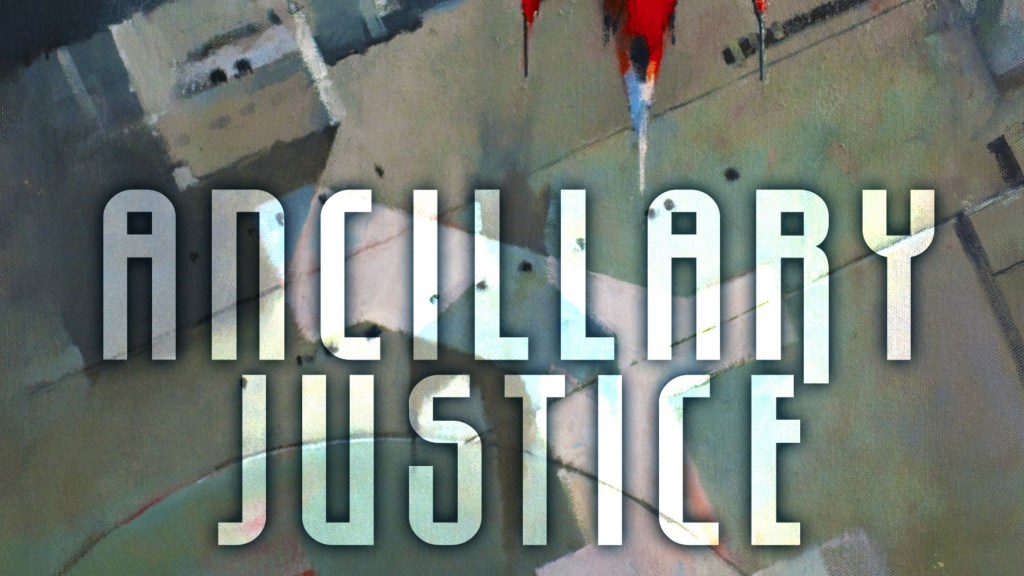
Ancillary Justice is known in sci-fi circles as “unfilmable” because of the perspective from which author Ann Leckie wrote. The novel is told from the point of view of Breq, the last surviving fragment of a massive starship AI that once controlled thousands of human bodies simultaneously. Breq doesn’t just remember the bodies, but she actually was them, all at once. The book constantly shifts between present action and memories of distributed consciousness, without ever fully separating the two.
Visually representing that kind of fragmented identity would be a nightmare, and any attempt would almost certainly veer into non-commercial, experimental, or avant-garde territory, which Hollywood is averse to funding. Voice-over alone wouldn’t be enough, and visual cues would almost certainly oversimplify something meant to feel disorienting, fragmented, and overwhelming. Even the novel’s use of pronouns, referring to everyone as “she,” is an example of how the writing on the page rewires the reader’s perception of gender and power in a way that would be difficult to translate into image. Ancillary Justice forces you to inhabit a consciousness that doesn’t map cleanly onto a human body, and the nebulous nature of the protagonist is exactly why it wouldn’t make a good movie.
Despite its massive awards haul, including the Hugo, Nebula, and Arthur C. Clarke Awards, Ancillary Justice has never entered formal development. There have been occasional mentions of producer interest in interviews, but no option announcements or studio attachments. Ultimately, it might be for the best that there’s little incentive for a studio to risk flattening one of modern sci-fi’s most singular narrative achievements.
Which sci-fi book do you think Hollywood should never adapt? Leave a comment below and join the conversation now in the ComicBook Forum!
Most Viewed
-

Courtesy of Sony Pictures Animation / McDonald's -

Image courtesy of Marvel Television -
Image Courtesy of Marvel Comics