It’s a bummer when a movie hooks you early on and keeps you interested throughout most of the runtime only to go out on a sour note. This is most often seen in horror, a genre in which many of the films seem to feel the need to include a twist or leave the audience with one final scare. Sometimes this works out just fine. For instance, the twists of The Sixth Sense and Saw work like a charm. As for final scares, the ones seen in Carrie, Friday the 13th, and Insidious all do a good job of getting you just before the credits roll. But the following endings? They don’t stick the landing at all.
Videos by ComicBook.com
However, to be included here, the ending had to be genuinely poor, not just divisive. For instance, some people hate the ending of The Mist and (the UK version of) The Descent, but those are far from terrible conclusions. They’re just devastating.
7) 1408
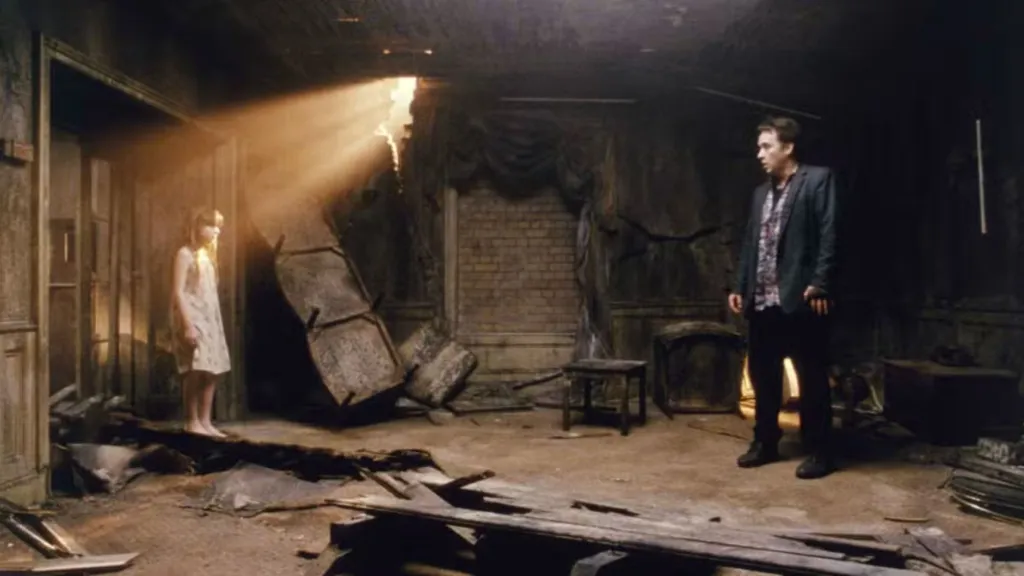
1408 has four total endings, but only two of which were actually used. In the theatrical version, John Cusack’s Mike Enslin survives the fire that consumes his hotel room (somehow) after he crafts a Molotov cocktail. He reconciles with his estranged wife and, while she’s skeptical of his story about the hellish evening, they then listen to a cassette recorder recovered from the room, which features their deceased daughter’s voice, confirming that the events we’ve just witnessed was no dream.
Then there’s the Director’s Cut ending, Mike does die in the fire. Olin, the proprietor of the hotel then tries to give the box of Mike’s possessions (including the cassette recorder) to his estranged wife at his funeral, which she rejects. Olin then sees the specters of both Mike and his deceased daughter holding hands and walking away. It’s nice to have closure in a movie, but both endings feel a little hokey (and the other two are so dour they’re best left as DVD bonus features to be watched only by completionists).
6) Sinister
The vast majority of Sinister does a great job of building on tension until it’s unbearable. The audience is coated in an aura of hopelessness that never relents. That includes in the ending, which goes the very disturbing route of having the daughter of Ethan Hawke’s Ellison Oswalt, his wife, and his son tied up and gagged. Then, little Ashley, serving as a vessel for the villainous Bughuul, chops them up. She has become just one of many children who have carried out the exact same crime in this particular house.
Now, that ending is divisive, and we said we weren’t including divisive endings. That’s why that specific event isn’t what we’re talking about. What we’re talking about is the fact the movie then feels the need to follow-up this horrendous, unsettling act with a jump scare, which was practically expected of 2010s horror movies. In other words, it was predictable, and it served to cheapen the grim, well thought out and unique ending we just witnessed.
5) The Last House on the Left (2009)
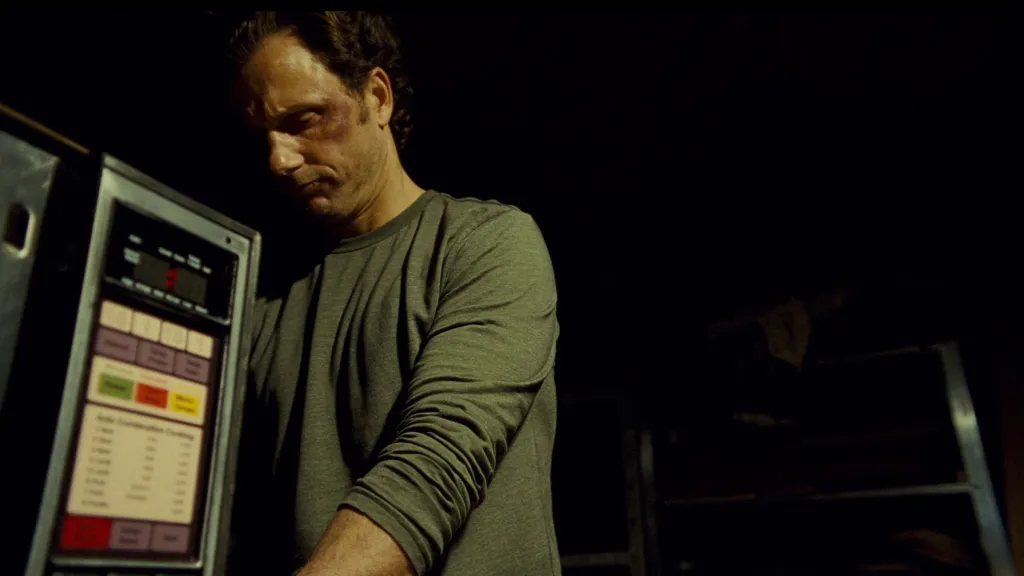
For the most part, The Last House on the Left is a solid remake of Wes Craven’s original (a movie that lied about being based on a true story). It tones down on some of the more problematic elements but still manages to make the film feel as though all bets are off.
And, by film’s end, two of the four members of the antagonistic criminal family are dead, one (who was more dragged along than similarly evil) has essentially become a part of the protagonist family, and one is incapacitated. The incapacitated one is Garret Dillahunt’s Krug, the matriarch of the criminal family. Then, even though the protagonist family has departed for the hospital, its patriarch then returns to the house and puts the other patriarch’s head in a microwave rigged to function even if the door is open. All of the sudden, the line between who is sadistic and who is not is hazy. It’s a scene that easily could have been removed and the film wouldn’t have been negatively affected in any way.
4) Friday the 13th Part III
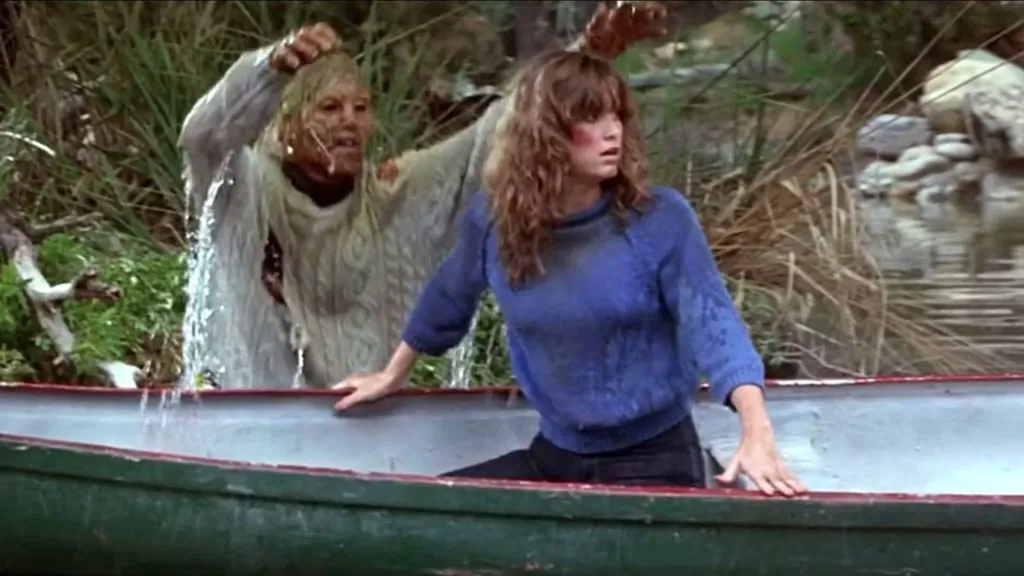
It may suffer from some gimmicky scenes included to take advantage of that classic ’80s 3D, but there’s a strong argument to be made that Friday the 13th Part III is the scariest of the bunch. Its tone is darker than the remainder of the films and it does an even better job of building tension than the first two movies (for instance, the opening at the roadside mart and every scene in and around the barn).
But just because Friday the 13th and Friday the 13th Part 2 had a leaping jump scare at the closing doesn’t mean Friday the 13th Part III should have. Especially one that makes absolutely no sense and flies like a led balloon. Jason jumping out of the water in the first film’s dream sequence was logical. Alice had heard about Jason from his mother. But why does Part III‘s Chris dream of Mrs. Voorhees? There’s no indication she’d ever heard of her much less knew what color sweater she wore.
Remember, while Part 2‘s characters discuss the legend of Jason and the events of the first film, Part III‘s do not. When Chris sees Jason’s face she says, “It’s you!” not “Jason!” What makes the lame final jump scare particularly lame is that the original intended ending was so much better. It was shot but lost, outside of a few photos online. Basically, Chris wakes up and instead of staying in the canoe she walks up to the main house, opens the front door, and gets her head chopped off by a waiting Jason.
3) Signs
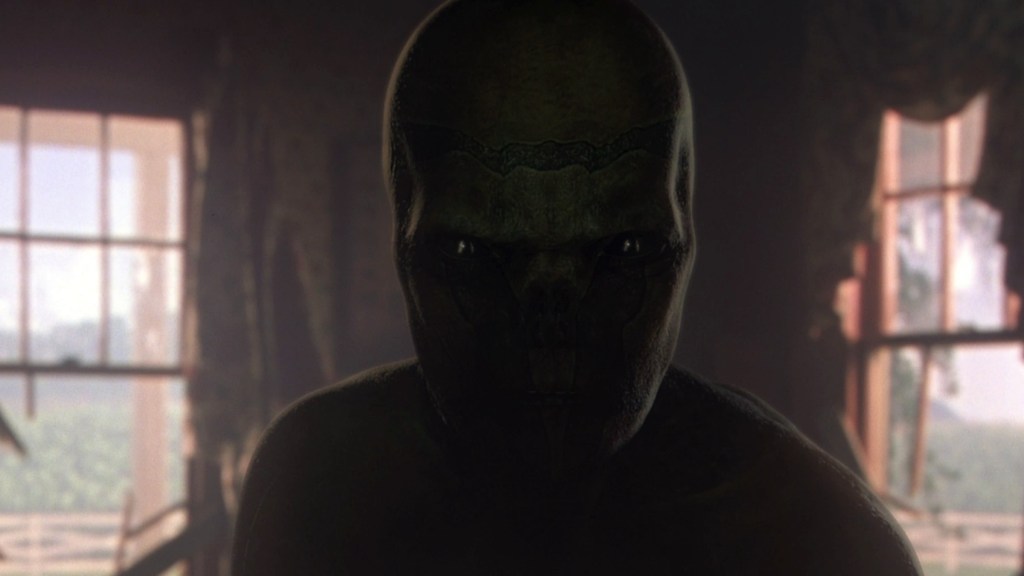
Having the aliens of Signs be afraid of water is such a cop out of an ending to what is otherwise one of M. Night Shyamalan’s best movies. For one, it’s a little too similar to how the aliens of War of the Worlds couldn’t handle the Earth’s atmosphere. Two, if you’re going to be similar to an ending, pick one that isn’t silly.
Really? These aliens with advanced resources didn’t do an analysis to see if they’re going to gag on air or have deathly allergic reactions to contact with water, something that covers much of the Earth? It flies in the face of all the tension the movie did a good job of establishing and building on.
2) Any Version of It
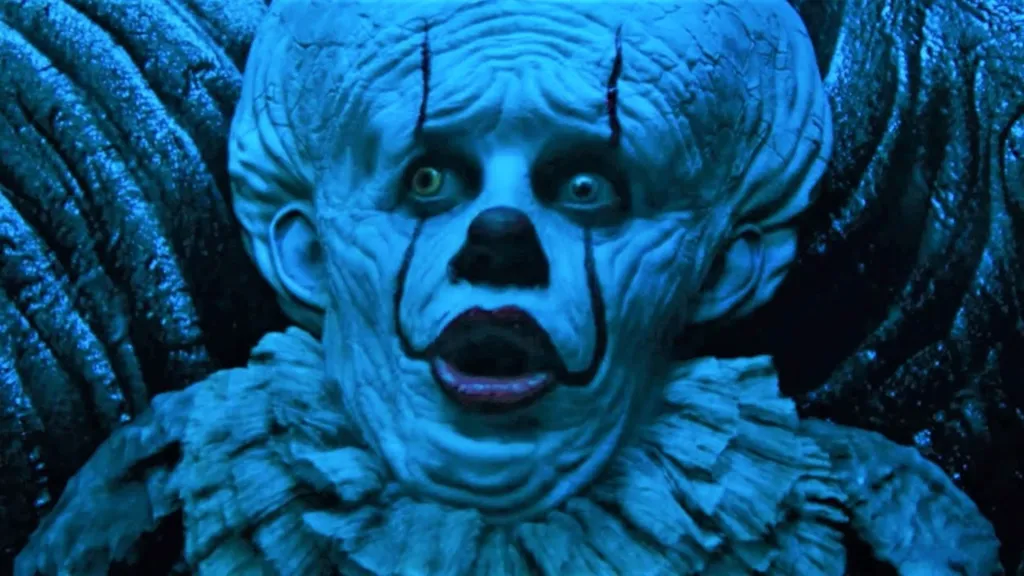
Even by his own admission, Stephen King has always had difficulties with endings. It’s pretty consistent throughout his books. But possibly the greatest offender of all is It, which goes from a genuinely terrifying clown (alien) to a goofy big ol’ spider (alien).
Considering there were four years between the release of the novel and the release of the miniseries, it’s not as if there wasn’t time to go in a spider-less direction, because it’s pretty universally dismissed as a flop of an ending. That question mark gets underlined and bolded when one considers that there was another 27 years between the miniseries and the first half of Andy Muschietti’s duology (which, yes, we’re counting as one movie). The spider should have been replaced, though at least they did continue incorporating Pennywise’s appearance in the massive arachnid.
1) A Nightmare on Elm Street
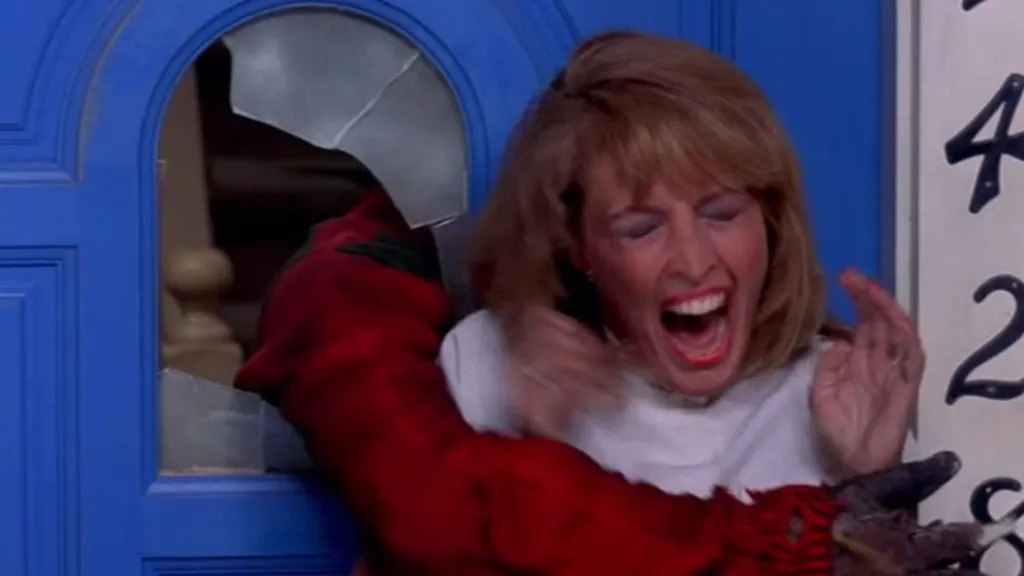
It is one hundred percent understandable why the tag scene exists in A Nightmare on Elm Street. Technically, the movie ends as soon as Nancy turns her back on Freddy Krueger, who then fades away, utterly defeated. Were it to have cut to credits right then and there it would have been jarring. Then there’s the franchising factor. You end your movie, which has a great villain, with a button scene, that amounts to a promise for more.
And as far as tag scenes go, A Nightmare on Elm Street‘s plays fine on paper. In execution, it’s pretty silly. For one, it toys with reality a bit too much. Are Nancy’s friends and mother dead or are they not? Is a car with a roof featuring the same pattern as Freddy’s sweater really all that scary? Then there’s the way Nancy’s mom, Marge Thompson, is yanked through the front door’s window panel. All of the sudden she’s an inflatable doll moving so quick it’s as if she got sucked out of a plane’s open emergency door mid-flight.
Most Viewed
-

Image courtesy of Netflix -

Image Courtesy of Netflix -

Image Courtesy of Devolver Digital -
Image Courtesy of DC Comics