For over a century, The Walt Disney Company has maintained its status as the preeminent force in global pop culture. This longevity is the direct result of Disney’s ability to craft films that function as permanent fixtures in the home, moving beyond their initial theatrical windows to become essential media for multiple generations. The Walt Disney Studios utilizes a precise combination of groundbreaking animation technology, narrative structures rooted in universal archetypes, and musical compositions engineered for immediate and lasting retention. In addition, by prioritizing high production values and meticulous world-building, the company ensures that its stories remain fresh during subsequent viewings, rewarding audiences for their continued engagement.
Videos by ComicBook.com
As the industry evolved, Disney strategically absorbed other titans of the entertainment sector, including Marvel Studios, Lucasfilm, and Pixar, to solidify its market dominance. However, this list focuses specifically on films released under the primary Disney banner, spanning traditional and digital animation, big-budget live-action spectacles, and cultural touchstones tailored for the Disney Channel. It’s also worth underlining, for clarity’s sake, that the following movies are not necessarily the best Disney productions, but rather the ones with a high rewatch factor—the ease with which a fan can pick them up and experience a high level of enjoyment regardless of how many times they have seen the story.
7) High School Musical
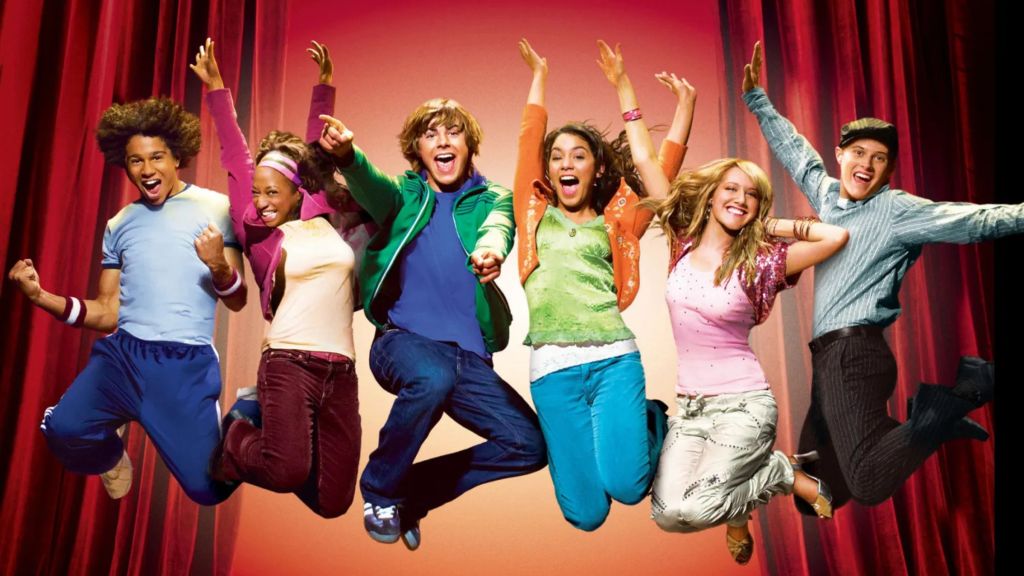
High School Musical fundamentally altered youth-oriented programming by successfully reintroducing the musical genre to its contemporary teenage demographic. The movie follows Troy Bolton (Zac Efron), a star athlete who challenges the rigid social hierarchy of his school to audition for a theater production alongside the academically gifted Gabriella Montez (Vanessa Hudgens). The rewatchability of High School Musical is tied to its high-energy soundtrack and the earnestness of its ensemble cast, which captures a specific era of pop culture with infectious enthusiasm. Furthermore, director Kenny Ortega utilized his extensive background in choreography to create visually engaging dance sequences that remain a highlight of the production. While the plot of High School Musical utilizes familiar high school tropes, the charisma of the lead performers and the technical precision of the musical numbers provide a level of escapism that remains incredibly effective for returning viewers.

6) National Treasure
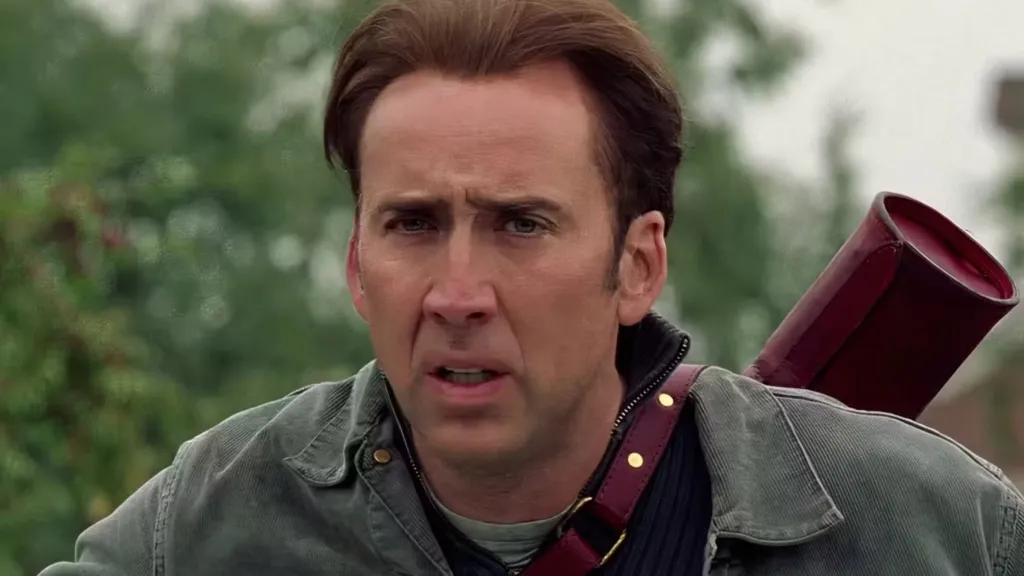
National Treasure functions as a fast-paced heist movie disguised as a historical adventure, making it an ideal candidate for repeated viewings. The plot revolves around historian Ben Gates (Nicolas Cage) stealing the Declaration of Independence to uncover a vast hoard of treasure hidden by the Founding Fathers. Much of the film’s lasting appeal is found in the chemistry between Gates and his cynical technical assistant Riley Poole (Justin Bartha), a dynamic that injects humor into the dense exposition. Cage’s performance is particularly effective because he approaches the absurd conspiracy theory with absolute sincerity, which helps ground the more fantastical elements of the scavenger hunt. On top of that, director Jon Turteltaub maintains a sense of constant momentum in National Treasure by treating logic puzzles and library research as high-stakes action sequences. Finally, the film avoids overly dark themes, opting instead for a sense of intellectual curiosity and adventure that makes it an easy choice for an evening of lighthearted entertainment.
5) Lilo & Stitch
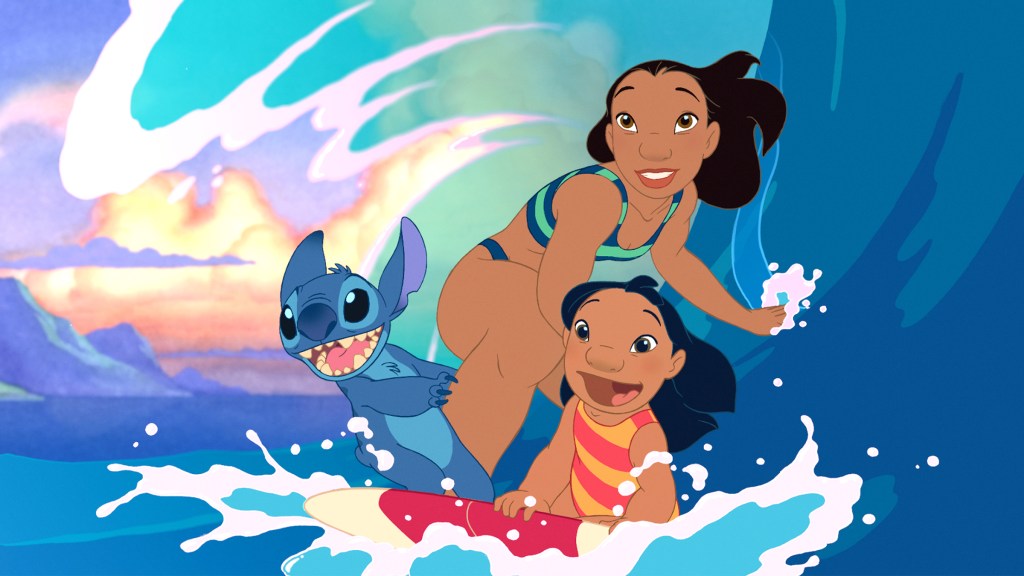
The distinctive watercolor aesthetic of Lilo & Stitch ensures the 2002 original remains a visual standout more than two decades after its initial release. Set in Hawaii, the narrative centers on Lilo (voiced by Daveigh Chase) adopting a chaotic alien fugitive, Stitch (voiced by Chris Sanders), who effectively dismantles the stability of her household through various high-octane sci-fi hijinks. Audiences continue to find value in the story’s refusal to sanitize the difficulties of a fractured family, specifically the legal and emotional pressure placed on Nani (voiced by Tia Carrere). This grounded emotional core provides a necessary counterweight to the slapstick comedy, making Lilo & Stitch a staple of the Disney+ rotation for multiple generations. The legacy of the animated feature was further solidified in mid-2025 following the massive commercial success of the live-action remake, which surpassed the billion-dollar milestone.
4) Frozen
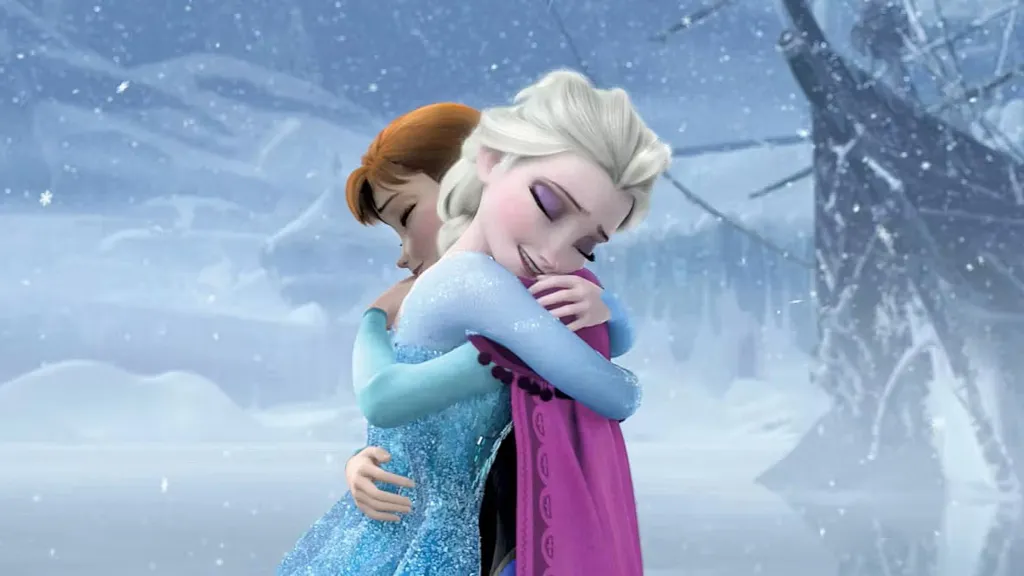
Frozen became a global phenomenon by successfully subverting traditional Disney tropes while delivering an incredibly catchy musical score that includes the inescapable hit “Let It Go.” Central to this lasting appeal is also the calculated subversion of the “True Love’s Kiss” archetype, a structural pivot that allows the sisterly bond between Anna (voiced by Kristen Bell) and Elsa (voiced by Idina Menzel) to take the place of fairy tales’ standard romantic resolutions. This thematic depth is further enhanced by the presence of Prince Hans (voiced by Santino Fontana), whose manipulative arc provides a compelling reason for fans to revisit the story to identify the early-act clues that foreshadow his eventual betrayal. Beyond the primary plot, the comedic contributions of Olaf (voiced by Josh Gad) provide consistent levity that makes the movie easy to watch multiple times. The cherry on top is a visual palette of ice physics that continues to set industry standards.
3) Tangled
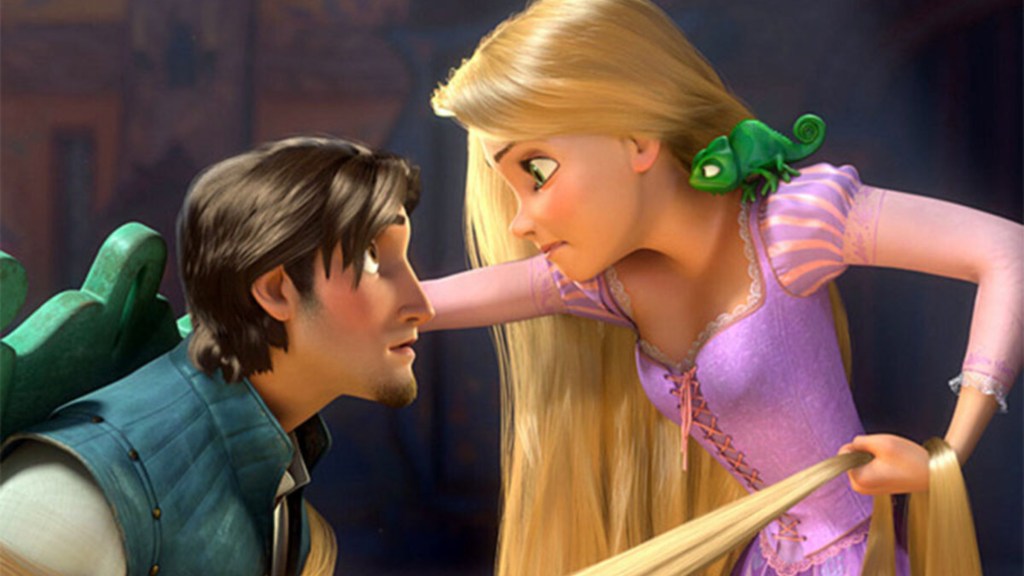
Disney’s $260 million investment in Tangled functioned as a high-stakes gamble to salvage the studio’s animation legacy by transitioning it from hand-drawn features to CGI. This record-breaking budget was utilized to overcome the significant hurdle of animating seventy feet of hair, a technical feat that required the development of a proprietary software called Dynamic Wires. Because the hair of Rapunzel (voiced by Mandy Moore) behaves as if it had weight, the character can engage in complex action choreography that avoids the floaty feel of earlier 3D features. This physical presence is essential to Tangled‘s rewatch factor, as it grounds the high-speed slapstick and ensures the visuals remain impressive more than 15 years after its release. The casting of Zachary Levi as the opportunistic Flynn Rider introduced an improvisational comedic timing, providing a necessary friction against the traditional fairy-tale setting. This chemistry, supported by a folk-infused score from Alan Menken, creates a rhythmic pace that rewards the viewer’s attention during every revisit.
2) Moana
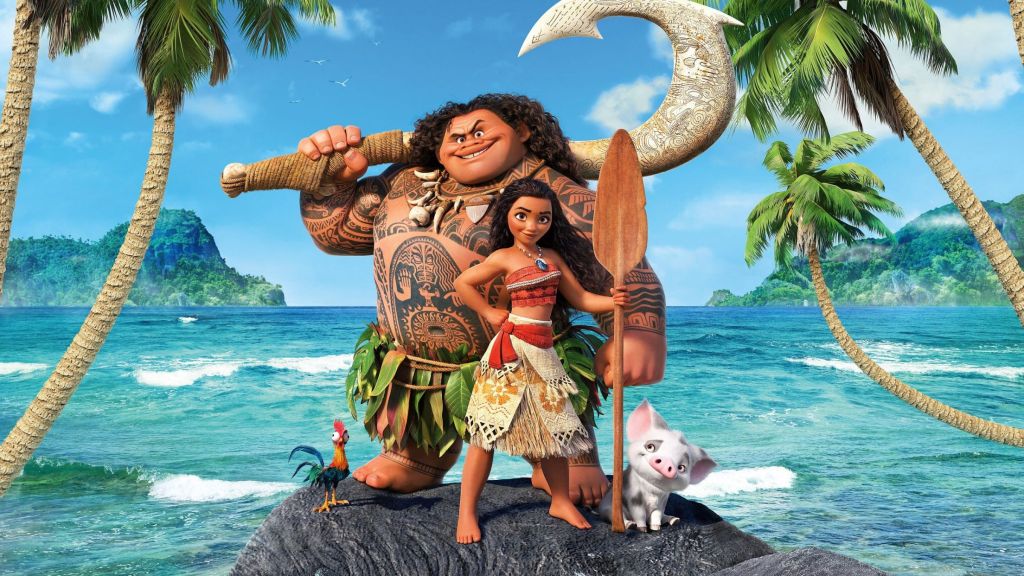
The enduring appeal of Moana rests on its status as the foundational anchor for one of Disney’s most lucrative modern franchises, a position further solidified by the record-breaking box office performance of its theatrical sequel. By successfully eschewing the traditional romantic subplot in favor of a profound voyage of self-discovery, the production offers a high-stakes narrative that maintains its emotional tension regardless of how many times the resolution has been seen. In addition, the friction between the determined Moana (voiced by Auli’i Cravalho) and the boastful Maui (voiced by Dwayne Johnson) provides a source of constant character-driven humor, ensuring the quest to restore the heart of Te Fiti remains engaging through every repeat viewing. Finally, the technical innovation required to portray the sentient ocean continues to serve as a benchmark for digital animation, providing Moana with a visual splendor that keeps the world of Motunui feeling vibrant and immersive a decade after its initial debut.
1) Pirates of the Caribbean: The Curse of the Black Pearl
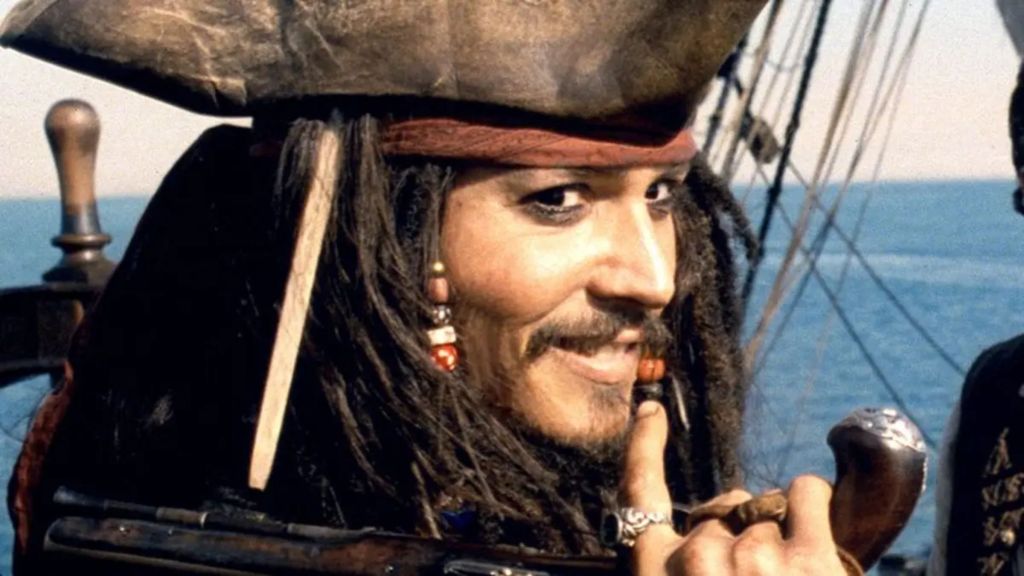
By successfully revitalizing a dormant swashbuckling genre through a blend of high-seas adventure and gothic supernatural mystery, Pirates of the Caribbean: The Curse of the Black Pearl remains the benchmark for the modern Disney live-action movie. Much of the film’s immense rewatch factor is centered on the Oscar-nominated performance of Johnny Depp, whose unpredictable Jack Sparrow remains engaging even after numerous viewings. By pairing this eccentricity with the earnest efforts of Will Turner (Orlando Bloom) and the proactive heroine Elizabeth Swann (Keira Knightley), director Gore Verbinski maintained a high-stakes momentum that avoids the over-bloated narrative structures often found in the later sequels. In addition, The Curse of the Black Pearl‘s heavy reliance on practical effects and location filming ensures the 2003 production possesses a tactile texture that allows it to compete with the visual fidelity of blockbusters released today.
Which Disney movie from the 21st century do you find yourself returning to the most when you need a dose of cinematic magic? Leave a comment below and join the conversation now in the ComicBook Forum!
Most Viewed
-
Image courtesy of Tor Books/Macmillan -
Image courtesy of Amazon MGM Studios