For us Gen Xers and Millennials, it’s hard to believe that we’ve not just caught up with the future Marty McFly visits in Back the Future: Part II, we’re now ten years past it. In the film, McFly journeys 30 years in the future from 1985 to 2015, discovering that his life hasn’t panned out the way he wanted to, and inadvertently giving Biff Tannen (Tom Wilson) the ability to rewrite the space-time continuum for his own benefit. While there are definitely things director Back to the Future director/co-writer Robert Zemeckis nailed about the 21st century — like hydroponic gardens and smart homes — there’s still a few advancements they got wrong, both back in 2015 and now.
Videos by ComicBook.com
4) Widely Accessible Flying Cars and Skateboards
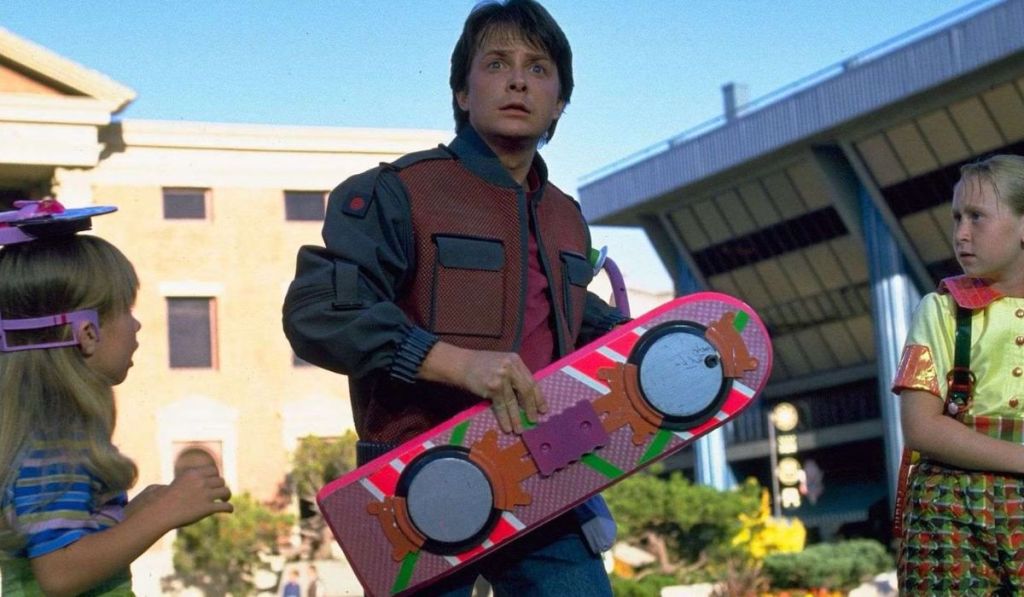
We’re pretty disappointed about this one. Marty, Doc Brown (Christopher Lloyd) and Jennifer (Elisabeth Shue) enter the future via Doc’s flying DeLorean and discover he’s not the only one in possession of the technology. In Back to the Future‘s 2015, flying cars are as commonplace as our current earthbound ones are. Although cars are now more widely powered by electricity and there are early models of flying cars being tested, we’re still at least a decade or so out from having flying cars be commonplace in 2025.
The lack of flying hoverboards are particularly disappointing since you’d they’d be less ambitious a feat to achieve. So much of the fun and chases in Back to the Future Part II take place on Marty’s hoverboard, however, we’ve yet to engineer anything that can fully levitate like the one in the movie.
3) Dehydrated Food
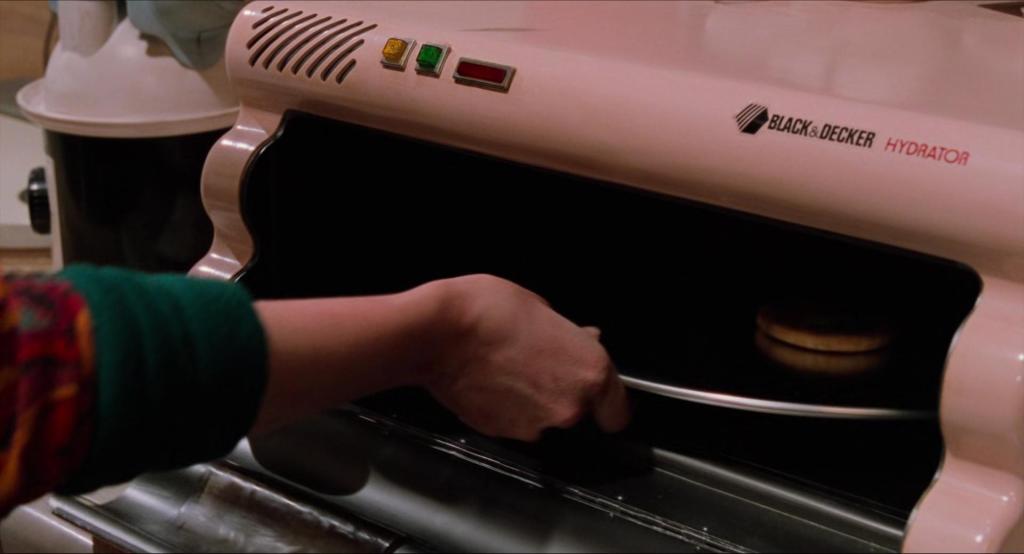
When Marty’s parents Lorraine (Lea Thompson) and George (Jeffrey Weissman) visit his house during the film, we watch Lorraine conjure up a large, hot steaming pizza in a matter of seconds from what looks to be a pizza bagel. Forty years after the movie, hydrators haven’t replaced microwaves in our kitchens and most of our food comes fresh rather than shrink-wrapped. Funnily enough, our society seems to have done the opposite, placing a premium on organic, locally sourced ingredients rather than a meal that can be made in the blink of an eye.
Back to the Future‘s idea of a 2015 kitchen looks very different from ours. While hydroponic gardens are a widespread household appliance, they typically don’t retract from the ceiling at a voice command and aren’t as large as one’s typical tower garden.

2) Self-Fitting and Drying Clothing

If someone walked down the street in what folks wore in Back to the Future Part II‘s 2015, we’d think they were nuts. Or characters from Back to the Future Part II. The style of the costumes in the future in the film definitely skew more space age eighties than what people actually wore 10 years ago. That being said, clothes that alter and dry themselves would save us a lot on our laundry bill.
And even forty years later, Marty’s Nike sneakers with self-adjusting laces are still ahead of their time, although we could’ve bought seeing a similar style shoe in stores back in 2015. But that’s more a testament to the timelessness of the brand’s design rather than any canny predictions on Zemeckis and costume designer Joanna Johnston’s parts.
1) The Prevalence of Robots
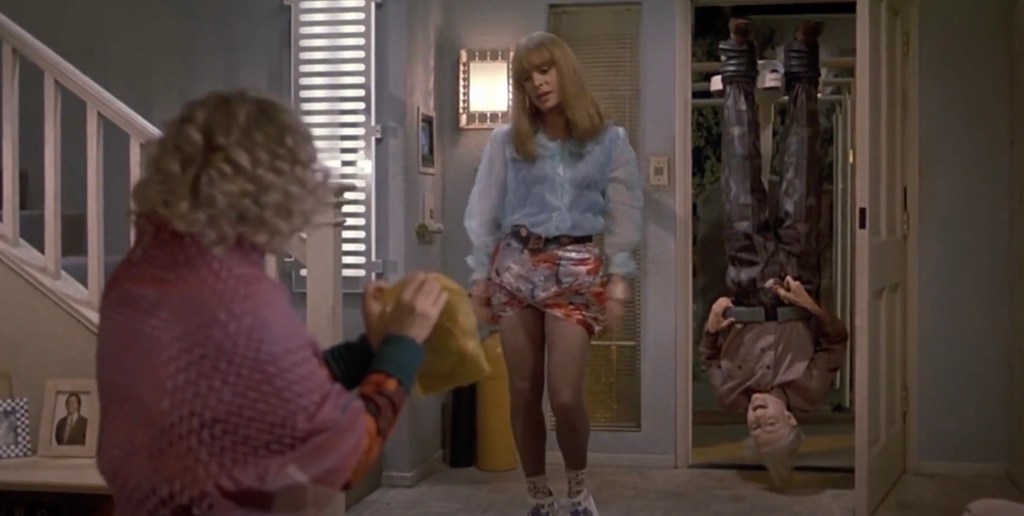
While robots definitely have an increased presence in our lives now, and back in 2015, they’re not quite as ubiquitous as Back to the Future Part II imagined them to be. Sure, we use screens to order food service more and Roombas vacuum cleaners were around ten years ago, but they can’t hover and walk our dogs like we see a robot do in the background outside of the McFly house. We’re also lacking the antigravity back stretcher that George sports in the film (probably for the best, it doesn’t look to be giving him much relief). And while the debate around artificial intelligence and ethics rages on in 2025, robots weren’t sophisticated enough to replace reporters in 2015, and have yet to in 2025…at least for the time being.
Back to the Future Part II is currently streaming available to rent on AVOD.
Most Viewed
-

Image Courtesy of Disney -
Image courtesy of Prime Video