Bryan Fuller is one of the most celebrated TV creators of all time, thanks to the unique voice he crafted in many fan-favorite projects such as Pushing Daisies, Dead Like Me, and, above all else, Hannibal. Fuller has a knack for mixing the wondrous with the mundane, often making use of whimsical sets and vibrant colors to build modern fairytales. That’s why the idea of Fuller making his directorial feature film debut with the dark fantasy Dust Bunny was so enticing. Unfortunately, some odd visual choices and the lack of a stronger script get in the way of Dust Bunny‘s exciting premise.
Videos by ComicBook.com
Dust Bunny tells the story of Aurora (Sophie Sloan), a hyper-imaginative child who believes a monster living under her floorboards killed her parents. Lucky for her, Aurora’s mysterious neighbor, Resident 5B (Mads Mikkelsen), is a John Wick-style assassin whom she one night saw kill “monsters,” aka other people. Being the pragmatist she is, Aurora gathers some money and tries to hire Resident 5B to slay the creature. 5B takes the job to uncover the truth, as he believes Aurora’s parents might be victims of a botched hit meant for him.
Rating: 2.5/5
| PROS | CONS |
| Strong core concept | Scattered and disjointed script |
| Stellar chemistry between Sophie Sloan and Mads Mikkelsen | Over-reliance on digital special effects and CGI backgrounds |
| Effective practical sets | Lacks proper direction for action choreography |
The synopsis of Dust Bunny, added to Fuller’s prestige and a star-studded cast that also includes Sigourney Weaver and David Dastmalchian, makes the movie seem like an easy hit. It’s nothing short of disappointing, then, that Fuller undercut the visual style he’s known for with clumsy CGI, while also struggling to conform to the pacing constraints of a feature film.
Dust Bunny‘s Script Needed Another Pass

The concept of a child using their imagination to make sense of a grim reality is not novel, and has already given us classics like Pan’s Labyrinth and Tigers Are Not Afraid. The appeal of these stories is their capacity to show the world through a new perspective that mistakes shadows for monsters, underlining how fantasy is one of our most important tools to face the horrors of life. Ambiguity is key in these cases, as not knowing if the supernatural threats are real often drives the mystery forward.
Dust Bunny, however, breaks the mold by revealing the answer early on; after a few minutes, it’s clear whether Aurora’s monster is just a figment of her imagination or not. While that could have freed the movie to focus on other aspects of the story, Fuller’s script still insists on repetitive dialogue where multiple characters will wonder what Aurora truly saw. Some of these quirky exchanges are played for humor, but their overabundance constantly breaks the rhythm of Dust Bunny. The way Fuller addresses the movie’s central premise reflects the main issue with its plot.
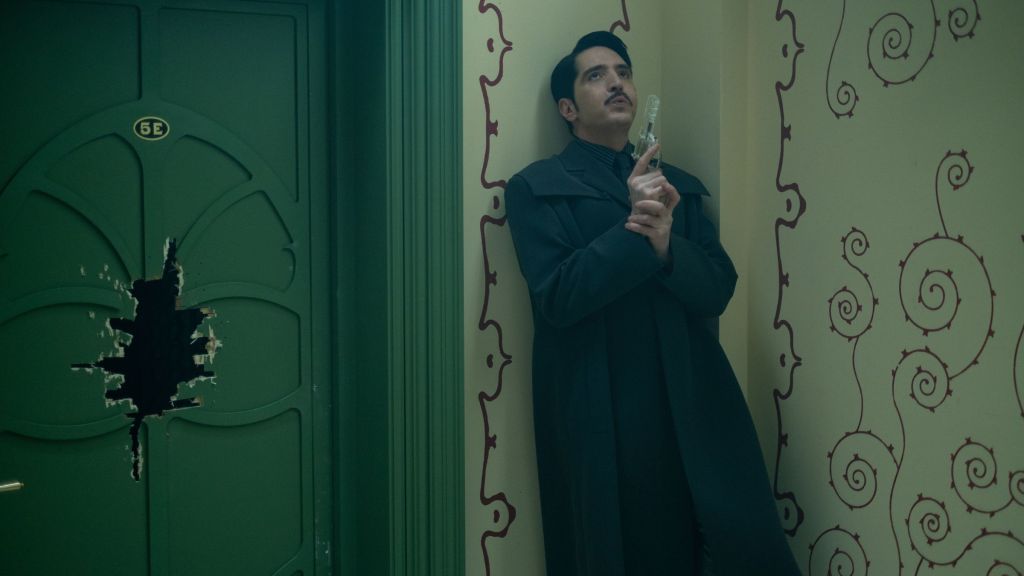
While there are plenty of clever ideas in the movie, none of them are used to create a cohesive story. We are taken from scene to scene while Dust Bunny tries to build a bigger mythology of the assassins’ network and the origins of the creature, often failing on both fronts. There isn’t enough time to lean on the movie’s premise, and as a result, the movie feels scattered.
Sure, it’s great to see Weaver using shoe guns to fight her enemies, and Dastmalchian is always enthralling, regardless of how little he has to do. Furthermore, Mikkelsen remains one of the greatest performers of all time, and a Léon: The Professional kind of protagonist is something he has never done before. His chemistry with the young Sloan is off the charts, and if Dust Bunny works at some level, it is due to its leading stars. Yet, while some parts are worth the trip to theaters, especially for longtime fans, the whole is too disjointed to allow the story to stand out.
Dust Bunny Is Plagued By Bad CGI
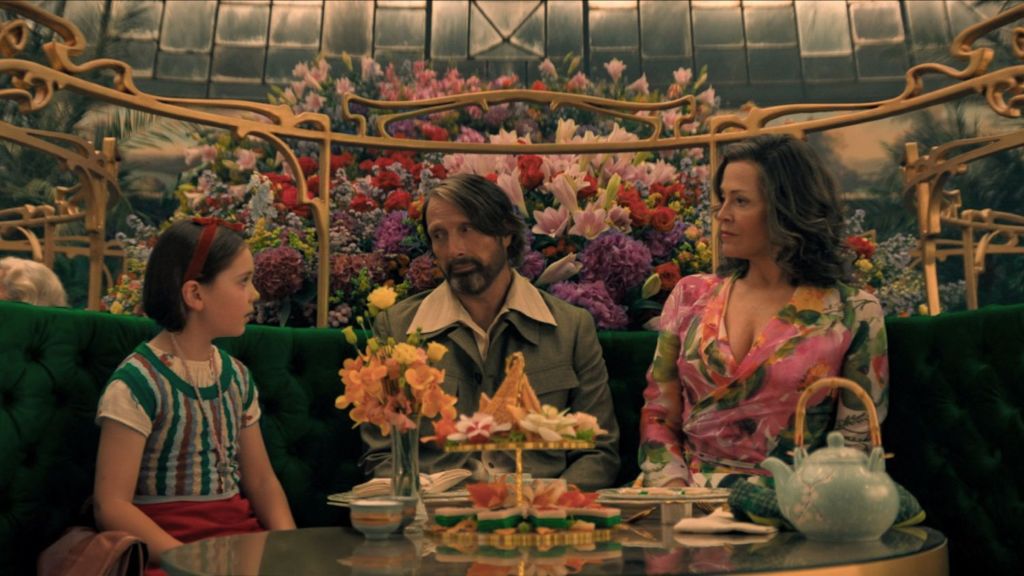
Fuller’s television legacy is built on a foundation of stellar visual storytelling, meticulous production design, and set pieces that pop with detail. Dust Bunny, perhaps due to budget constraints and its fantastic premise, adopts a hybrid approach to world-building that unfortunately dilutes this signature aesthetic. There are still corners of this world that retain that wonderful magic, such as Aurora’s cluttered room, Resident 5B’s modest kitchen, or the luxurious restaurants where he contacts his assassin network. However, these practical environments are frequently set against computer-generated backgrounds that simply do not gel with the foreground action. Beyond the backgrounds, the film leans heavily on digital special effects, utilizing CGI for entire shots and transitions. This over-reliance strips the movie of the tactile charm that usually defines Fuller’s work, replacing his handcrafted whimsy with something artificial and flat.
Dust Bunny‘s visual shortcomings extend to the action choreography, preventing the fight scenes from ever looking truly believable. While the film attempts to stage the kind of ambitious set pieces audiences expect from assassin-themed movies post-John Wick, it lacks the slick stunt work required to make them land. Instead, we get awkward editing and noticeable digital doubles that break immersion—including a particularly uncanny frame of a CGI Mikkelsen leaping through the air. Dust Bunny clearly wants to play in the same sandbox as contemporary thrillers, but without the practical discipline to pull it off, the spectacle rings hollow.
Ultimately, Dust Bunny possesses undeniable moments of brilliance, fueled by a committed cast and the lingering sparks of its creator’s unique vision. However, weighed down by narrative clutter and technical missteps, the film falls short of its promise, offering only a glimpse of the masterpiece it could have been.
Dust Bunny comes to theaters on December 12th.
Have you seen Dust Bunny yet? What did you think of it? Leave a comment below and join the conversation now in the ComicBook Forum!
Most Viewed
-
Image courtesy of MAPPA -
Image courtesy of Daybreak Game Company