Every spin-off seems to go through the same unspoken test: no matter how good the idea is, it’s always going to be compared to the original series. And when you’re talking about a show that has already spawned two offshoots, that pressure only gets bigger. The Big Bang Theory is one of the biggest sitcoms in TV history, running for twelve seasons with unforgettable characters and a story full of geek culture references. So when Stuart Fails to Save the Universe was announced, expectations were naturally high, especially since it revolves around special side characters and a multiverse-driven sci-fi story. Luckily, it’s been winning fans over ever since — but there’s one even better detail.
Videos by ComicBook.com
Instead of depending entirely on people’s familiarity with this universe, the spin-off found a surprisingly creative way to make every episode feel a little different. Depending on how you watch TV, though, you may have been missing it. Why? Because it’s the exact part that most people skip in almost every show.
Stuart Fails to Save the Universe‘s Opening Is the Best Part of the Entire Show

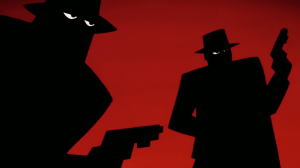
Yes, the part that most viewers automatically skip as soon as an episode starts is actually the most carefully crafted part of Stuart Fails to Save the Universe. That’s because it literally changes every single episode. Rather than just introducing the show, it’s an extension of the story itself, constantly swapping visual elements, adding new information, and playing directly with the audience. It features self-referential messages about the show itself and essentially turns into a conversation with viewers about the fact that they’re watching the series and even the opening. It’s pure fourth-wall breaking and meta-humor, and it’s such a smart way of acknowledging how people actually consume TV shows today.
For years, TV openings were a huge part of a show’s identity. You only needed to hear a few seconds of the music to know exactly what was on — Friends, The Fresh Prince of Bel-Air, The X-Files, and The Simpsons are perfect examples of that. More recently, Game of Thrones and The Walking Dead proved the same thing. But as viewing habits became faster and more centered around streaming, nobody wanted to waste time anymore. Opening sequences gradually became obstacles. And honestly, it’s hard to blame anyone for that, as very few people are excited about watching the exact same minute before every single episode. So how do you get the best of both worlds? How do you make an opening memorable while also making audiences actually want to watch it?
In a recent interview with the Los Angeles Times, the show’s creators explained exactly how the idea came together. “Chuck (Lorre) kept saying, ‘Let’s do something that people don’t dare skip, so the first thing is [the opening titles] change because if it’s the same, it’s skippable,’” Bill Prady revealed. The goal behind Stuart Fails to Save the Universe was to break traditional sci-fi conventions in inventive ways, and since the opening was meant to be part of the overall experience, they felt it should challenge TV conventions as well. That mindset shaped everything — from the visuals to the music and even the episode titles. If you’ve been paying attention, you’ve probably noticed that the theme song isn’t exactly the same every week either. Danny Elfman, who also composed iconic music for The Simpsons and Wednesday, was given plenty of creative freedom to keep reinventing it.

And Prady also explained that every episode title contains a tiny spoiler about what’s about to happen. The joke, however, is that those spoilers are almost completely meaningless and exist purely to become part of the opening’s meta-humor, since giving away plot details has become one of TV’s biggest sins. Episode 1 is titled “Spoiler: Gary Dies,” while Episode 2 is called “Spoiler: Zack’s in This One.” It’s almost like the show is making fun of its own audience.
More than anything, though, the opening was designed to reward viewers who actually pay attention. The creators weren’t simply trying to joke about the “Skip Intro” button — they wanted to give people a real reason to stick around every single week. And that fits perfectly with the show’s entire concept, since it’s built around multiverses, alternate possibilities, and the idea that things can always change.
How the Opening Proves the Show Is More Than Just Another The Big Bang Theory Spin-Off

The biggest challenge for any spin-off of a hugely popular series isn’t getting people interested in the premiere — it’s convincing them there’s a reason to keep watching afterward. Plenty of spin-offs fail for different reasons, and one of the biggest is that they get stuck in the past, trying too hard to recreate what made the original work. The problem is that this usually makes the new show feel like a copy instead of an evolution, and nobody wants to watch the same thing all over again. Stuart Fails to Save the Universe seems to have understood that risk from the very beginning.
Sure, the series is clearly connected to the original, but it doesn’t rely just on fans recognizing familiar faces. The opening alone shows a willingness to experiment and establish an identity of its own. Lots of shows can bring back beloved characters or create big moments, but very few manage to find something that truly belongs to them — and that may be this show’s biggest achievement so far.

Rather than using TBBT as a crutch, the spin-off treats its universe as a starting point. It obviously takes advantage of elements and characters fans already know (like Raj, Penny, and Zack so far), but it never feels like it’s simply trying to recreate the same formula. Everything about its approach is different, from the scale of the story to the style of its humor. The spin-off aims to be much more ambitious, even while continuing the world established by its predecessor. That’s why the opening plays such an important role: it almost feels like a mission statement for the entire series. Stuart Fails to Save the Universe understands exactly what it needs to do to justify its own existence.
The show has built its own identity through a series of small creative decisions that, together, make it feel like something genuinely new. Instead of fighting against modern viewing habits, it embraces them and turns them into part of the joke. The result is a more entertaining, more rewarding, and more engaging experience. So the next time you sit down to watch the spin-off, if you’ve been skipping the opening, you already know what to do.
Stuart Fails to Save the Universe is available to stream on HBO Max.
More TV Shows
-
Image courtesy of Hasbro -
Image Courtesy of USA Network