Across his decades of stories, Stephen King has made a name for himself in more ways than one. The prolific author has been haunting the nightmares of readers, moviegoers and TV watchers since the 1970s and is best known for a slew of things. Pennywise the dancing clown, the haunted Overlook Hotel, and countless other characters, places, ideas, and more have defined his career. Even more distinct than all of the stories Stephen King has been able to tell is the crossover between them, not only with how many stories take place in towns like Castle Rock, Maine, but also with recurring characters and motifs.
Videos by ComicBook.com
The glue that binds everything together across Stephen King’s books is, of course, his magnum opus, The Dark Tower series. Though the series is largely a fantasy western, it dips its toes into every imaginable genre, with connectivity that can be found in almost everything that he’s written. One of the ways that The Dark Tower is able to sneak its way through King’s projects is that it has a sneaky little Easter egg that can be quickly interjected into something that confirms a connection to the Tower, and it’s so simple that it might not always be noticed: The number 19.
Stephen King and the Number 19 Easter Egg
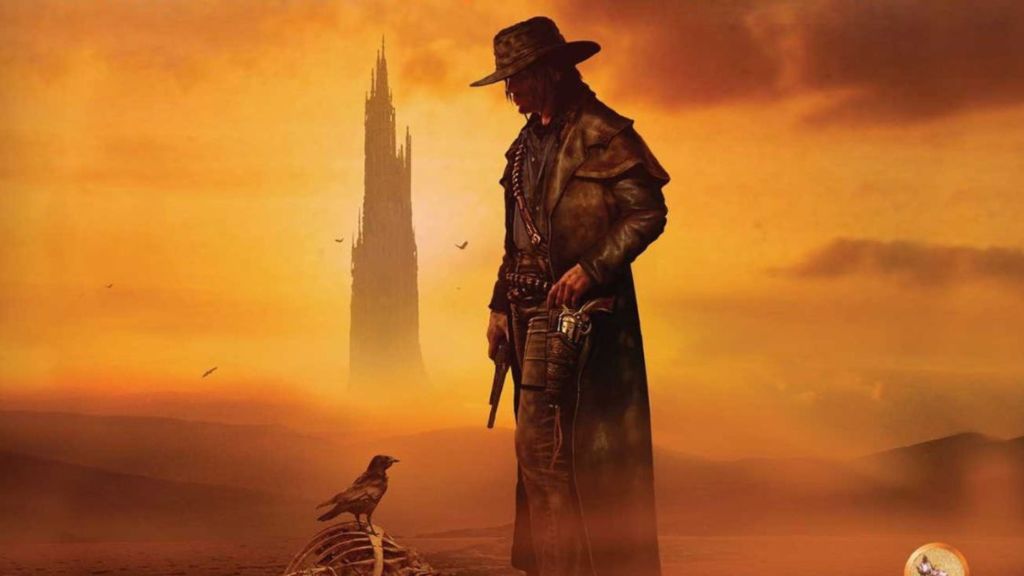
For Constant Readers, any appearance of the number 19 immediately rings alarm bells, but it’s such a simple number that it can go unnoticed just as easily. The question, of course, is, what does it even mean? The reality of the recurring number is that it’s not something that can be easily explained like a joke; it’s a metaphysical idea, but one that does have a grounded origin.
The most common story that has been told by King and fans is that the obsession with “19” in his work starts with the author himself putting pen to paper on the novel that would one day become The Gunslinger (the first part of The Dark Tower). King himself has opined on this, and even opened up about it in the essay “On Being Nineteen (and a Few Other Things),” noting that it’s an age many get stuck on and that the arrogance he had at the age would be one of the things that propelled him to create the larger mythology of the Dark Tower alongside all his other fiction.
It’s worth noting, however, that 19’s place in Stephen King’s work was cemented after perhaps the most harrowing and tragic moment in his life. On June 19, 1999, Stephen King was walking down a road when he was struck by a minivan, breaking his hip, collapsing his lung, and fracturing one of his legs in multiple places. The moment became a defining one for King, especially since he hadn’t actually finished The Dark Tower series. King would quickly go on to not only complete the books, but would begin injecting “19” into the series as a totem of high importance (even going on to make his accident and potential death as a result a key plot point in a distinct meta-narrative).
In the context of The Dark Tower, though, the number has meaning that makes its recurrence have actual meaning. One of the biggest pieces of The Dark Tower books is the idea of “Ka” a word in Mid-World that is akin to “fate.” The group of characters that make up the majority of the books becomes known as the “Ka-tet,” a group that is bound by fate. Across the books, the Ka-tet make notes over 19 recurring around them consistently, realizing that it ties back to “Keystone Earth” (our own reality) and largely indicates something worth paying attention to that might help them along their journey (at least most of the time).
As a result of the importance of the number in The Dark Tower books (though, admittedly, it didn’t really become a big deal until the fifth book of the series), it started popping up in other King books to continue the trend of connectivity across them, indicating the reach of the Tower as the centerpiece of all of creation. That in mind, 19’s place in King lore is one that has a pretty dark origin, but its recurrence serves as a reminder of how quickly life can change.
19 Is In More Stephen King Adaptations Than You Realize
Having now dug into the dirt about where 19 comes from and why it’s clearly so important to Stephen King, it’s worth noting that you’ve absolutely seen “19” Easter eggs across the movie and TV adaptations of his work even if you didn’t realize it. One example is the Stephen King TV series Castle Rock, which includes Chapter 19 of Misery as part of its Easter Egg-filled opening credits.
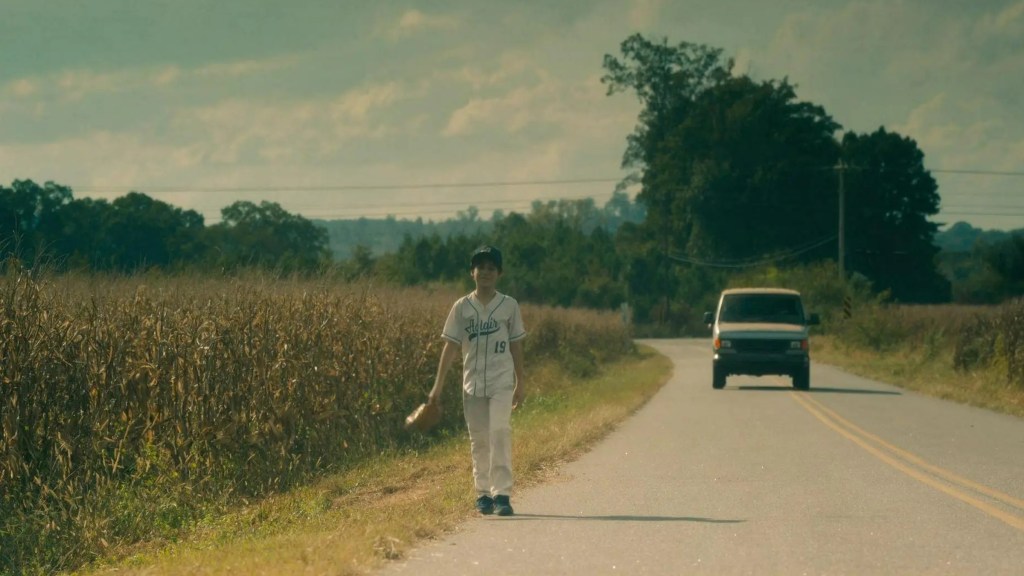
A major one comes in Mike Flanagan’s film Doctor Sleep. In the film, Jacob Tremblay’s character Bradley Trevor is revealed to be a prodigious baseball player, one who is revealed to not only have some kind of abstract psychic powers, but is using it unconciously to read the minds of pitchers before they throw the ball. This naturally makes him a target for the True Knot, but what makes it worth talking about here is his number, which, you can see above, is 19. “Ka” is referenced in the film as well, making the appearance of 19 not that surprising at all, especially since Flanagan himself is a very vocal King fan.
A lot of the appearances of “19” in King’s books hail from either being a route one has to take (like in The Life of Chuck) or the address for a house, but many are adding up how many letters are in a character’s name. In the books, the ka-tet realizes a character named Claudia y Inez Bachman is important since there are 19 letters in her name. Other major King characters that happen to have 19 letters in their full names are Salem’s Lot‘s Father Callahan (Donald Frank Callahan) and Revival‘s Charles Daniel Jacobs.
Once The Dark Tower books began to make “19” important, it resulted in the number taking on a life of its own in King’s books and work, with unintended connections being noticed by fans, which gives it more staying power. An example of this is the number of the haunted room in the Overlook Hotel in The Shining, 217. Though in reality the number itself came from King’s own stay at the Stanley Hotel, the fact that 2 + 17 = 19 has King fans cheering.
This numerology pops up a lot, with King fans tabulating dates, addresses, and other numbers in his texts only to realize that they add up to 19. In truth, it’s tough to say how many of them are intended by the author, or a pure coincidence. But what will really break your noodle is that there’s no such thing as coincidence where Ka is concerned.
More TV Shows
-
20th Century Studios