The Expanse TV show has a tumultuous past. After being cancelled by SYFY, the beloved sci-fi series was resurrected by Prime Video after major fan pushback, only to get pulled before its time once again. The sixth season of The Expanse ended in early 2022, though rather than a normal cancellation, it was pulled at what was deemed a natural stopping point. The story ended right before a major time jump, wrapping up the Free Navy arc, and leaving humanity on the brink of a new era.
Videos by ComicBook.com
However, authors Daniel Abraham and Ty Franck of the duo James S. A. Corey wrote nine novels, meaning the story’s final trilogy remains unadapted. While the natural stopping point closed several chapters, it also left many ends loose. While some fans are certain the show is over for good this time, many are optimistic that rights holder, Alcon Entertainment, will keep adaptation options open, even after the Prime Video era. Whether or not you think it will happen, here are five reasons we need the last three seasons of The Expanse.
5) To Wrap Up Character Arcs That Were Left Hanging

Season 6 provided closure for some characters, but others remain unresolved. Amos Burton chose to stay with Holden and Naomi, but the books reveal that his story takes an unexpected turn. Clarissa Mao’s redemption arc was one of the best in the series, but Season 6 establishes that her body is failing due to the damage caused by her illegal combat implants, and her fate is left up to the viewers’ imaginations. The show sets up her transformation but fails to bring it home without the final chapters. Meanwhile, Cara and Xan Bisset’s story as two young belters was just beginning, and their connection to Paolo Cortázar’s experiments ties them directly into the protomolecule mystery. The final books give each of these characters earned endpoints they didn’t get in the Season 6 finale.
4) To Explain the Ring Entities and “Strange Dogs”
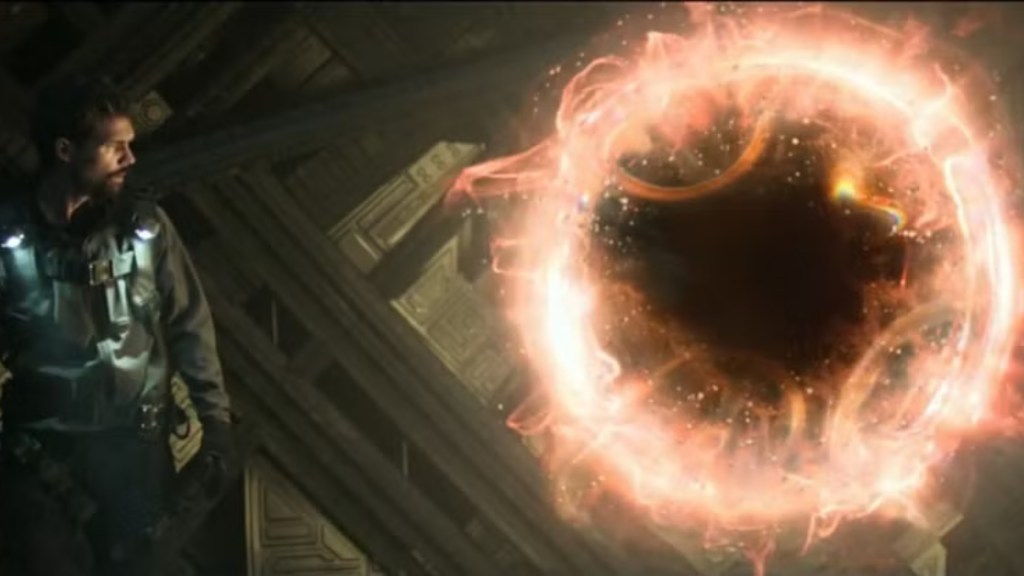
One of the story’s most mysterious subplots takes place on Laconia, where Cara discovers strange alien “dogs” capable of repairing dead creatures, but not necessarily restoring them as they were. This plotline is directly adapted from the novella Strange Dogs, and is a particularly intriguing expansion of the protomolecule mythos. More importantly, it’s directly related to the biggest unanswered question in the entirety of The Expanse: the Ring entities themselves. The ancient, hostile forces destroyed the protomolecule builders and remain an existential threat lurking beyond our comprehension. Season 6 leaves breadcrumbs, with ships mysteriously vanishing in transit and Duarte’s obsession. However, without an adaptation of the final trilogy, TV audiences are left scratching their heads about one of the core mysteries.

3) To Show the Rise of the Laconian Empire and Admiral Winston Duarte

Season 6 introduces a character named Admiral Winston Duarte, who is perhaps the most dangerous figure in the saga. Duarte is a former Martian officer who defects through the Ring gates with stolen protomolecule tech and a fleet of warships. It remains a subplot in the series, but book readers know his introduction is a setup to a major shift in power dynamics. Sadly, we never get to see the rise of Duarte’s empire and how it makes every Earth, Martian, and Belter fleet instantly obsolete. We never got to see how it completely reframes the victory over Marco Inaros. The Free Navy war feels like a climax, but in reality, it’s only clearing the way for something more terrifying. The fragile balance between Earth, Mars, and the Belt, which is so painfully achieved by the end of Season 6, is spun on its head in the final three books.
2) To Show How Peace Can Easily Become Control

Season 6 ends on a hopeful note, with Camina Drummer becoming president of the Transport Union, poised to give Belters control over the Ring gates. It’s a hard-earned victory after years and years of oppression. For once, peace and cooperation between Earth, Mars, and the Belt seem possible. However, it takes the final trilogy to reveal how fragile that peace actually is. As Duarte’s empire imposes order, worlds that believed themselves free suddenly find themselves under the control of an authoritarian regime that claims to be acting for humanity’s long-term survival. Much of the genius of The Expanse lies in its lessons on power in society, but without Seasons 7, 8, or 9, we don’t have the full thesis statement.
1) Because Books 7 and 8 Are the Best in the Series
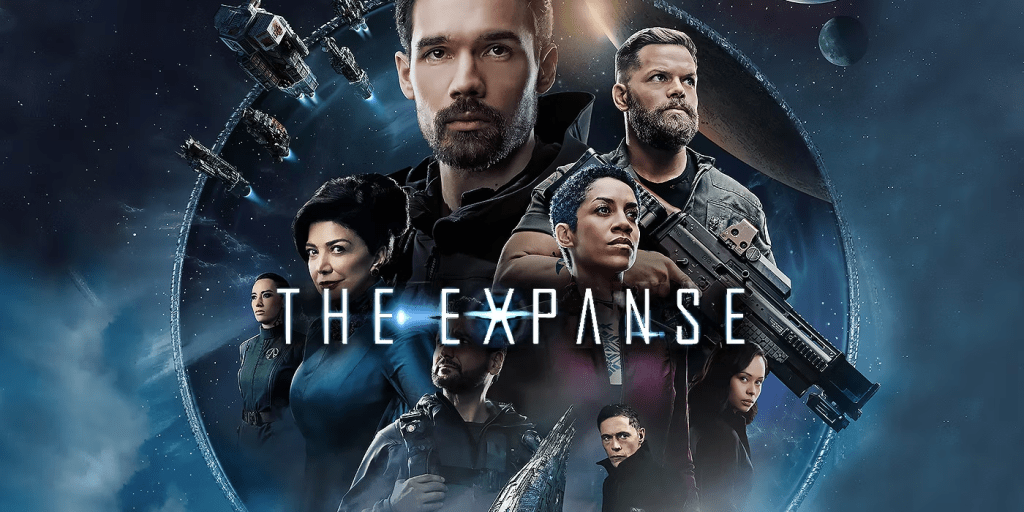
Persepolis Rising and Tiamat’s Wrath are two of the best novels in The Expanse series, and that’s reason enough we need to see them onscreen. Book 7 picks up decades into the future, introducing a galaxy that has changed drastically, with new political powers, revolutionary technologies, and, of course, the Laconian Empire. The stakes are suddenly enormous, bigger than they’ve been the entire series, hinging on fragile alliances. Beyond scale, the series delivers some of its most shocking plot twists and most intense interstellar battles in these chapters, while never losing its character-driven approach.
In fact, these contain some of the most profound character moments and arcs as readers see how the years have shaped Holden, Naomi, Amos, and Alex. Even secondary characters, like Clarissa Mao or the Bisset siblings, are pushed into pivotal roles. Ultimately, the final trilogy is the closing act of the overarching story, and ending the TV series on Season 6 feels a little like pausing a movie just as a character thinks they’ve sorted everything out, but right before they actually learn the final lesson and face the actual enemy.
Do you think The Expanse will ever return for Season 7? Leave a comment below and join the conversation now in the ComicBook Forum!
Most Viewed
-

Official art by Bastien Lecouffe-Deharme -

Image courtesy of Tor Books/Macmillan -

A photo of the Retrovolt Arcade taken in 2017, showing several classic arcade cabinets and stools. -

Courtesy of Saber Interactive -

Courtesy of TOHO Animation