Stat Trek fans have spent nearly 60 years with the captains and crews of the enduring sci-fi franchise, but that also means they’ve spent six decades aboard its ships. Beyond simple transport, these vessels have been battle stations, birthplaces, and home bases. Some are designed as warships, others for exploration; some are experimental prototypes, while some are reliable beasts.
Videos by ComicBook.com
Regardless of the purpose within Starfleet, each Trek series centers around one of these hero ships that fans eventually come to know and love, as they would any main character. In this list, we’re not ranking Starfleet’s literal flagships, but rather, the flagships of the franchise itself. And to avoid personal bias in the ranking, we’re considering factors like technical specs, design, aesthetics, combat performance, comfort, and even historical importance within canon. From worst to best, here are the hero ships that feel like home.
9) USS Cerritos (Lower Decks)
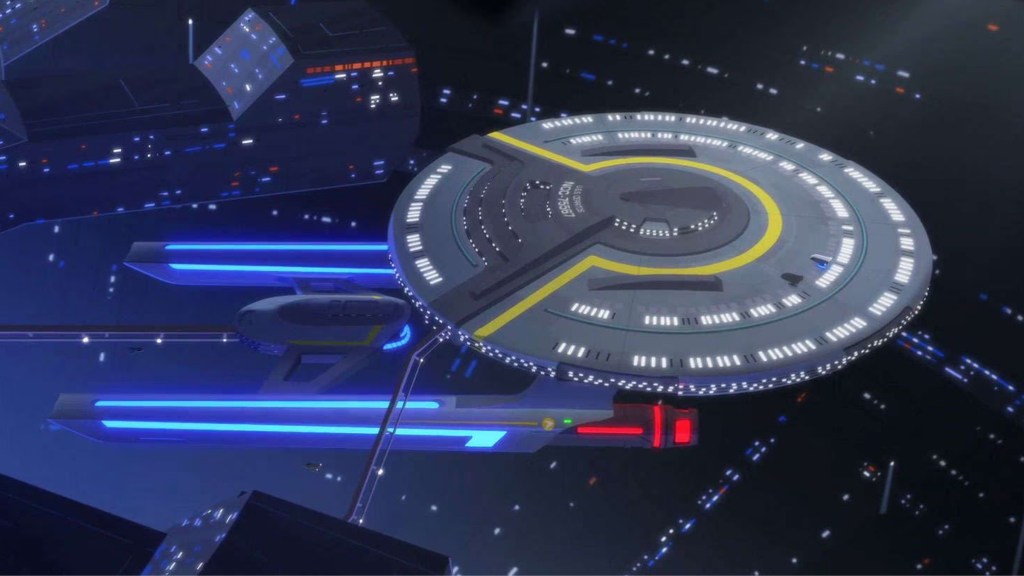
The USS Cerritos is intentionally designed to be unremarkable. A California-class support vessel, its main job is the handling of second contact missions, repairs, and cleanup after “real” hero ships save the day. In-universe, it’s treated as a second-tier workhorse, which is apparent in its visual design too. The squat profile and awkward proportions have prompted fans to call it “a frisbee with handlebars.”
But even if it’s not exactly the most powerful ship, it’s the perfect vessel for the Lower Decks series, which is all about the forgotten backbone of Starfleet that never gets any of the glory. The Cerritos is filled with overworked and underappreciated ensigns and officers. It may be last on the list objectively, but it’s still beloved because of how well it captures the show’s theme.
8) USS Protostar (Prodigy)
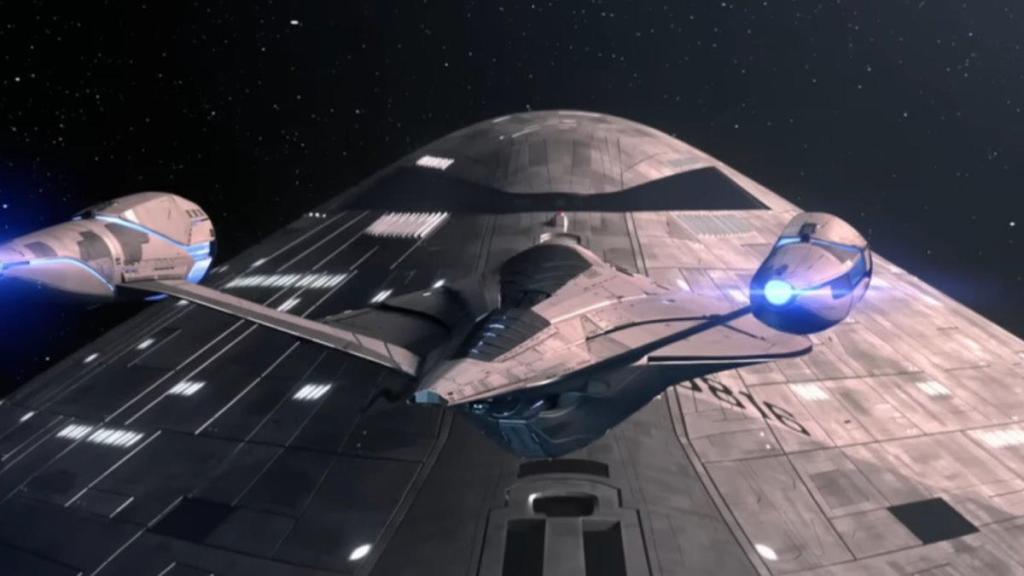
The USS Protostar is perhaps one of the most fascinating experimental ships Starfleet ever produced. Designed by Vice Admiral Kathryn Janeway, it features a revolutionary proto-warp drive that uses a contained protostar to generate massive power. This means it can reach speeds way beyond conventional warp. In theory, this makes it one of the most advanced vessels in Federation history.
In practice, however, the Protostar is really small, with a limited crew capacity of roughly two dozen people. It simply doesn’t have the scale and infrastructure (or even cultural impact) of larger hero ships. While Prodigy may have introduced younger audiences to Star Trek, it remains a niche series in the franchise. The Protostar is a brilliant concept and a smart narrative device, but its limited screen time and canon impact leave it low on the list.
7) USS Athena (Starfleet Academy)

The USS Athena, introduced in the most recent Trek outing, Star Trek: Starfleet Academy, is another boldest design departure. The Academy-class vessel features a distinct circular crown ring, flattened nacelles, and an overall layout that resembles a mobile campus more than a traditional starship. When docked, it integrates directly with Starfleet Academy, serving as both a training vessel and a learning space.
The hybrid nature makes the Athena unique, and so far, divisive. Some fans admire its ambition, while others feel it strays too far from classic Starfleet aesthetics. More importantly, it’s still too new to have earned any deep emotional investment. It hasn’t yet been tested in prolonged storylines, and Starfleet Academy’s impact on the franchise remains to be seen. Still, the Athena has great potential.
6) USS Discovery (Discovery)
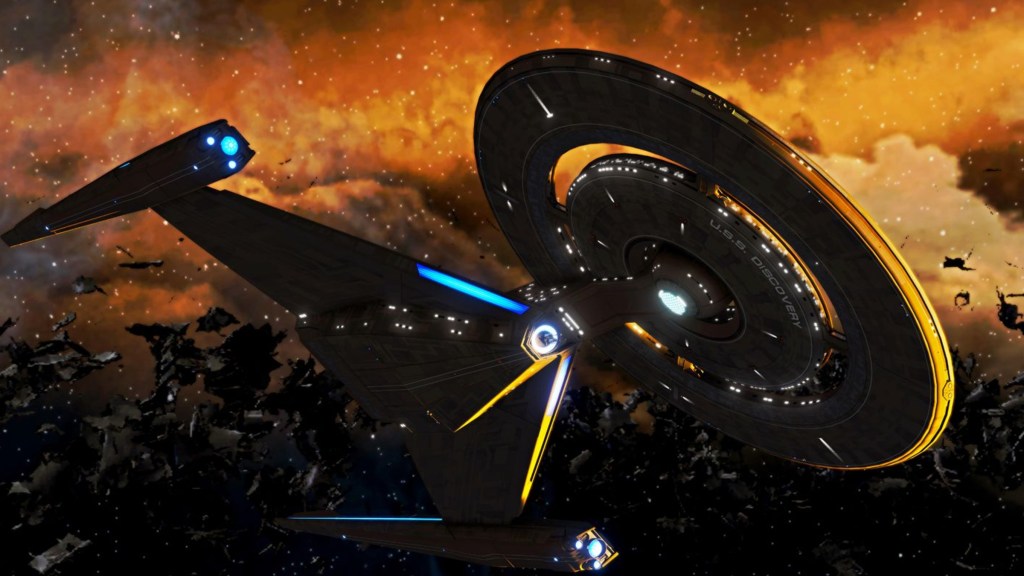
The USS Discovery is technologically radical, with a spore drive that allows it to instantly jump anywhere in the galaxy, or even across dimensions, by navigating the mycelial network. It’s objectively unmatched in mobility, and thus, it’s fundamentally one of the most powerful strategic assets Starfleet has ever possessed.
At the same time, its almost magical teleportation ability is exactly what has fans divided. Many feel the spore drive contradicts established Trek science and comes too close to fantasy. The Crossfield-class design is also a hot topic of debate, and the ship itself has been destroyed, rebuilt, and upgraded multiple times. Discovery certainly represents the ambition and experimentation of modern-era Trek, but also the controversy.
5) Enterprise NX-01 (Enterprise)
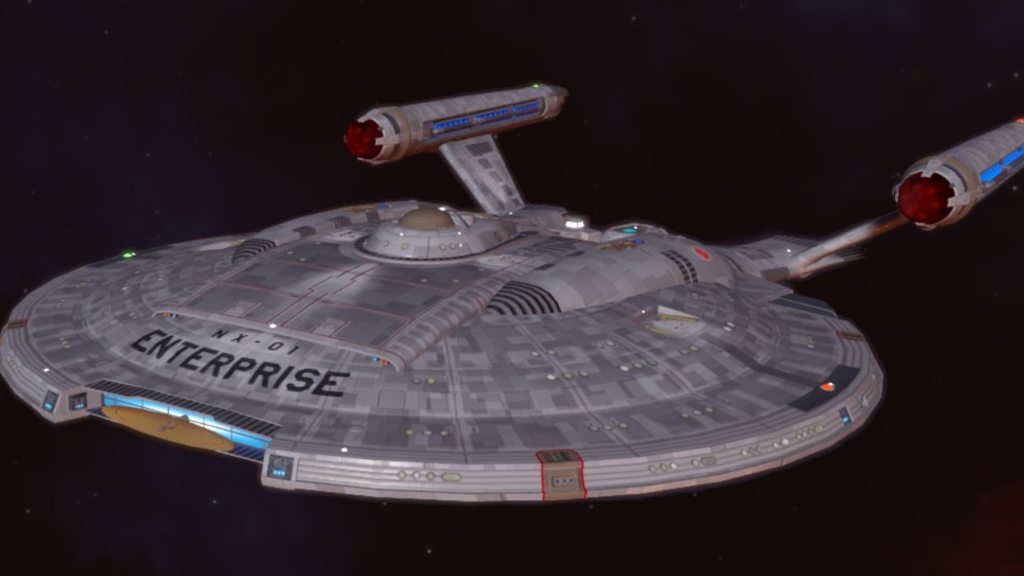
The NX-01 was humanity’s first true deep-space exploration vessel, capable of Warp 5 under Captain Jonathan Archer. A century before Kirk, Enterprise introduced us to Starfleet in its infancy, still learning to navigate interstellar politics. Early in the series, it lacked shields, relying on simple hull plating for defense.
So while it’s far from the most powerful, its importance in the canon can’t be overstated. Additionally, the NX-01’s vulnerability actually makes it compelling. It feels real and is perhaps the ship that fits the best into the hard sci-fi category. Its design was practical and grounded, reflecting what humans might plausibly build as their first interstellar cruiser. Over four seasons, the ship helped lay the groundwork for the Federation itself, playing key roles in the Xindi and Romulan conflicts.
4) USS Voyager (Voyager)
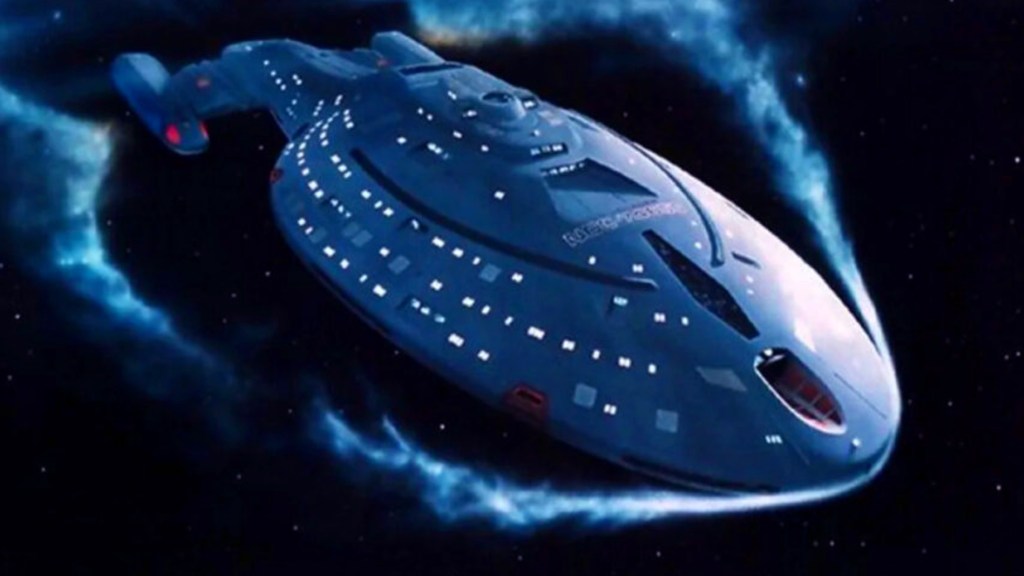
The USS Voyager’s story is a tale of endurance. Stranded 70,000 light-years from Earth in the Delta Quadrant, the Intrepid-class ship had no reinforcements or support network and very small chances of survival. For seven years, the crew faced hostile species and a lack of resources while fighting to get home.
Technologically, Voyager was ahead of its time. It featured bio-neural circuitry, variable geometry warp nacelles, planetary landing capability, and advanced astrometrics. Still, what truly earns it a place in the top 5 is what it survived. It battled Borg cubes and confronted Species 8472, and its journey remains one of the franchise’s most emotionally intense.
3) USS Defiant (Deep Space Nine)
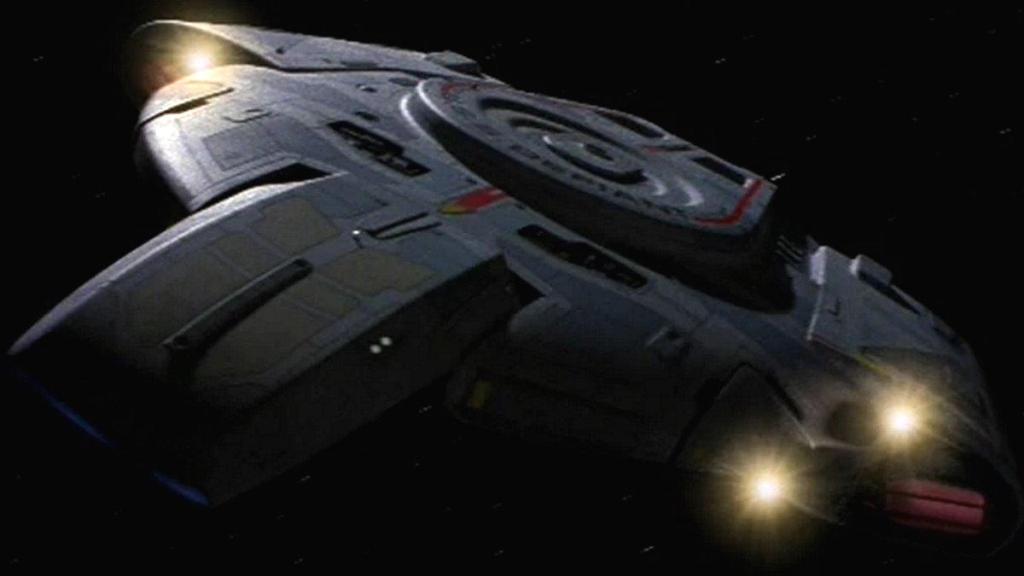
Nicknamed “the tough little ship,” the USS Defiant was the fleet’s first warship. Officially classified as an escort cruiser, the Defiant-class was conceived during the panic after first contact with the Borg. Stripped of nearly every nonessential system, including families and luxury quarters, the freed-up space was used for combat, and the vessel was armed to the teeth with an artillery of pulse phasers, quantum torpedoes, and ablative hull plating. Later, it even received a cloaking device through an agreement with the Romulans.
Thus, the Defiant emerged only 170 meters long, but equipped as if it were a much larger cruiser. Proving its abilities over and over again during the Dominion War, the Defiant survived massive fleet engegemnts Under Sisko’s command. Its compact profile made it a difficult target, while its high-thrust impulse engines allowed it to dart through battlespace quicker than the Jem’Hadar attack ships. Ultimately, however, the Defiant cracks the top three because it’s a cult-favorite ship from a fan-favorite show that gave us a more militarized Star Trek.
2) USS Enterprise-D (The Next Generation)
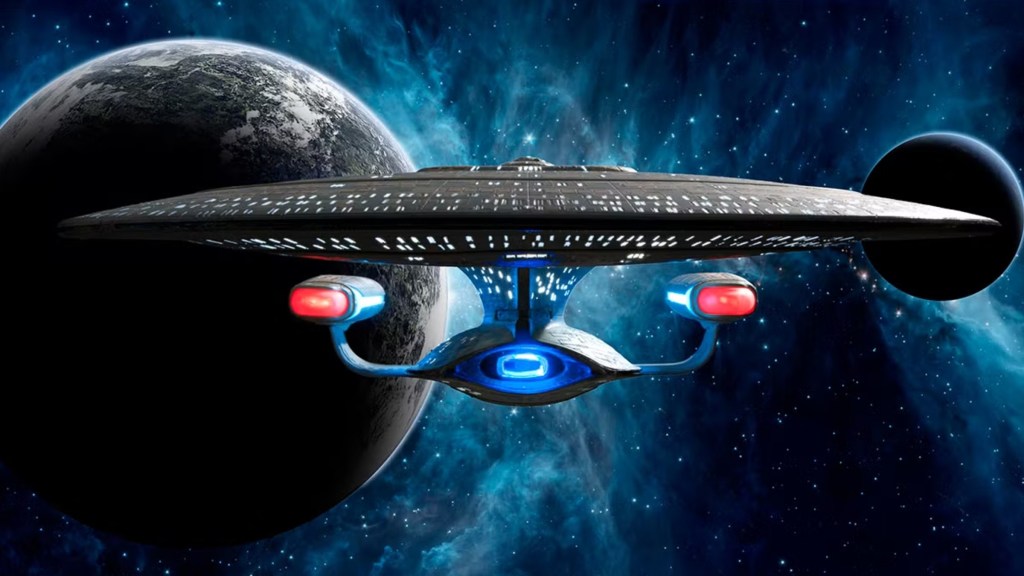
The Galaxy-class Enterprise-D is Starfleet at its peak, just as The Next Generation is Trek at its best, according to many fans. Massive, graceful, and spacious, the 642-meter-long craft functions as a self-contained floating city. Powered by a matter-antimatter warp core and capable of sustained Warp 9.6, it was designed for multi-year missions without resupply. With families, schools, arboretums, and Ten Forward, it truly felt like a home and embodied the high ideals Gene Roddenberry imagined for humanity’s future.
For seven seasons, and perhaps beyond, Picard’s Enterprise was the gravitational center of Star Trek. Equipped with a saucer separation system and holodecks, it was obviously built with optimism for the purposes of exploration and diplomacy. Yet it also had robust defense, including layered navigational and structural shields, regenerative grids, and reinforced tritanium/duranium hull plating. In offense, it was also more formidable than its “gentle giant” reputation suggests. Critics of the Enterprise-D often dismiss it as “too comfortable” or “beige,” but for millions of fans, this majestic vessel remains the most iconic in the fleet.
1) USS Enterprise (NCC-1701, The Original Series)

No starship in science fiction has a legacy quite like the original Enterprise. Designed by Matt Jefferies with real aerospace principles in mind, the Constitution-class created the template for every ship that followed, including the saucer section, engineering hull, and twin nacelles. It is instantly recognizable across cultures and generations. Built for long-range exploration, the NCC-1701 measures over 288 meters long and is powered by one of Starfleet’s earliest high-output warp cores. It could reach Warp 8 at maximum output (astonishing speed for the 23rd century) and operate independently for years at a time.
Internally, the ship has all the bells and whistles, including roomy quarters, medical bays, laboratories, transporter rooms, and one of Starfleet’s first fully integrated command-and-control bridges. Its weaponry was also cutting-edge for the period, including multiple Type-VI phaser banks and forward and aft photon torpedo launchers. Even its comparatively primitive defenses fared well in repeated encounters with Klingons, Romulans, and other entities. Yet, the genius of the Enterprise design really lies in modular design, which allowed constant upgrades, and is why variants of the Constitution-class remained in frontline service into the movie era and beyond.
Under Kirk (and later Pike in Strange New Worlds), the Enterprise explored unknown regions, negotiated first contacts, and saved entire civilizations. Its five-year mission became the foundation of the Trek mythology. Other ships may surpass it in power or comfort, but none rival its impact or ingenuity.
What’s your personal ranking of the Trek TV hero ships? Leave a comment below and join the conversation now in the ComicBook Forum!
Most Viewed
-

Sony Pictures -

Image courtesy of The Pokemon Company -

Image Courtesy of Marvel Comics -

Image Courtesy of HIDIVE -

Image Courtesy of Netflix -

Image Courtesy of Marvel Studios