
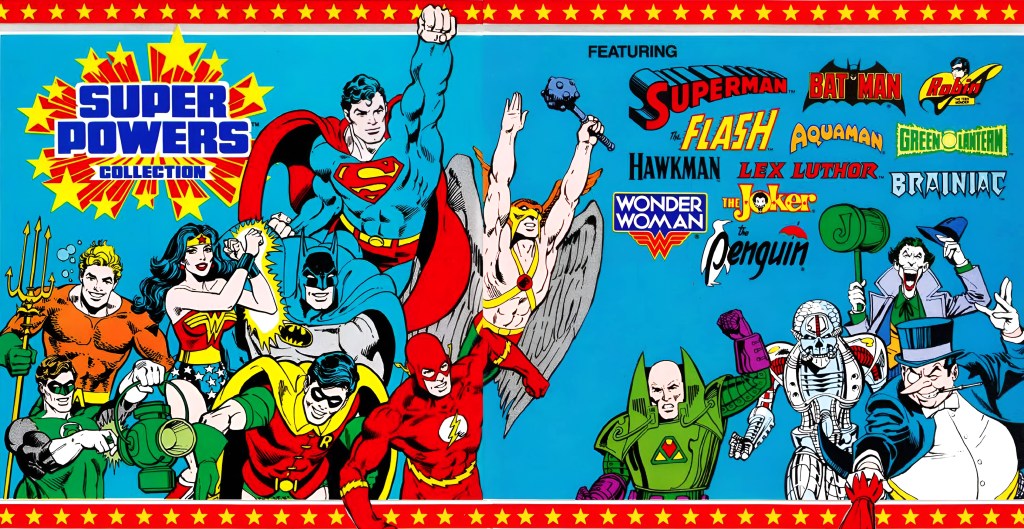
From its awesome packaging and promotional comics by legends like Jack Kirby and Jose Garcia-Lopez to its groundbreaking, universe-building character selection, Kenner’s Super Powers earns its title as one of the most beloved action figure lines ever produced. For the first time, DC Comics fans could collect a full first appearance Justice League of America line-up, or the heroes and villains of Jack Kirby’s seminal Fourth World titles. Although initially popular, sales declined after only the line’s second year on shelves, leading Kenner to pull the plug in 1986. Dozens of figures in various stages of development were cancelled, but even more tantalizing to collectors were the ones that made up the line’s final wave, produced in only small quantities before Super Powers was discontinued. Included in that final wave were fan favorites like Plastic Man, iconic villains like Mister Freeze, and the hero who outsold Superman in the forties: Shazam!
Videos by ComicBook.com
With Super Powers still a collector favorite today, it’s no wonder that these last-wave characters are some of the most sought-after in the line, with the ultra-rare Cyborg worth up to $2k mint on card. Almost as valuable is a carded Shazam, which can sell for upwards of $500 — still more than double the $200-250 price-tag for the more common wave one and two figures. Together with a carded Shazam, four of those iconic first and second wave Super Powers figures are up for auction this week with Heritage. The lot includes carded samples of Shazam, Wonder Woman, Aquaman, Doctor Fate, and Firestorm, and the price has already reached $500 at the time of writing, with four days left to go in the auction.
A Quick History of Kenner Super Powers
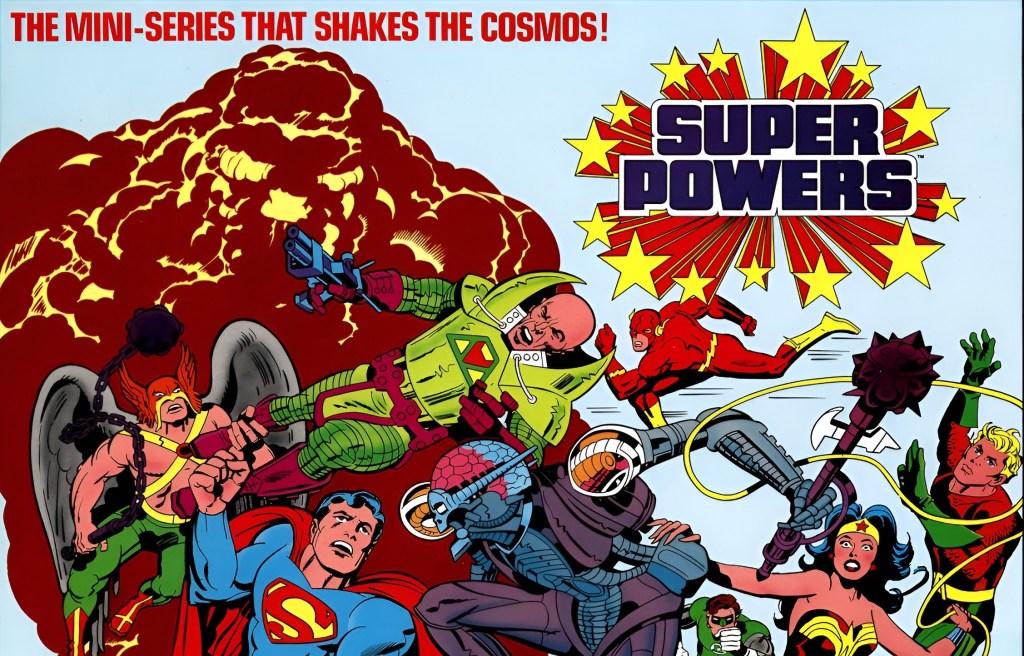
The early eighties saw a major upheaval in the action figure market when the Mego Corporation filed for bankruptcy in 1982. With Mego gone, the master action figure licenses for several major properties became available, including Marvel and DC Comics — licensed separately for the first time after previously being sold alongside each other by Mego and Ideal. Kenner chose to acquire the DC license, motivated by the characters’ then-greater recognizability and pop cultural presence: Superman II was one of 1980’s biggest box office hits, Superman III was on the horizon, and a popular cartoon series (the long-running Super Friends) advertised DC’s full array of heroes and villains to kids every Saturday morning.
Kenner’s original pitch to DC was made public in the early 2000s, and provides a detailed look at an alternate version of the line. Kenner originally envisioned four separate toylines under the “Super Powers” banner: a 12″ fashion doll line focused on DC’s female characters, a Little People-esque “Junior Superheroes” line for pre-school age children, a micro-scale line, and the 5″ action figures that were ultimately produced.
The mock-ups shown for the 5″ line vary significantly from the figures, playsets, and vehicles ultimately produced. There’s greater emphasis on the Teen Titans, as well as — frustratingly — female characters: Wonder Woman was the sole female character produced for the line, while the original pitch from Kenner includes figures of Lois Lane, Supergirl, Batgirl, Catwoman, and Wonder-Girl. A Titans Tower playset was sketched to go along with the Teen Titans wave, pitched as consisted of Wonder-Girl, Beast Boy, Cyborg, and Kid Flash. Other playsets modelled but never produced include an awesome-looking Batcave and a “planet Oa” Green Lantern base. The most interesting feature of the pitch is the deliberate blank silhouettes Kenner left in each proposed wave line-up: these were meant to be filled, at DC’s discretion, with new or newly-popular characters.
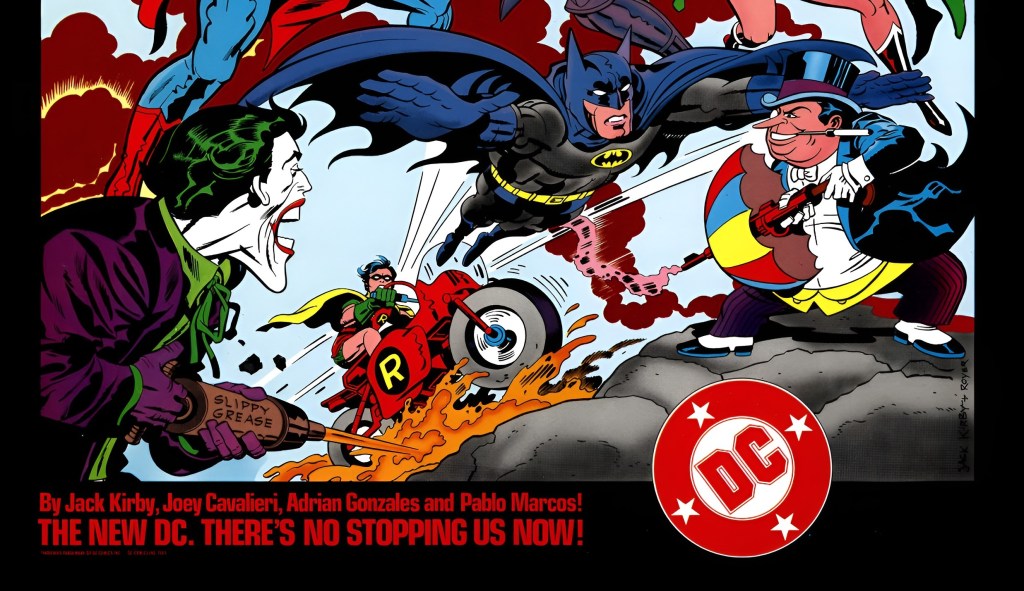
DC’s partnership with Kenner went beyond simply rubber-stamping Kenner’s products. It was an extensive collaboration, with DC lending the talents of their artists and writers to a tie-in comic book and the line’s packaging and promotional art. Jack Kirby provided cover art and the plot for DC’s initial Super Powers tie-in mini-series in 1984, as well as the interiors for a Paul Kupperberg-scripted second series in 1985. Carmine Infantino would pencil the third, again from a story by Paul Kupperberg. Character art for the figures’ cardbacks was drawn by Action Comics artist Alex Saviuk, while much of the line’s other art was taken from Jose Garcia-Lopez’s 1982 DC Comics style guide. His designs would also serve as the basis for many of the line’s figures, along with Jack Kirby’s redesigns of his own Fourth World characters. The stories and characters featured on the still-running Super Friends were also retooled to promote those featured in the Super Powers line.
How Super Powers‘ Cancellation Led to Holy Grail Action Figures
Thirty-three characters were produced for Super Powers before its 1986 cancellation. Ten of these figures made up the final wave, which only saw limited release. Their scarcity on today’s secondary market is a natural consequence: while the relatively common first and second wave figures were sold for three years, these figures were on shelves for a much shorter time frame. Once they made it to shelves, they were ordered by retailers in reduced quantities in response to diminished customer demand, further reducing availability. It didn’t help that the final wave was made up of a bizarre assortment of relatively obscure characters, including two newly-created by Kenner for the line.
Shazam was the best-known character in the wave, having starred in a live-action children’s series in the seventies as well as an animated series in the early eighties. Plastic Man had also starred in his own cartoon, while Cyborg appeared regularly in DC’s top-selling comic of the era and on the Super Friends. Samurai was also chosen based on his presence in the Super Friends, and was given a proper backstory for the first time by Infantino and Kupperberg in their Super Powers comic. Mister Freeze was chosen to add to Batman’s popular rogues’ gallery, while Orion and Mister Miracle complimented the assortment of Fourth World villains featured in the previous wave.
The final three figures in this wave are the most unusual, and subject to mixed feelings from collectors. Some laud the inclusion of the incredibly deep cut Legion of Super-Heroes foe Tyr, while others beg the question of how on Earth the character was chosen, given that no other Legion of Super-Heroes characters were produced or even considered for the line. Even stranger is Kenner’s decision to include two original characters: Golden Pharaoh and Cyclotron. Unfortunately, no official explanation has ever been offered for what the thought process behind their inclusion was, especially in regards to why they were chosen over established, pre-existing DC characters.
Collecting Kenner Super Powers Today
Some fans blame the final wave for the line’s demise, speculating that sluggish retailer orders for these figures caused Kenner to cancel further waves, as well as further production runs of wave three. The figures shipped in staggered cases, meaning that some arrived sooner and in greater quantities at retail than others. As a result, some third wave figures (Orion, Mister Freeze) are comparatively easier to locate. Conversely, Cyborg’s eye-catching vac-metal finish meant higher production costs and smaller production runs, meaning that he saw even more limited release than his wave-mates. Demand is also a factor, making the iconic Shazam or Mister Miracle more sought-after than Golden Pharaoh or Samurai.
Even with cosmetic damage to its cardback, a mint-on-card Shazam is a holy grail figure for any Super Powers collector. The sample on auction at Heritage has a few such blemishes, but the going price indicates that this doesn’t bother bidders much. There’s a spot of wear on its cardboard, likely the by-product of a semi-failed effort at removing the figure’s price sticker, as well as yellowing of the figure’s blister card and plastic tray. Undamaged is the Jose Garcia-Lopez portrait of the hero that graces the card, the only figure in the line without an Alex Saviuk-drawn cardback. Together with wave one’s Wonder Woman and Aquaman and wave two additions Firestorm and Doctor Fate, the lot serves as a mini-history of Super Powers across its three year lifetime, complete with an impressive centerpiece in Shazam.
Do you collect Kenner Super Powers? Leave a Comment below and join the conversation in the ComicBook Forum!
More Uncategorized
-
Image Courtesy of DC Comics -

Image Courtesy of Universal and A24





Forum Conversation: What's One Comic Book Trend You Wish Would Go Away?
Go to ForumI actually like characters never staying dead, to the point where any time they do stay dead it kind of upsets me.
I feel the same. Not everything has to be connected to a huge cosmic force. Sometimes it’s nice to just stay street-level occasionally.
Legacy stuff. Give characters their own identities.