Grant Morrison is one of the most legendary writers in comic history, if for no other reason than the role they played in the creation of DC’s Vertigo. They were brought to the US in the company’s British invasion, and their imaginative takes on characters like Animal Man and the Doom Patrol opened the door to a new kind of mature readers comic, leading to the creation of the ’90s’ most successful imprint. Morrison did their best-non superhero work at Vertigo throughout the decade, including a story that has become their magnum opus, at least of that far-off time: The Invisibles. This brilliant series played into many of the writer’s interests and belief about the future. It was utopian, as they believed that the new millennium would change humanity for the better (in fact, they believed that The Invisibles was a magic spell that would help this come about).
Videos by ComicBook.com
However, we all know how the ’00s changed the world, and Morrison’s hopes proved to be untenable. All of this led to one of their most underrated works, a book that serve as a dark mirror to the utopianism of The Invisibles: The Filth. This 12-issue series with artist Chris Weston (who worked with Morrison on The Invisibles (Vol. 2) #14-22) took readers in an entirely different direction, and included some of the writer’s wildest ideas and most offensive humor. It went in shocking directions, and is the perfect encapsulation of what happens when the coming utopia is replaced by a terrible dystopia.
The Filth Took Readers to the Dark Side of Society In a Brilliant Way
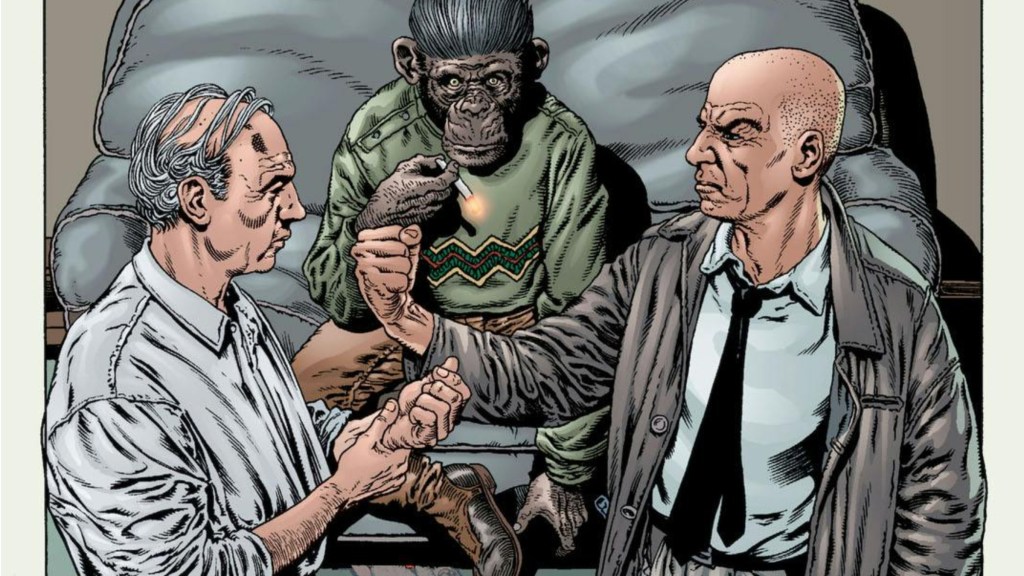
The Invisibles introduced readers to the Invisible College, made up of rebels from around the world who wanted to change things. They were utopians, hoping to allow humanity to reach their full potential in the universe. They were pitted against the Outer Church, a Lovecraftian organization full of dark gods and demons, who are the secret power behind all leaders. It was a battle of chaotic freedom against the ultimate force of terrible, fascist order, and it fit into Morrison’s belief that the new millennium would see humanity change for the better, that the Invisible would win. They were wrong; 9/11 dashed any hope of the ’00s continuing the success of optimism of the ’90s.
The Filth is in every way the opposite of The Invisibles. It introduces us to Greg Feeley, a pervert with a cat, who is suddenly told that he is a high-ranking member of the Hand. The Hand fights for Status Q, the status quo, and is the instrument of the powers of the world. It exists to destroy all but the most mundane things in the world, taking away the very power of the people, the very idea of rebelling against the system. They are the secret police of the new world order, working to make the world into a place where no one questions authority and humanity can never progress to something better and not as profitable for the leaders.

The Filth, to being with, is bat guano insane, which is putting it nicely. Morrison is known for working with artists to conjure hallucinogenic imagery, and Weston was more than up to the challenge. The world of the Hand is an insane dream of weird ’60s British sci-fi and cold machinery contrasted with the grey of the modern world, a place of the illogical building the logical. Readers are taken to the wrecked representation of the human psyche, corporatized and mined to keep people from ever wanting anything more. There’s even a portal into fictional universes, used to shape reality itself. All of that is before we get to the wild characters, like the Soviet talking chimp Dmitri-9, the Scottish wild woman Cameron Specter, Hand legend Spartacus Hughes, the twisted superhero Secret Original, the pornographer Tex Porneau, and many more.
The Filth is partly about the way society is controlled by those in power, but it’s also about identity and what it means in a world that is completely under control of the forces of conformity. Morrison takes the story in disturbing directions, questioning who we are as a society, and taking readers on the kind of ride that only they could. Morrison and Weston create an immersive mindblowing world, one that is always more than it seems. It’s a reaction to the changes of the ’00s, and it fits society now more than ever. It’s a comic that is everything Grant Morrison does best, unleashing their imagination to talk about the realities of the society we’ve built, or rather the one that the powers of the world have built for us.
The Filth Is an Indictment of Everything That Has Made Our World Into What It Is
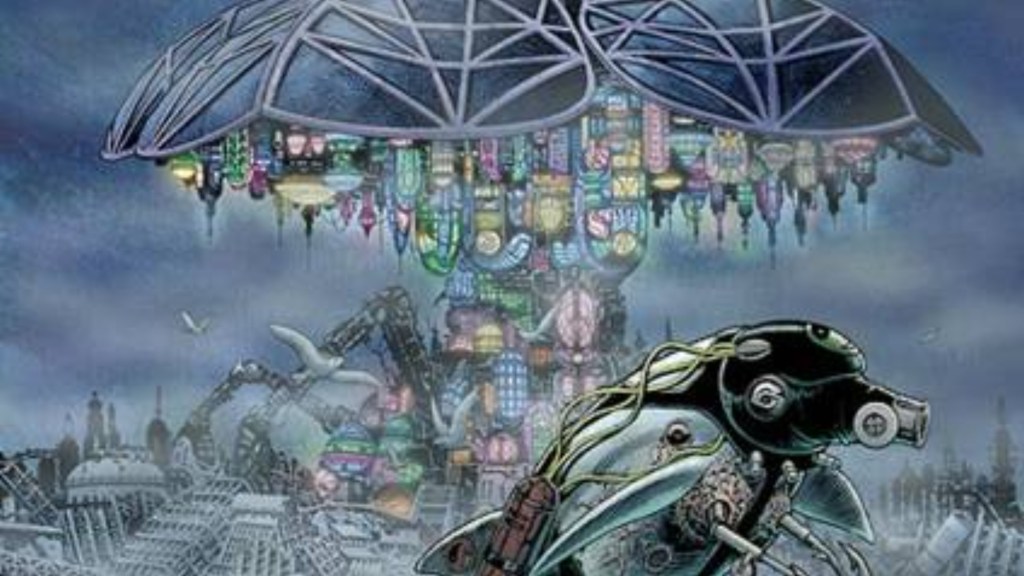
The Filth has all the hallmarks of an edgy ’00s comic (for example, there’s a lot of sex and violence, including giant sperm killing people in Tex Porneau’s LA neighborhood), but Morrison is able to bring a core of humanity to whole thing that reveals the story’s heart. While it is a story about how society is engineered to keep the people down, it shows the power of the human soul and the triumphs we can win over the dark forces that hold all the cards. It is not a hopeless story, proving that even with our souls mined for perverted dreams to sell us, the core beauty of humanity always shines through.
The Filth ran from 2002 to 2003, when Morrison was mostly working at Marvel. Back then, the more mature style of comics that the writer had pioneered was becoming the rule and not the exception, and the power of Vertigo was greatly reduced. The Filth was one of numerous comics that was pushing boundaries at the time and it got lost in the shuffle. However, that’s a shame; it’s one of Morrison’s best works and a comic that makes more and more sense as the years go on. The Filth is often the dirtiest, most vile thing ever, but it’s also the most hopeful thing ever. It’s so very human, which is its greatest triumph.
What do you think of The Filth? Leave a comment in the comment section below and join the conversation on the ComicBook Forums!
Most Viewed
-
Courtesy of Lionhead Studios -

Courtesy of Eight-Bit -

Image via Prime Video -

Courtesy of Toei Animation -

Photo by Jesse Grant/Variety via Getty Images