Chris Claremont is the greatest X-Men writer ever and it’s not even close. Claremont had been working at Marvel for a bit in the ’70s, writing titles like Iron Fist, Ms. Marvel, Deadly Hands of Kung Fu, and Captain Britain for Marvel UK, when he was given the chance to write X-Men after Giant-Size X-Men #1 brought team back. Claremont was able to make fans love them, allowing them to grow in popularity. He ended up writing the team for 16 years, from 1975 to 1991, working with some of the greatest artists in the medium, like Dave Cockrum, John Byrne, Paul Smith, Barry Windsor-Smith, John Romita Jr., Marc Silvestri, Jim Lee, and more, giving readers the best stories and characters imaginable. If you like the X-Men at all, you have him to thank for it.
Videos by ComicBook.com
Chris Claremont changed the X-Men forever and played a key role in the maturation of the comic medium in the ’80s. When his tenure with the team ended, he was one of the hottest writers in the industry and fans wondered what he was going to do next. He did end up teaming up with Jim Lee for a few issues of WildCATs, but was mostly gone from monthly comics until 1995. He didn’t drop a creator-owned series at Image or return to Marvel, as was popular at the time. Instead, he ended up over at DC Comics, where he would make his return to comics with Sovereign Seven, a book starring a new team of superheroes. Over 30 years later, no one really remembers it, which is a shame; it’s honestly one of the most interesting books of the ’90s.
Sovereign Seven Was Claremont Doing What He Did Best
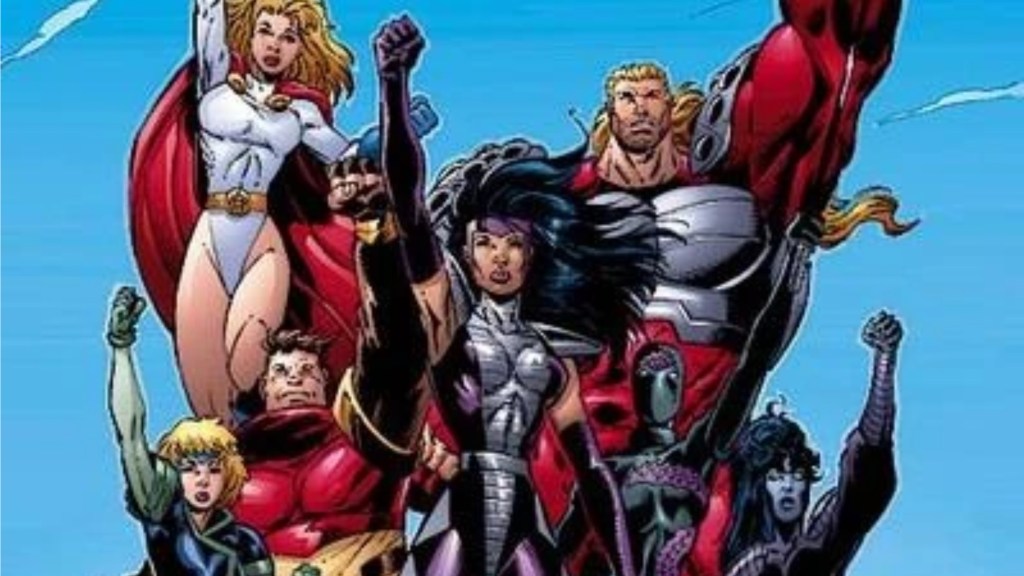
Chris Claremont gave readers the best X-Men stories and he did this in a rather simple way. Claremont books gave readers simmering sci-fi, fantastic fantasy, and spectacular superhero action, but they were, at their core, all about the characters. Claremont took the approach of the Lee/Kirby classics and concentrated on making the X-Men seem as real as possible, which paid off. Over his 16 year run, he was able to transform them into fully realized characters, allowing us to better understand who they are and why they do what they do. Uncanny X-Men became a superhero soap opera and fans lapped it up.
Sovereign Seven was a book that was made in that mold. Claremont teamed with artist Dwayne Turner and right away it was different than any other mainstream superhero book from the Big Two for a simple reason – it was creator-owned. DC was allowing him to not only play in their sandbox but letting him bring his own toys. While creator-owned books were becoming more common in the ’90s, thanks to the rise of Image and Dark Horse Comics, it was still unheard of for the Big Two to make a creator-owned book a part of their main line of books. The closest that we got at the time were DC’s Vertigo, but they weren’t superhero stories and couldn’t be bought off the newsstand. Right off the bat, Sovereign Seven was unique.
The book revolved around a cast of alien royalty, each saved from certain death by the team’s leader Cascade. Consisting of Network, Finale, Rampart, Reflex, Cruiser, and Indigo, the team would come to Earth and ended up being based out of a mysterious coffee shop, the Crossroads Coffee Bar, which is bigger on the inside than the outside and full of portals to various places. They worked at there to earn their keep, all while fighting evil and trying to unravel the mystery of who has targeted them. Claremont based the owners – Violet Smith and Pansy Jones – on the musical duo the Flash Girls. The team itself was somewhat X-Men coded (Cascade was the team’s Storm, Indigo was the Wolverine, et cetera), trying to tempt X-fans to the comic.
This was the set-up for the book and it was vintage Claremont to a tee – character-driven sci-fi superhero action. The writer gave readers the kind of verbose books he was known for, building the characters and their worlds adroitly. The team battled enemies like Darkseid and the Female Furies, with Power Girl joining the book’s cast. It only ended up lasting 36 years, with Claremont returning to Marvel to write Fantastic Four in 1998. While I wouldn’t say there were massive problems with the book, it was sort of a tough sell – all-new characters from a writer most well-known for building plots that lasted years. On top of that, DC really didn’t advertise the book nearly as much as it should have. It was never going to be as big as the X-Men, but it had its potential.
Sovereign Seven Isn’t a Classic but It’s Worth Hunting Down

Chris Claremont played a huge role in changing the way superhero comics worked in the ’70s and ’80s, helping bring about the maturation of the medium. His first X-Men run is the stuff of legend and you’d imagine that the follow-up to it would be at least somewhat successful. However, Sovereign Seven has become a mostly forgotten part of his oeuvre. While it boasts everything that Claremont’s Uncanny stories did – cool sci-fi concepts, great characters, awesome action – it was never really given the chance it deserved to shine. It was, though, an interesting little experiment in the decade of extreme.
One of the big differences between ’90s Marvel and ’90s DC is that DC was much more writer-focused than the House of Ideas of the day. The decade was all about creators realizing their worth, leading to numerous creator-owned books from the best creators out there. That’s what makes Sovereign Seven‘s existence make so much sense to me. The company giving a writer a chance to do their own creator-owned series is one of the most ’90s DC things ever. It fit into the ethos of the company of the time, and a creator-owned book in the DC Universe was definitely not what anyone expected. It hasn’t been collected in years, so you’re going to have a problem finding it but it’s honestly worth the hunt. Even Claremont’s worst works have something to them and Sovereign Seven is nowhere near bad, it just never really got a chance to find its audience.
More Comics
-
Image Courtesy of DC Comics -
Image Courtesy of DC Comics -
Image Courtesy of Marvel Comics -
Image Courtesy of Marvel Comics -
Image Courtesy of Marvel Comics -
Image Courtesy of Marvel Comics -
Image Courtesy of Marvel Comics