Beginning in 1987, 2000 AD published Zenith, a rare exploration of the superhero genre from the long-running British comics magazine. By the time it concluded in 1992, Zenith had proven to be a breakout work for creators Grant Morrison and Steve Yeowell. Zenith didn’t go on to become a recurring staple in 2000 AD alongside the likes of lawman Judge Dredd and sci-fi soldier Rogue Trooper. Instead, it remained a singular work, only revisited once by Morrison and Yeowell together in the “zzzzenith.com” one-shot epilogue in 2000. That will change in September’s Prog 2451. ComicBook can exclusively reveal that 2000 AD is returning to Zenith’s universe with a new series focused on Red Dragon, the Welsh hero from the original series.
Videos by ComicBook.com
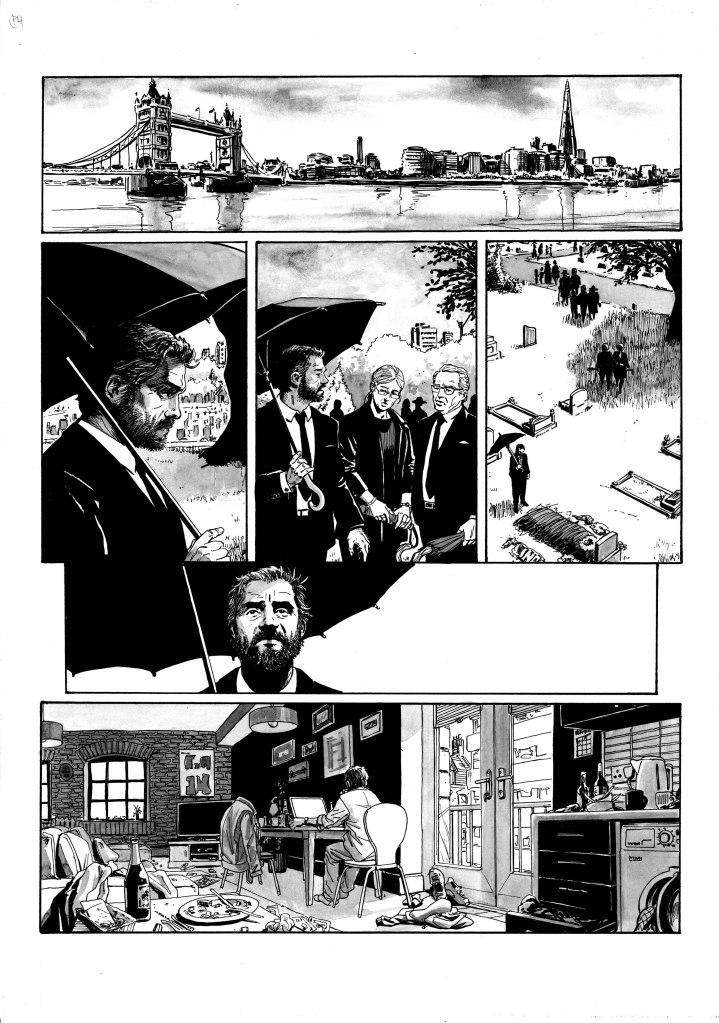
Rob Williams, known for his work on Judge Dredd and DC’s Suicide Squad, is writing the Red Dragon series. Yeowell is joining him, along with Patrick Goddard, hot off his stint drawing Rogue Trooper: Blighty Valley. The two will illustrate different eras of the narrative, with Yeowell drawing parts of the story set in the 1960s colored by Dylan Teague, while Goddard draws the present-day segments in black and white.
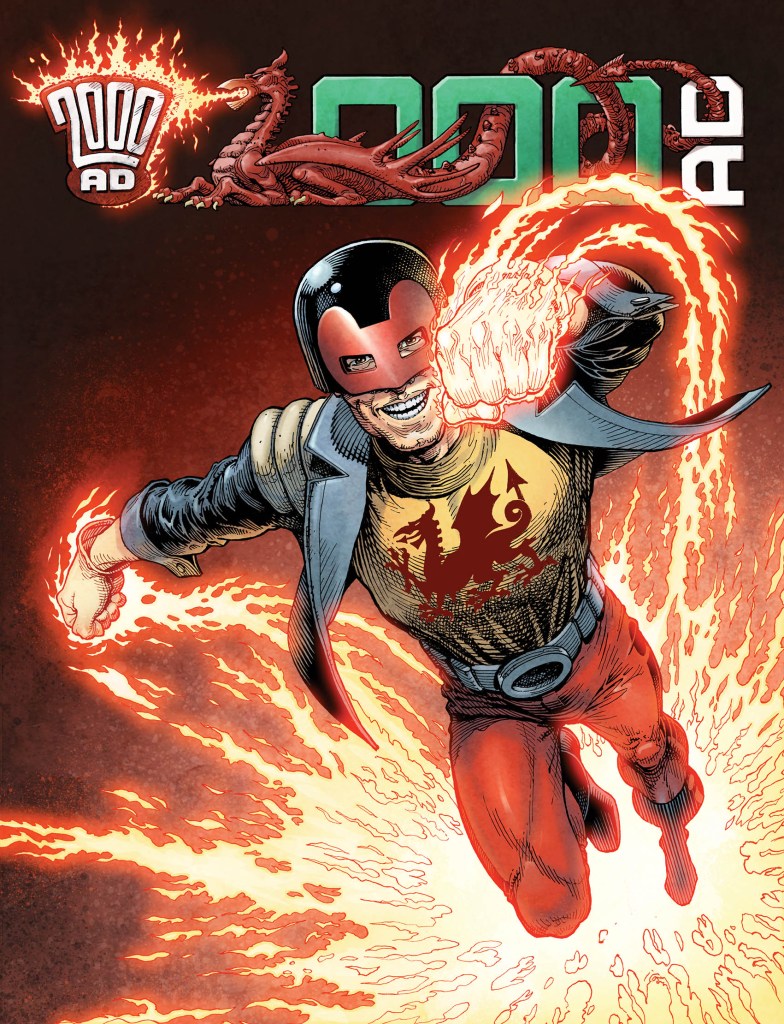
“Reading Red Dragon’s story arc in Zenith in 1987 broke my heart, and I wasn’t alone in that,” Williams says. “Grant and Steve created this vibrant, deeply flawed, extremely human character and, what’s more, he was a Welsh superhero. He sounded and felt like quite a few people I’ve known over the years growing up in South Wales, just they didn’t have the ability to fly (although there were a few alcoholics and arsonists). When I was asked if I would be interested in telling a Red Dragon story, I started to think about the idea of a Welsh superhero. Of where the UK and Wales was in the 1960s of Red Dragon’s heyday, of showing some of that optimism and bright color, and then telling a story about where Wales, and Britain, is now.”
And that led to Red Dragon. ComicBook had the opportunity to ask Williams, Yeowell, and Goddard a few questions to dig deeper into what Red Dragon is all about. Here’s what they had to say:
It’s been 33 years since the original Zenith ended, and, outside of a one-off in 2000, that universe hasn’t been revisited since. Why now? How did that idea even begin to come to fruition?
Rob Williams: I was asked if I’d have any interest in doing something with the Zenith universe. I think my initial reaction at the time was – probably sensibly – to leave a classic character alone, as anything you produce is probably going to suffer by comparison.
I forget exactly what happened, but at some stage, a possible Red Dragon series was mentioned. And I’m Welsh… So that was a dirty trick! And then, even worse than that, I came up with a story idea and a way into it that got me genuinely excited.
I rather wrestled with whether or not it was a good idea to do this story for a while, as I’m pretty sure it’s not what people are going to expect, or even necessarily crying out for. But the story stuck around in my gut, and in the end I thought, “Well, I’ve let this marinade for a good long time now and I’m still excited by it.”
So, with enormous respect for Grant Morrison and Steve Yeowell’s work on Zenith, which I loved when I was growing up reading 2000 AD, I went in.
Steve Yeowell: Rob mentioned to me his idea for a noir story set in present-day Wales featuring Zenith journalist Martin Hand and including flashbacks to Cloud Nine in the 1960s. Almost a year later, editor Matt Smith contacted me asking if I wanted to be involved in what had been fleshed out into Red Dragon, drawing the ’60s sequences that were plotted to appear alongside those of artist Patrick Goddard’s set in the present day.
Patrick Goddard: I got involved when Rob contacted me and floated the idea of the Red Dragon series. It came as a bit of a surprise, as I didn’t think that universe would ever be back. Fortunately, Rob can be persuasive, and when I heard Steve was involved, that eased any concerns about stepping on anybody’s toes.
Red Dragon is a Welsh superhero. As an ignorant American, I may not be fully aware of how significant that might be for readers in the U.K. How does his Welsh origin factor into the story?
PG: One of the big selling points for me was getting to work on one of the only Welsh characters in mainstream comics. I also get to draw parts of Wales that I know, and it’s almost like a character itself in the story (if I pull it off correctly!). As Rob said, my part is more of a detective/ investigative style of story; the landscape plays an important part in the storytelling, so I’m trying to do it justice.
RW: When we first met Red Dragon in the original Zenith strip in the ’80s, he was a Welsh-speaking, Dylan Thomas-quoting alcoholic who, in his heyday in the ’60s, was possibly the most powerful superhuman on the planet. But at some point, he stepped away from Cloud 9, the UK’s superteam, went back to a Welsh village, hid away, and drank himself to death. It was enormously exciting at the age of 16 or whatever I was when I first read Zenith, as a Welsh teenager in the valleys, to see and read a superhero who sounded like people I knew, who acted like some of them.
Red Dragon’s Welshness and the way the character leans into certain romantic Welsh traits are fundamental to the character. So I started thinking about telling a story that shows where Wales was in his heyday, and where it is now, and how being a Welsh character in a team of English superheroes would have made him feel. This is a very Wales-focused series. Three of the four creators on the series are Welsh.
Zenith readers know — and SPOILER WARNING to those who haven’t read it — that Red Dragon doesn’t make it out of Phase One of that story. They also know how his story began, how it ended, and at least one important decision he made in between, with him opting not to join in Cloud 9’s “plan.” What part of Red Dragon’s story still needs to be filled in? What are you most excited about exploring in this character’s history?
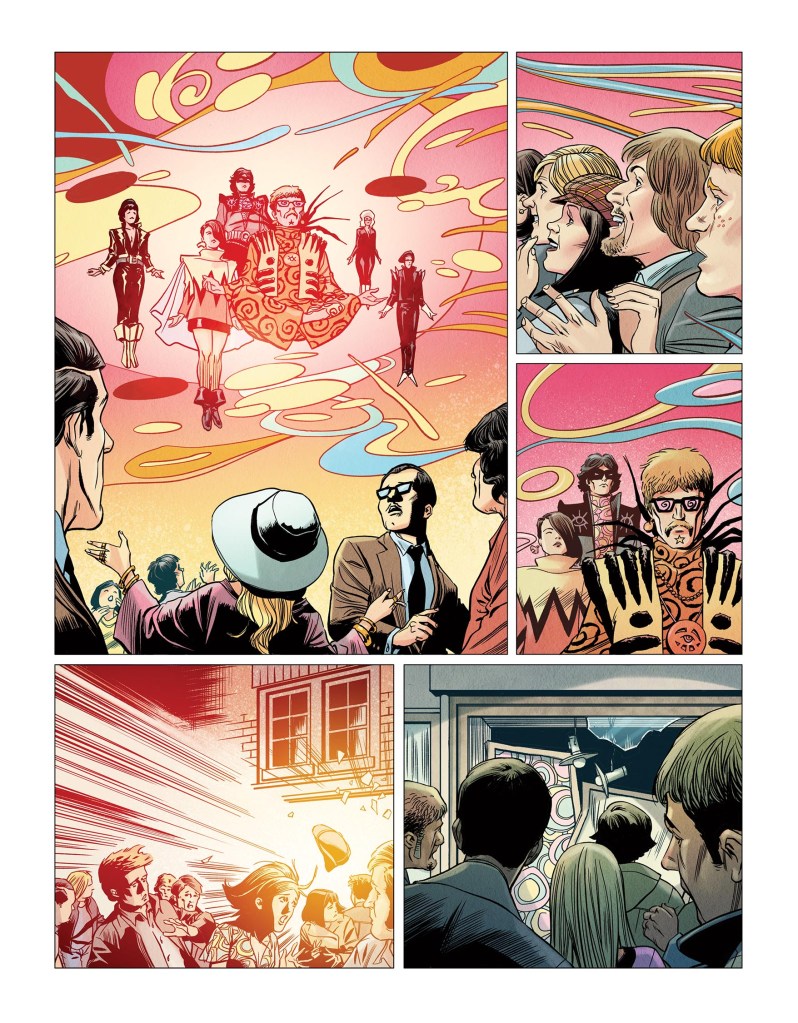
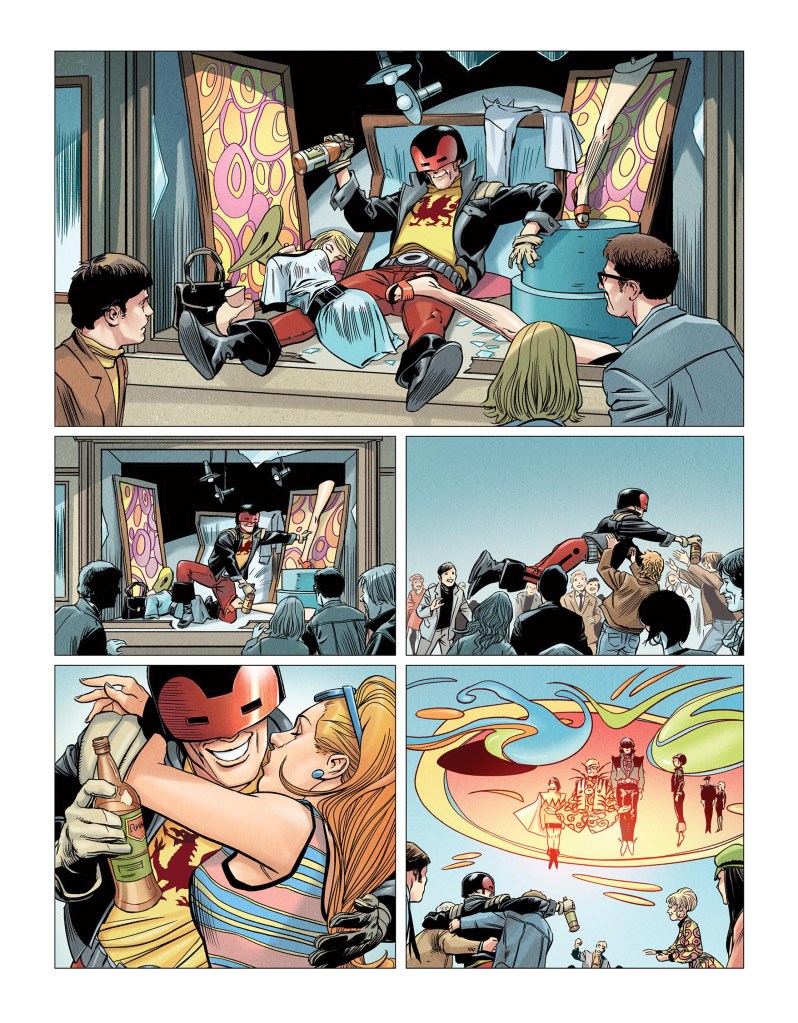
RW: Well, for one thing, I’m excited to have Steve join me for the ’60s sequences of our tale. This is a story that’s split in two, one thread showing Red Dragon at his height in London in the cool Britannia of the 1960s, where he’s young and vital and has his whole future ahead of him, the other thread being 2025 and a documentary film crew going to Red Dragon’s village to interview people who knew him.
SY: I’m enjoying drawing a Red Dragon in his prime and at the peak of his powers, unlike the older, broken, and disillusioned Siadwell we met in Phase One. Nineteen-sixties Red Dragon is a product of his times – more optimistic, more charismatic, and more self-confident (outwardly at least).
RW: That contemporary thread is being drawn beautifully by Paddy, who recently collaborated with Garth Ennis on Rogue Trooper: Blighty Valley. I had zero interest in a story that brought Red Dragon back from the dead. I wanted to remain respectful to the brilliant pathos of what Grant and Steve did with Siadwell Rhys in that first Zenith book. But there are still secrets to be uncovered, and to perhaps put some layers on Red Dragon’s corpse along the way.
PG: It’s more of a puzzle for my part, trying to piece the elements together, so I’m enjoying learning how it all goes myself!
One significant theme in Zenith is the contrast of generations — Maximan being a super soldier of the World War II era, Cloud 9 being born into the ‘60s counterculture, and Zenith an avatar of sorts for ‘80s materialism. Is that generational theme still present in this new series? What other themes are you looking to dig into with Red Dragon?
RW: Oh, very much so. I figured if we’re doing a Red Dragon story in 2025, it should compare where he came from — our ’60s sequence is full color, our 2025 sequence black-and-white, which tells its own story. This is a post-Brexit Britain and Wales that we’re using as our launching point for the series. Cloud 9 and the superheroes were the hope of a bright new world where anything seemed possible.
This is a series that asks, “Where are we now by comparison?” Where did all that promise go?
SY: From the scripts of Rob’s that I’ve worked on so far, I’d say those generational themes are very much still there, and also a conflict with authority that links the past and present.
PG: I’m looking forward to seeing the mixture of Steve’s ’60s colourful work juxtaposed against my pages and seeing how the story is woven between the two. As it’s set in the present day, you see how Siadwell made such an impact in his village and the aftermath of being there.
What can you say about Red Dragon’s visuals? Is there a desire to make it look similar to the original series, or is the style meant to differentiate it?
SY: I’ve always found that the media I use influences the final look of the art. After years of prevaricating, I’ve bought a Wacom Cintiq and am inking Red Dragon digitally over scanned analogue pencils. The new tool is bound to make its presence felt, so Red Dragon’s visuals will be, I suppose, similar but different…
RW: One of the approaches I was most excited about with this series was cutting back and forth between the two narrative threads. When we were able to get Steve for the ’60s sequences, that felt like it took the weight off. Steve co-created these characters. And Dylan Teague is colouring Steve. I’ve known Dylan for years, and we’ve talked about what that narrative thread should feel like. Psychedelic ’60s, Kings Road, the Beatles in ’67, etc.
PG: My pages are all in black and white. Rob wants an unapologetic view of Wales, showing the true grittiness of the landscape (plus it rains a lot in Wales!). I’m playing with some ink washes to add some tone, with some usual dirty dry brushing, which I hope gives it more texture. I’m certainly not trying to copy Steve’s run, I’m not that brave!
RW: Paddy’s just a rock-solid storyteller. And he’s Welsh, so we have some instant frames of reference on the landscape, the architecture, and how it looks and feels. I asked him if he’d mind maybe dirtying up his inks a bit to get that oppression of the Welsh mountains and valleys. That thread is pretty much a murder mystery, a True Detective with superpowers hidden somewhere in the DNA. I grew up in the valleys. I know what it can be like. I wanted this story to have that sense of danger, that if something bad happens out there, help isn’t necessarily coming.
The new Red Dragon series begins in 2000 AD Prog 2451, on sale September 24th.
More Comics
-
Image Courtesy of Marvel Comics -

Image Courtesy of Marvel Comics -
Image Courtesy of DC Comics -
Image Courtesy of Marvel Comics -
Image Courtesy of Marvel Comics -
Image Courtesy of Marvel Comics