DC really did start as a pulp outfit that got lucky and then got brave. In the late 1930s, National Allied Publications (what would become DC) put a strongman in tights, called him Superman, and people suddenly had a reason to feel a little less crushed by life. Batman came next, dragging noir paranoia into kids’ adventure books. Wonder Woman arrived as a messy, brilliant experiment in feminist mythology filtered through golden-age kink and psychology. From the start, DC was inventing modern mythology with the brazenness of a company that hadn’t yet learned why it shouldn’t.
Videos by ComicBook.com
Since then, DC’s default setting has been “go big.” Marvel might be better at consistency, but DC, at its best, swings for the fences in a way that reminds you why superheroes matter in the first place. They fail big, but they also succeed big, and I’ll take that over playing it safe any day.
4) Crisis on Infinite Earths
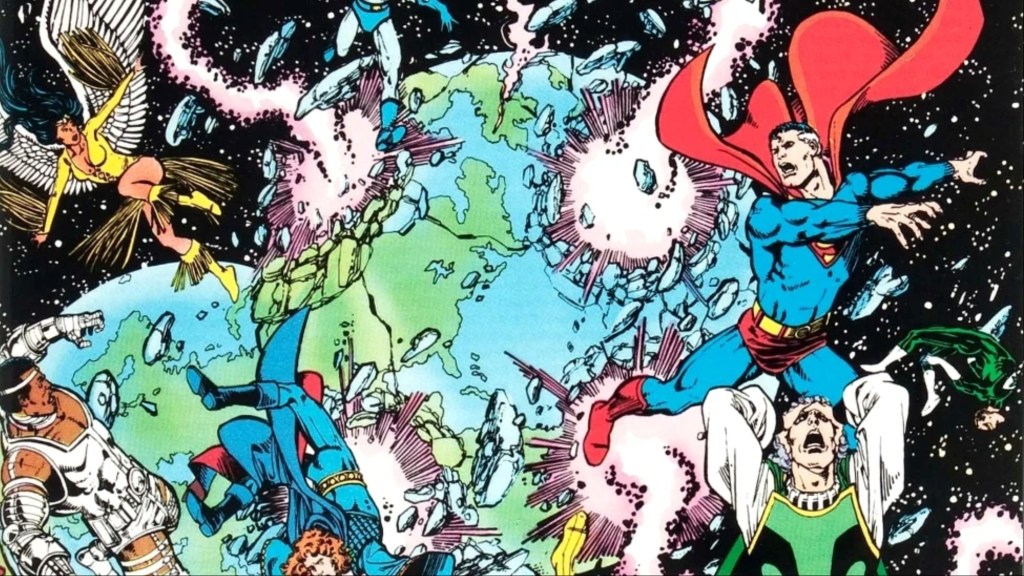
Crisis on Infinite Earths was DC’s big swing that changed their fictional universe in ways no major comic company had tried before. The series took on the tough job of merging DC’s messy multiverse into one clean universe where Superman, Batman, and Wonder Woman all lived in the same reality. It featured the Anti-Monitor gradually wiping out universe after universe while heroes from different realities teamed up to save what was left of existence. Crisis on Infinite Earths killed off popular characters who had been around for decades and rewrote histories that fans had followed for years. Its commercial success taught DC and eventually Marvel that readers would embrace continuity-altering mega-events, leading directly to spiritual successors like Infinite Crisis, Final Crisis, and Flashpoint. It inadvertently created a cycle of crisis-reboot-crisis that continues to define DC’s publishing approach, for better or worse. Perhaps most importantly, it normalized the idea that comic universes could be periodically reset to shed continuity problems.
3) Watchmen
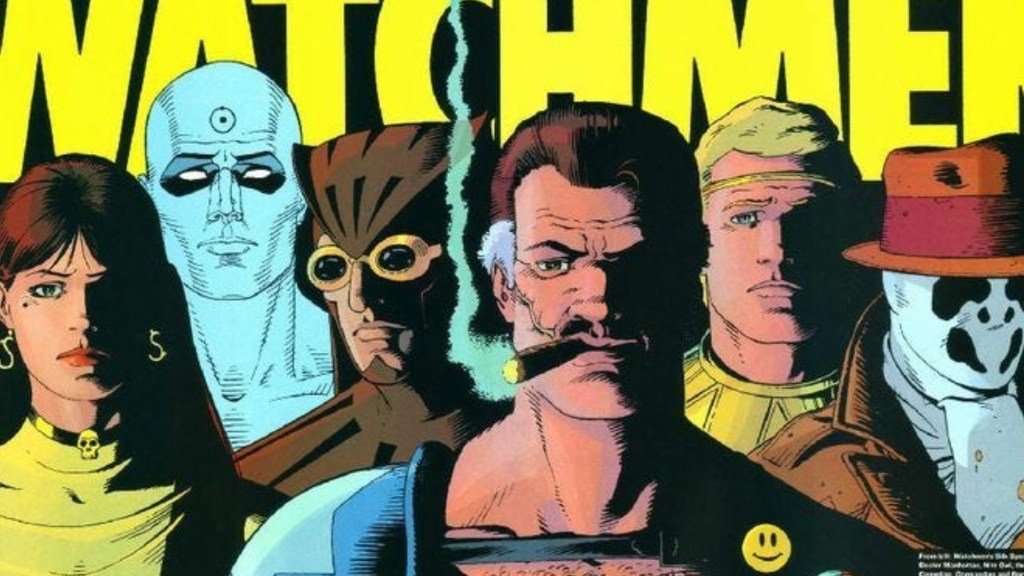
Published by DC Comics as a 12-issue limited series, Watchmen was part of a wave of more mature, experimental storytelling in comics during the 1980s. Watchmen starts with the death of a former costumed hero, The Comedian, and follows a small circle of former vigilantes as they probe whether someone is targeting costumed heroes. What starts as a murder mystery quickly grows into something bigger. By the time you reach the end, the simple question of who killed The Comedian has transformed into much tougher questions about right, wrong, and terrible choices.
If Watchmen has a flaw, it’s that its success inspired so many comics that copied its serious tone without its moral depth. This isn’t the book’s fault, but it does sometimes lead people to remember it as simply “dark” rather than “disciplined.” Within its pages, the discipline matters. The subplots feed the central question of whether ends can justify means. Watchmen also moves beyond challenging the superhero myth. It offers a more honest look at the heavy burden of making choices that affect everyone else. There’s a reason people still debate its ending decades later. The questions it raises don’t have easy answers, which is exactly what makes it special.
2) The Sandman

Neil Gaiman is one of the most celebrated writers of our time (yes, he’s had his scandals), and The Sandman is the work that cemented his reputation as a master storyteller. The story follows Dream (or Morpheus), one of seven siblings called the Endless who basically run different aspects of reality. After being trapped in a magic circle for 70 years by some wannabe sorcerer, Dream breaks free and has to rebuild his kingdom while dealing with all the problems that piled up during his absence. To say The Sandman is about Dream alone would be misleading. The series uses him as a lens to explore countless stories within stories. Gaiman also blend mythology, fantasy, horror, and philosophy into a sprawling narrative that refuses to play by normal storytelling rules.
1) All-Star Superman

All-Star Superman (2005) by Grant Morrison and Frank Quitely distills everything that makes Superman great into one self-contained story. After being overexposed to solar radiation, Superman learns he only has a limited amount of time left to live. What follows is honestly the most emotionally satisfying Superman tale ever told, as he completes a series of “impossible tasks” and tries to leave the world better than he found it. There’s something profoundly moving about watching the most powerful being on Earth face his mortality with grace. Knowing he will die reveals that his restraint, his decency, and his faith in people are not defaults. They’re values he chooses when no one could stop him from choosing otherwise. Overall, All-Star Superman asks whether a perfect ideal can be human and answers with a gentle, stubborn yes. If you think Superman is boring, this comic will prove you dead wrong.
Did we miss your favorite ambitious DC storyline? Let us know in the comments.
Most Viewed
-

Image courtesy of MAPPA -
Image courtesy of Daybreak Game Company