Marvel’s true genius wasn’t creating superheroes — it was humanizing them. While DC had gods among men, Marvel gave us deeply flawed individuals who happened to have powers. Spider-Man couldn’t pay rent. The Fantastic Four bickered like any family. The X-Men faced discrimination despite their abilities. This “Marvel method” of storytelling, spearheaded by Stan Lee, Jack Kirby, and Steve Ditko in the 1960s, changed comics from disposable children’s entertainment into a medium that could address genuine human struggles through the lens of the fantastic.
Videos by ComicBook.com
The shared universe Marvel created also ensures the constant regeneration of ideas. An event in one series can ripple through others, keeping the world dynamic. And while some periods of Marvel’s history have leaned heavily into repetition or over-the-top crossovers, even these missteps haven’t diminished its ability to tell stories that matter.
4) Civil War
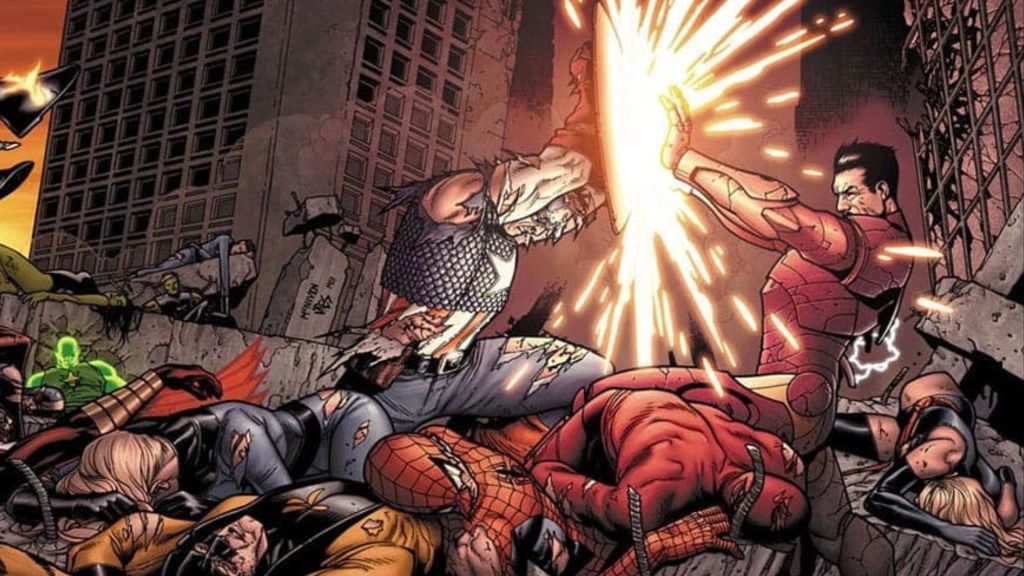
Civil War stands as Marvel’s most direct political statement in superhero form. Following a disaster in Stamford where hundreds die, the government pushes the Superhuman Registration Act. The Act forces superheroes to reveal their identities and work under government control. Naturally, this splits the superhero community. Iron Man backs the Act, seeing it as a necessary step to keep everyone safe, while Captain America fights against it, arguing it tramples on personal freedom. It’s not “both-sidesism” so much as a sober admission that power plus fear produces bad choices no matter who’s in charge. Civil War dares to turn the superhero genre inward, asking not “Can we save the world?” but “Who decides how we’re allowed to try?” Even with its rough edges, that’s a question worth the fallout.
3) Secret Wars
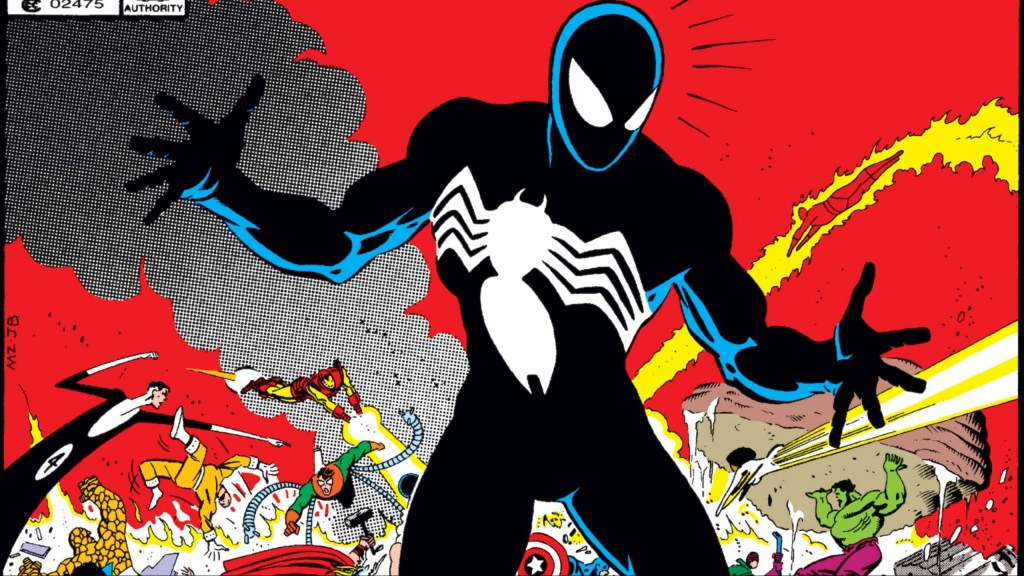
Secret Wars was a comic designed to sell toys. Marvel partnered with Mattel to create action figures, and they needed a story to justify cramming all their popular characters together. The result should have been a creative disaster, but instead became an influential, if imperfect, benchmark for superhero crossovers. The 1984 version, written by Jim Shooter, is often regarded as Marvel’s first major crossover event, where heroes and villains are whisked away to a mysterious Battleworld and thrown into epic battles. The winning side gets whatever they desire. That’s it. Somehow, that simplicity became its strength. Secret Wars also introduced iconic elements like Spider-Man’s black suit, which would eventually become Venom.
2) House of M
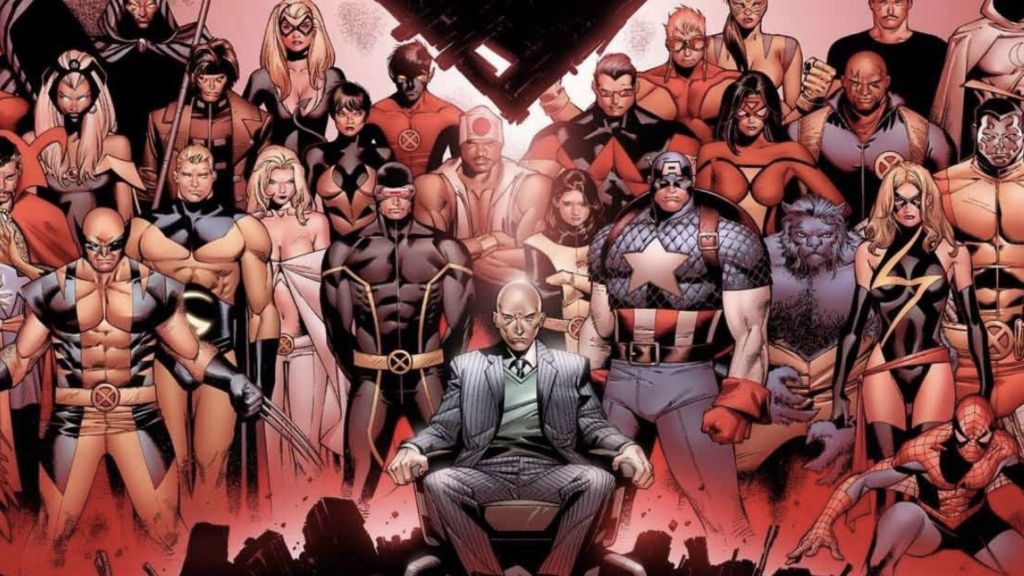
House of M explores whether creating a perfect world is worth sacrificing the truth. In this story, Wanda Maximoff (Scarlet Witch) suffers a psychological collapse and rewrites reality itself. Magneto’s family rules as royalty, and nearly every character lives out their deepest desires. However, Wolverine is the first to realize something is wrong, as his restored memories allow him to remember the original reality. He then gathers heroes from both the Avengers and X-Men, and together they confront Magneto and his family at their palace in Genosha. Eventually, Magneto discovers that Pietro manipulated Wanda into creating this reality to save her life and please their father. Enraged, he attacks Pietro, and when Wanda witnesses this apparent murder of her brother, she snaps. The event, known as “M-Day,” fundamentally altered Marvel’s landscape for years. The X-Men became an endangered species fighting for survival rather than acceptance, and many former mutants had to cope with the loss of their powers and identities. Ultimately, House of M forces the superhero genre to confront its own escapism and punishes the universe for believing the lie.
1) Infinity Gauntlet

This 1991 limited series centers on Thanos who collects all six Infinity Gems (Soul, Time, Space, Mind, Reality, and Power) to create the Infinity Gauntlet. Call it Marvel’s most honest apocalypse: a nihilist gets God’s glove and actually uses it. Unlike many event comics that promise universe-ending threats but deliver minimal consequences, Infinity Gauntlet actually follows through on its premise. With a single snap, Thanos wipes out half of all life in the universe. The heroes, on the other hand, are thrown into an unwinnable battle. Even with the combined might of Spider-Man, Thor, Doctor Strange, and the cosmic entities of the Marvel Universe, they are mere ants to the godlike Thanos. Without Infinity Gauntlet, we wouldn’t have seen the cosmic renaissance in comics that followed, from Annihilation (2006) to Guardians of the Galaxy‘s rise to prominence. For better or worse, every “universe at stake” storyline since has lived in the shadow of Thanos and his gauntlet.
What do you think? Let us know in the comments!
Want to stay up to date on the biggest geek entertainment news? Add us as a prefer source in Google – HERE.
Most Viewed
-
Image courtesy of MAPPA -
Image courtesy of Daybreak Game Company