Apex Legends has been a solid hit for EA over the last seven years, with the extraction shooter benefiting from a committed development team that keeps finding new ways to push the game forward. Sometimes, that comes through exciting new character types or radical changes to the world. Other times, it’s with the help of tie-in crossovers, like season 29’s fusion with the world of Cyberpunk 2077.
Videos by ComicBook.com
For season 30, though, the team behind Apex Legends decided to look to the past to carve out a new future — and not for the first time. This involves bringing back some fan-favorite elements from previous seasons, as well as a deep reimagining of the Bloodhound archetype for “Marked.” During an interview with ComicBook, Apex Legends senior technical designer David Weisse, senior level designer Michael Shannon, game designer Casey O’Brien, and associate design director Eric Canavese sat down to discuss why now was the perfect time to revisit Bloodhound and how “Marked” updates the game in some pretty key ways.
Why Apex Legends Is Updating Bloodhound
CB: What was the driving creative impetus behind Marked?
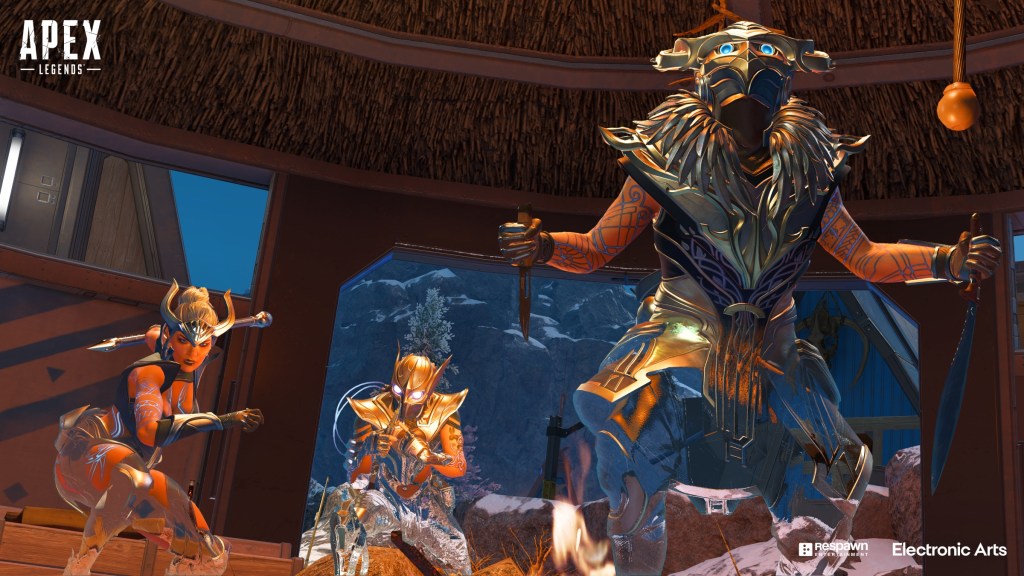
Devin Weisse: The goal to revitalize Bloodhound kicked off a lot of the theming for this event. Bloodhound has that old Norse mythology connection, referring to the Allfather and how that feeds into the World’s Edge story. The starting point was that we really wanted to do something new for Bloodhound and get them revitalized. [We wanted to] make them feel like a competitive character. We wanted players to still feel that hunter-tracker fantasy but make them feel more fearsome and give them more agency when playing. Tying that in with the map changes drove everything together to feel like a cohesive piece.
CB: Why was now the time to update/upgrade the Bloodhound? Was it fan requests, internal decisions, or just time to buff this style of game?
David Weisse: A little bit of everything. We hinted at it in Season 28. We’ve tried various buffs in the past, and while they might create momentary spikes, everyone usually goes back to playing other characters. Ultimately, we felt the time had come to give them a refreshed kit. Apex has changed a lot since launch — it’s been seven years. Bloodhound is an OG character who, similar to Lifeline, had a kit that made sense at the time but just doesn’t fit with current combat.
We wanted to reward people who play Bloodhound, love that hunter fantasy, and make players feel more engaged. Apex is a competitive game, and we don’t like it when players feel like, “I like this character, but I have to pick someone else if I want to win.” We wanted to avoid that, so it felt like the right occasion to give them a refreshed kit, increase their power, and let them actively attack rather than rely on teammates to do the work.
CB: So much of this season’s updates are rooted in stealth, both as a hunter and potentially as the hunted. What excited you all about embracing that as a driving mechanic?
David Weisse: We’ve touched on cloaking in various ways before. Mirage has a visible cloak while reviving or healing, and Crypto has some cloaking, but stealth was a core ability in Titanfall that we hadn’t fully explored here. We felt it fit the Bloodhound fantasy really well. When prototyping for this season, we tried three different versions of a new Ultimate, and this cloak felt like the strongest concept.
It delivered something genuinely new to Apex. You aren’t fully invisible, but you become much harder to track. That creates interesting gameplay: it’s great for setting up ambushes but also for escaping third-party situations or helping with rotations. Embracing stealth creates something new in the environment rather than just augmenting what was already there.
How Season 30 Changes Apex Legends
CB: What are some of the ways you’ve updated World’s Edge?
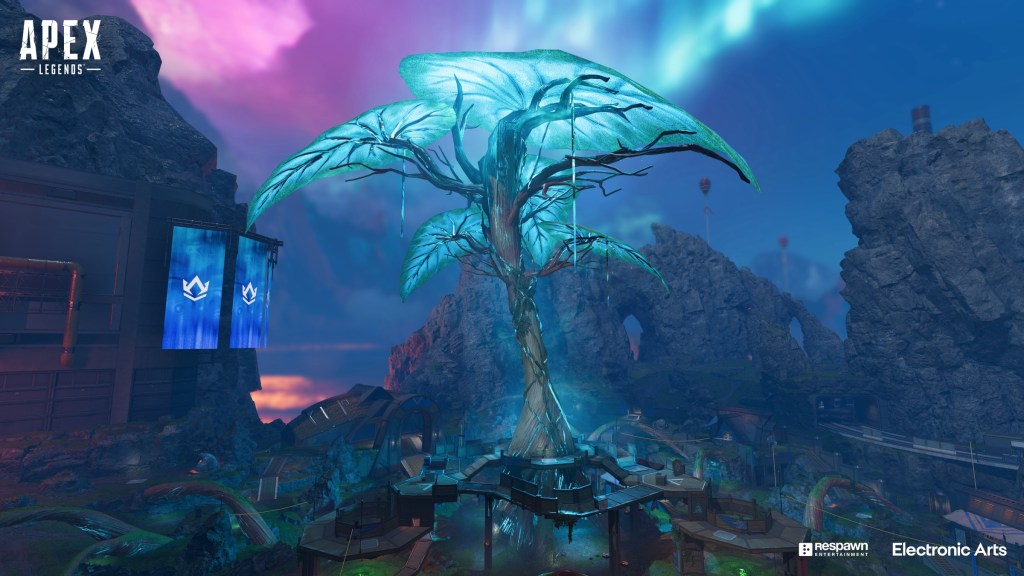
Michael Shannon: Season 30 was a great opportunity to finally bring Bloodhound’s tribe into World’s Edge and conclude the storyline about industry making the planet unlivable for them. World’s Edge was in a good place competitively and casually, but it felt a little stale. Bringing in a whole new architectural style helped alleviate that staleness, and Bloodhound’s tribe was the perfect fit. Alongside the new Bloodhound Points of Interest (POIs), we brought back some classic POIs: There’s “Sorting Factory,” a longtime fan favorite.
Compared to Lava Siphon’s giant pits and harsh gondola separations, Sorting Factory offers much less friction. It gives players more agency in how they engage, disengage, and choose fight angles, making it a healthier center-map POI. There’s also “Construction Stacks.” The building in Fragment that streamers were very fond of. We’ll never convince players not to drop Fragment, but the previous iteration concentrated combat heavily on just two spots (Streamer Building and Monument), leading to chaos. Adding Construction Stacks spreads combat out for a more consistent experience.
CB: How do you balance updating settings with a mix of the familiar (like the return of Sorting Factory/Construction Stacks) with new elements?
Michael Shannon: We tried to bring a lot of contrast. Sorting Factory represents the typical, industrial Apex style. People love it, but we’ve done it a lot. So, we took a hard right turn into something very different with Bloodhound’s tribe, which players had previously only seen in the “Stories from the Outlands” trailer.
The new POIs also play very differently from existing locations: Tree Settlement brings bold verticality that was previously reserved only for main buildings. East Village is a village-style POI with separated spaces designed to compete with Fragment, catering to players who love fast, cat-and-mouse gameplay.
CB: Where did the idea for the “Corrupted Attachments” come into play?
Casey Brian: The initial idea came from exploring how weapons and attachments could work differently in Apex. During that exploration, we stumbled upon the concept of a “kiss-curse,” picking up an object that buffs you in one way but also applies a detriment. It worked really well in Apex, so we ran with it.
Corrupted Attachments add another layer of decision-making during the looting phase. “If I stumble upon this corrupted attachment, do I want to pick it up? Will it benefit me? Can I play well enough to outweigh the drawbacks?” It enhances player choice and agency around how they gear up.
CB: What excites you the most about this season from a game design and worldbuilding perspective?
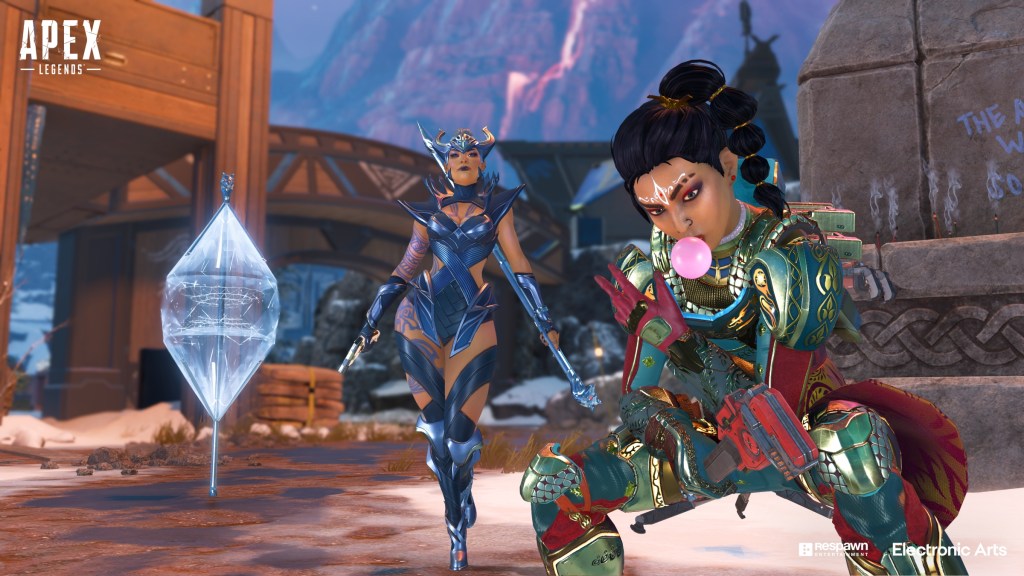
Eric Canavese: The infusion of Bloodhound into World’s Edge and continuing that story through the environment is awesome. Being able to tell stories through a living, evolving world is really fun. Once players get their hands on tree navigation, Sorting Factory, and seeing how these POIs evolved, they’re going to go nuts. Synergizing the world, story, and Bloodhound together makes this season kick off hard.
CB: What has surprised you the most about the development/execution of “Marked?”
Devin Weisse: For me, it’s the interplay between weapon/looting changes and how they affect characters like Loba. As looting mechanics shifted over time—making it easier to get unlimited batteries or big heals—Loba became less critical. Hitting the reset button on looting changes opens up a fresh experience.
If you play Loba now, you feel much more useful. Teams can’t easily get purple gear from a single POI anymore; they have to scrounge. Bringing a Loba gives your team a real leg up to secure better gear than your opponents. It’s fascinating how a systemic change not directly targeted at a character can impact them so strongly.
Casey O’Brien: To tag onto Devin’s point, testing those loot changes was eye-opening. During internal playtests with Loba, everything felt smooth and normal. But when we turned Loba off, we immediately felt how much looting had changed.
It validated our choices. Slowing down early-game looting makes progression feel rewarding from the moment you drop until the final fight. You get your candy, but you’re eating your vegetables too. Seeing that evolution from the live game has been great.
Michael Shannon: On the map development side, this was probably the fastest we’ve ever executed a map update. Because it was aligned with the Bloodhound rework, our vision was crystal clear, allowing us to build something special very quickly.
Devin Weisse: Even though it was fast, when you see the changes, it almost feels like a whole new map!
Apex Legends season 30 — Marked — is set to launch on August 4, 2026.
More Gaming
-

Image Courtesy of Sony Interactive Entertainment -

Image Courtesy of Sony Interactive Entertainment -

Image Courtesy of IO Interactive