Among any ongoing game series, Assassin’s Creed might be one that takes the most criticism due to its mainstream appeal. The fluid stealth, action, and exploration gameplay of each title has cultivated a unique identity, with mechanics that grow and change with each new entry to the series. After multiple controversial titles, though, it’s clear that Ubisoft’s vision for the franchise’s future might not match what fans want Assassin’s Creed to be.
Videos by ComicBook.com
With the release of Assassin’s Creed Shadows, players were largely divided on the game’s emphasis on a dual protagonist narrative, approach to classic mechanics, and many more minute details about the game. On the one hand, Assassin’s Creed has staggering research put into its historically accurate worlds, which all focus on certain periods of time for players to immerse themselves in. At the same time, Ubisoft’s last few imaginings of certain settings have left something lacking, through a feature that seems to diminish with each modern successor.
Assassin’s Creed Games Won’t Adopt Fluid Parkour Again For Open Exploration
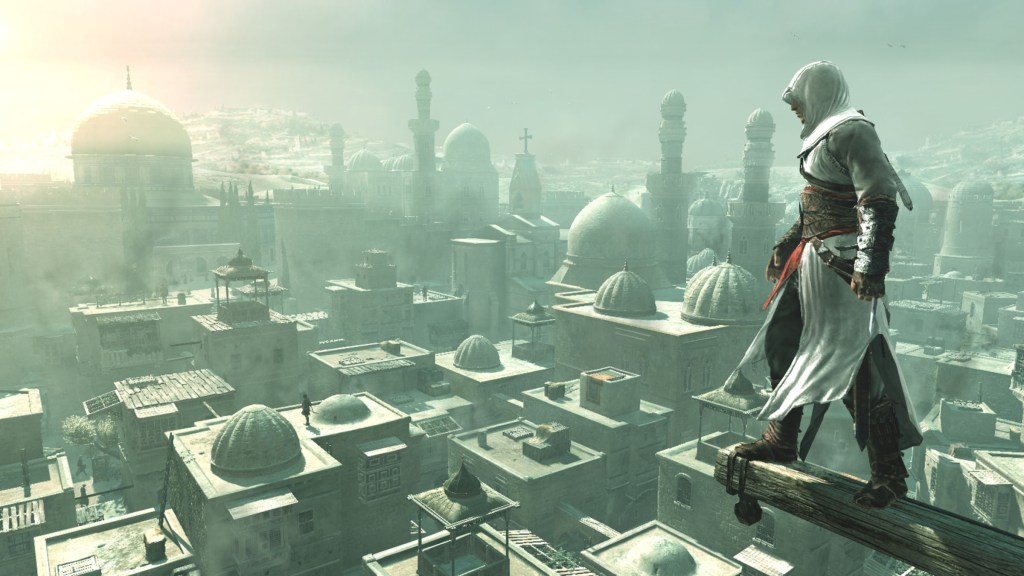
The first Assassin’s Creed games were set in dense cities, where climbing along buildings was the best way to get an overhead view of your environment. Using parkour to escape dangerous situations and hide among urban settings was arguably the most interesting aspect to the original games, especially as they adopted larger areas in future titles. However, the design of Assassin’s Creed‘s worlds has slowly reduced that gameplay down to its basic parts, shifting to focus on other action-adventure elements.
Assassin’s Creed: Valhalla, Odyssey, and Shadows all featured much larger, nearly open worlds with a lot of landscapes to travel between different locations. Unlike the dense streets of Paris from Assassin’s Creed Unity or the naturally tight islands of Assassin’s Creed IV: Black Flag, these modern interpretations of the series feature far less areas where parkour climbing is a core part of its level design. As a result, the mechanic isn’t something you use often, mainly for the occasional infiltration mission that usually prioritizes combat over stealth quickly.

All these details highlights the shift in Ubisoft’s direction for Assassin’s Creed games ever since the significant departure from its formula with Assassin’s Creed: Origins. The attention to detail put into larger and larger worlds means that there will be more natural gaps between cities or other dense locations where parkour would be a central mechanic. Without climbing through trees and rooftops being something you do constantly, parkour isn’t something that needs to be as detailed as other systems that support open world exploration.
Linear Action-Adventure Design Ideas Restrict One Of The Series’ Most Innovative Mechanics
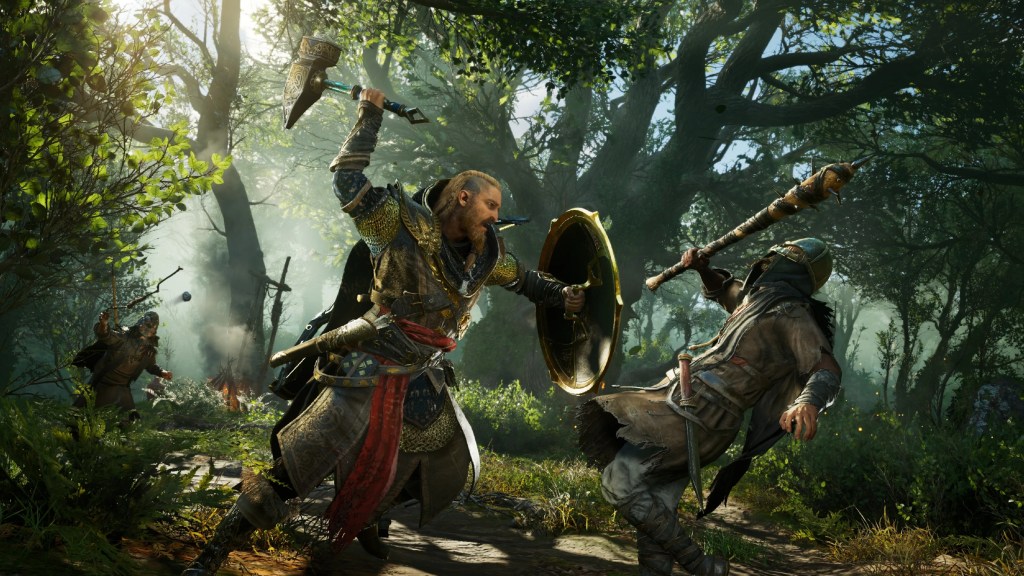
While some games like Assassin’s Creed: Mirage try to call back to the series roots with smaller, focused settings that encourage parkour, the larger action-adventure approach has stifled the feature that once defined the series. This partially comes from the series’ inclusion of more RPG details, with certain areas being far more linear based on your overall character strength. For example, an enemy base in Assassin’s Creed: Shadows has foes of a certain level, who don’t allow you to use parkour to outmaneuver or outsmart them regardless of your creativity. If you are too under leveled, you’ll fail every time.
This almost forces players to always do things the same way each time they encounter a tough situation at a new location. Engaging with unique environmental items and using unique character abilities can be fun, but for an Assassin’s Creed game, the verticality once added an extra layer to stealth that no other game had. Planning a path used to help players find new ways to gain the upper hand, while in newer titles it only seems to be a mandatory aesthetic used to unlock fast travel points.
The Past Several Games In Ubisoft’s Flagship Franchise Have Restricted Parkour Significantly

According to some fans, it almost feels punishing to use parkour in any way in titles like Assassin’s Creed: Shadows or Valhalla. With powerful RPG mechanics for your character, parkour almost feels like a far less powerful option than just walking into a den of enemies and taking them down one by one with busted skills. On the one hand, this makes it easier for new players to jump into the series, but veterans of the franchise are beginning to lose one of the main reasons they started playing.

For many, Assassin’s Creed is about freedom and agility, using fluid parkour mechanics to bend an otherwise rigid environment into another tool in your arsenal if you know the landscape well enough. Restrictions from recent titles reduce this feeling to its bare minimum, almost removing a key component to earlier stealth gameplay from earlier games. Worst of all, even new renditions of parkour put in to recapture that magic now seem slow, with limitations making them frustrating rather than invigorating.
Unfortunately, multiple Assassin’s Creed games to come out in the last decade have all but proven Ubisoft’s intentional removal of classic parkour mechanics. Perhaps this is to help new games gain a separate identity from iconic classics, but in my opinion, Assassin’s Creed is always at its best when the parkour is central to the experience.
What do you think about Ubisoft’s direction of the last few Assassin’s Creed games? Leave a comment below or join the conversation in the ComicBook Forum!
Most Viewed
-

Image courtesy of Warner Bros. Pictures -

Image Courtesy of Netflix