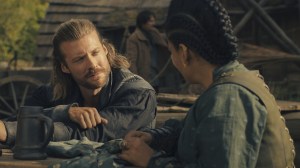
If there’s one thing you can expect to find in any Fallout game, it’s mutated monsters. Every title in the franchise has things like Radroaches and Mirelurks, but another faction of mutated baddies is not only a Fallout staple, it’s one of the best. Super Mutants are ubiquitous in Fallout games, going back to the first, and because they were once human, they retain some human-like features. As a result, there are rare examples of taking on a Super Mutant as a companion, though the vast majority of Super Mutants in the games are enemy mobs you need to fight the second they cross your path.
Videos by ComicBook.com
One of the things that makes Super Mutants such compelling creatures is their origin story, as they are not the result of radiation on humans who didn’t make it into vaults before the bombs dropped (That would be Ghouls). Instead, they were meant to be weapons of war, using the Forced Evolution Virus (FEV) to … well, force the evolution of test subjects to make them stronger, more easily controlled, and capable of fighting just about anything. They managed to knock out two of the three goals, but, as with everything in Fallout, experiments often yield undesirable results.
Super Mutants Were Meant to Be the Ideal Warriors
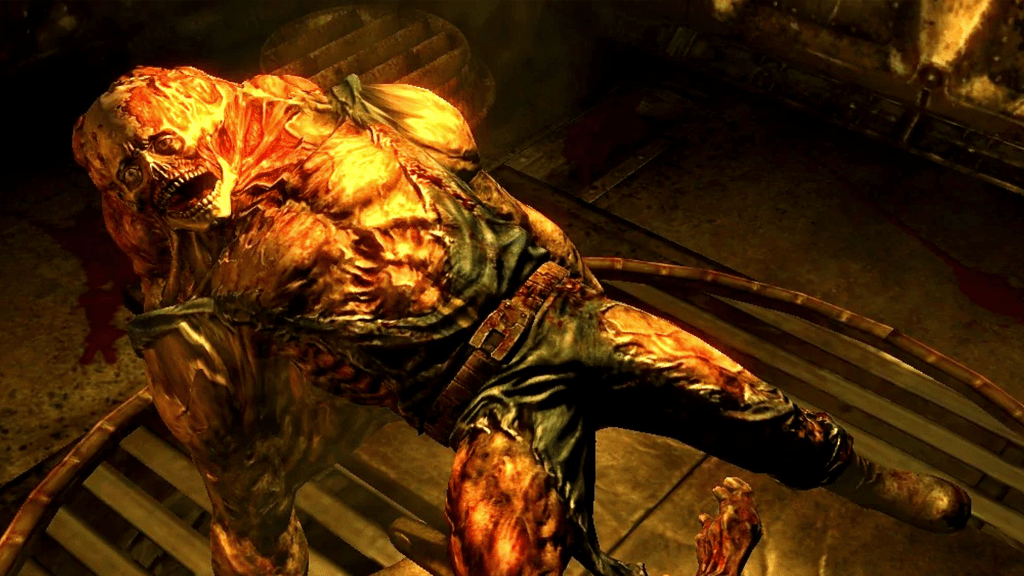
The term “Super Mutants” applies to any human that’s directly changed via the FEV, or is the offspring of the same. There are different types, as experimentation was conducted in various areas of North America, but they all share the same basic traits. They’re large, strong, resistant to disease and radiation, and they’re not the smartest mobs in the world. The Super Mutants found in Fallout, Fallout 2, and Fallout: New Vegas were all the result of experiments conducted using FEV-II at Mariposa Military Base. These Super Mutants are more intelligent than most and favor large social groups.
They owe their existence to the Master who believed he could overcome the differences between factions by forcing all of humanity to evolve into the same thing. He created them to conquer the Wasteland, but was thwarted by the Vault Dweller in 2162. The East Coast Super Mutant population was created similarly, but through a different process and version of the FEV. They are the result of a batch of unwilling test subjects who took refuge in Vault 87 (pictured). Like most vaults, it wasn’t meant to save, but to experiment. The FEV was used on Vault Dwellers, resulting in a different type of Super Mutant that is asexual and of limited intelligence.
In Fallout 4, a separate group of Super Mutants owes their existence to the Institute, which acquired a sample of the FEV. Their Super Mutants were dumped into the Capital Wasteland, where they’ve grown less intelligent with each passing generation. They also grow unnaturally, resulting in massive behemoths and other further-mutated versions of Super Mutants. While no widespread cure for the FEV exists, as it permanently rewrites a subject’s DNA, one serum was created to treat a specific strain. For all other Super Mutants, they’ve no hope (and likely no interest) in reverting to a human form.
Super Mutants Aren’t Going Anywhere
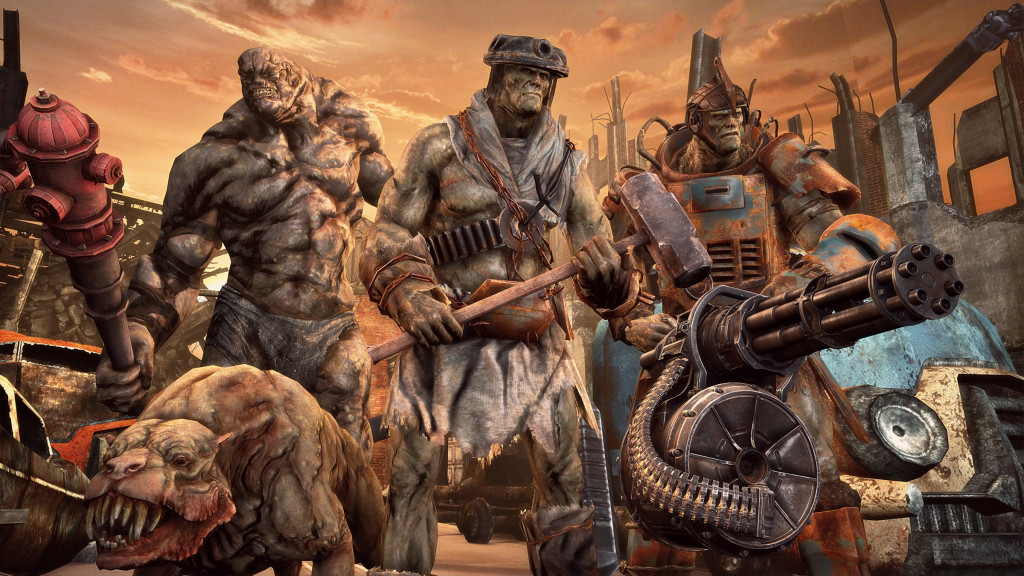
While Super Mutants were created after the Great War that ended civilization and left the Wasteland, the FEV is pre-war tech. It was created artificially at War West Tek’s NBC (Nuclear, Biological, Chemical) Division, meant to develop highly evolved super soldiers. Of course, this didn’t happen as planned, and the resulting populations of Super Mutants that are undeniably powerful fighters aren’t what the FEV’s developers had in mind. Its existence is one of the primary reasons the Brotherhood of Steel came into being, as it seeks to contain all technology for the dangers they could pose. The FEV certainly fits, and because Super Mutants are such a staple of the franchise, they’re not going anywhere.
Do you love fighting Super Mutants in Fallout games? Leave a comment below and join the conversation now in the ComicBook Forum!
Most Viewed
-

Courtesy of Sony Pictures Animation / McDonald's -

Image courtesy of Marvel Television -
Image Courtesy of Marvel Comics