The Resident Evil movies are absolutely rife with clones, clones, and more clones. The clones in these movies outnumber the ones seen in the Resident Evil games, but that doesn’t mean the interactive portion of the franchise is without its own set of fleshy copies. Cloning has been a part of the series for some time and touches on friends and foes alike, as well as those who operate in those margins.
Videos by ComicBook.com
Here’s a brief collection of cloning’s history in Resident Evil games. Just be warned, this article has heavy spoilers for many games in the franchise, including Resident Evil Requiem (which is the final section).
5) Resident Evil: The Umbrella Chronicles
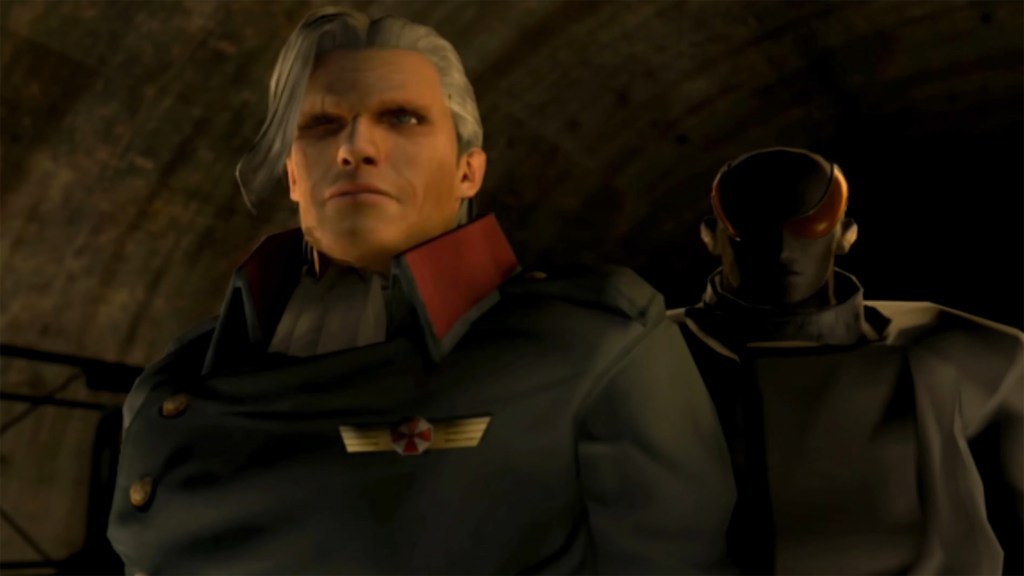
Resident Evil: The Umbrella Chronicles explains the origins for the Tyrant, the giant humanoid bioweapons seen throughout the series. Sergei Vladimir, a future Umbrella Corporation executive, took part in a Soviet research project that specialized in human cloning, which produced 10 copies. He later sold those 10 clones of himself to the Umbrella because he was one of the few people that would be compatible for Tyrant experimentation. His tanky build echoes in later Tyrants and his clothes even match the look of Resident Evil 2‘s Mr. X, as the two sport a long leather trench coat.
4) Tyrants (and Hunters)
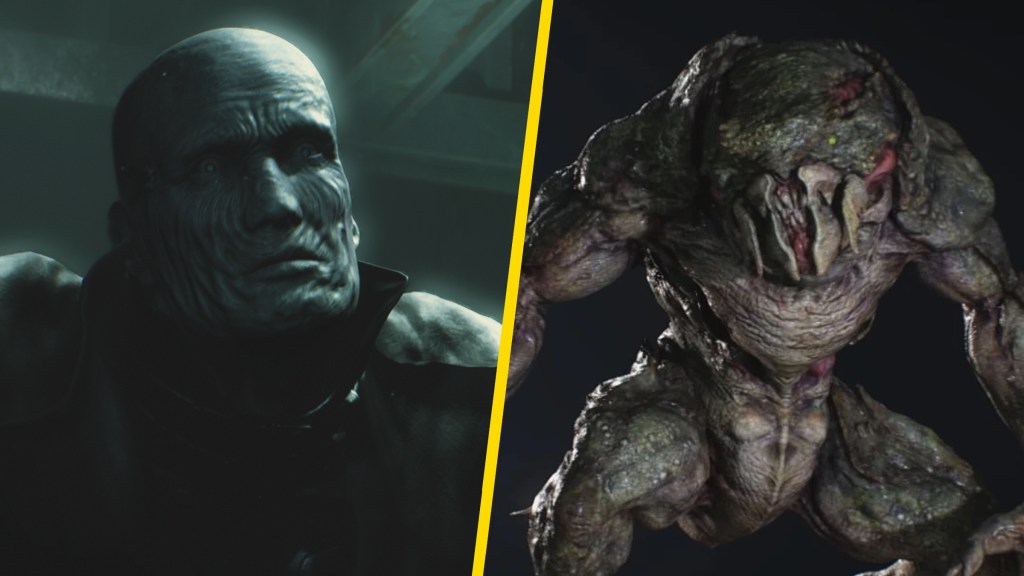
Tyrants not only stem from Sergei’s clones, but many are clones in and of themselves. Cloned embryos of the T-002 (the Tyrant from the first Resident Evil) gave way to further research that led to later Tyrants, like the T-103 (which Resident Evil 2’s Mr. X is a part of), Tyrant R (who is in Resident Evil Outbreak: File 2 and Resident Evil: The Umbrella Chronicles), Thanatos (from Resident Evil Outbreak), T-078 (from Resident Evil: Code Veronica), T-091 (from Resident Evil: Dead Aim), the Ivans (Sergei’s two bodyguards from The Umbrella Chronicles), and Tyrant C (also from Resident Evil Outbreak: File 2). Nemesis, the infamous stalker from Resident Evil 3, is also a result of this initiative, as he came to be when a T-103 clone was successfully merged with a NE-α parasite.

Hunters, the bipedal and reptilian monsters seen throughout the series, were able to be produced in high quantities through cloning. Mixing human and reptile genes along with the T-virus proved trying for its subjects. However, once a promising and enduring candidate emerged, they were cloned in order to create more Hunters.
3) Resident Evil: Code Veronica
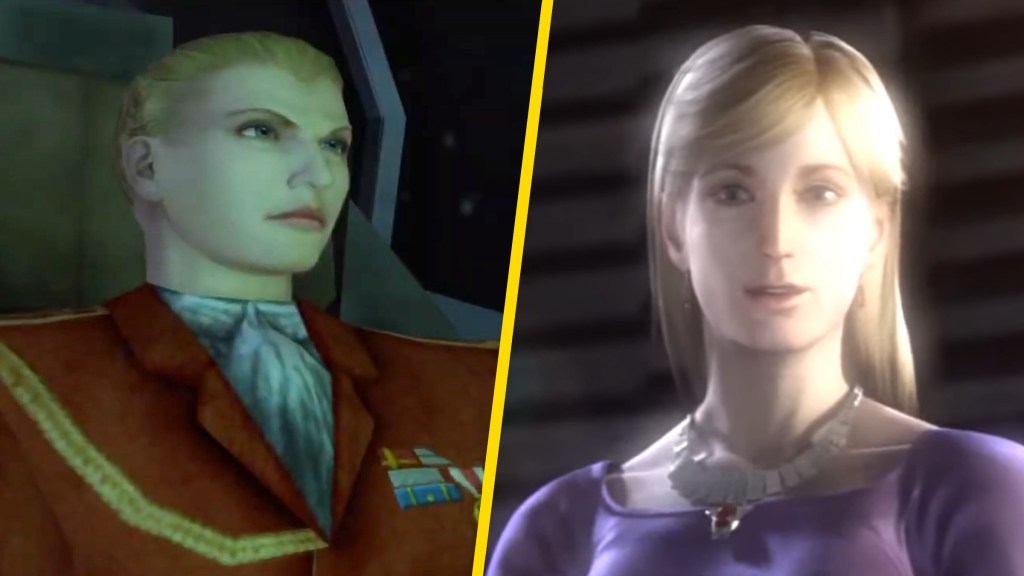
Alfred and Alexia Ashford are both clones created by Dr. Alexander Ashford, and all three play a key role in Resident Evil: Code Veronica. Their creation fell under the Project Code: Veronica, a project meant to craft a successor to the Ashford name who could carry on the legacy of Veronica Ashford — the intelligent and ennobled founder of the Ashfords — and keep Oswell Spencer from taking full control of Umbrella Corporation if Alexander were to die.
There was only supposed to be one clone, as Alexia was meant to be the one exact clone of Veronica. But the zygote split, which explains how Alfred came into the picture. Alexia had Veronica’s intellect, but Alfred was not as lucky. Upon learning of their origins and how he wasn’t quite as smart as Alexia, Alfred captured Alexander, locked him away, and injected the t-Veronica into him, which turned him into Nosferatu, one of the game’s bosses.
2) Resident Evil 6

Cloning is at the heart of Resident Evil 6. Carla Radames, one of the antagonists, is more or less a clone of the suave spy Ada Wong. Carla was a researcher under the leadership of Derek Simmons, another one of RE6’s antagonists. Derek became obsessed with creating an Ada clone with the C-virus and went through over 12,000 subjects to achieve that goal.
Radames, eager to impress Simmons, used her body as a subject and became the first successful mutation into Ada, something the player can witness through a tape showing Radames’ new form emerging from her cocoon. Her exact resemblance to Ada is confusing for the other characters and appears as though Ada is the one driving the world into ruin. Ada ends up killing this copy in her campaign, while Carla still claims she is the real Ada as she crumples into goo and into a form much less human. Players can differentiate between the two through their clothes: Ada’s shirt is her signature red hue, while “Carla” is in a blue dress.
1) Resident Evil Requiem

Resident Evil Requiem dabbles with cloning, albeit in a strange way. The creepy kids in the orphanage are all attempted copies of Grace, one of Requiem’s protagonists. These children were copied in order to duplicate Grace in order to crack the Elpis code, a puzzle and presumed weapon Umbrella Corporation’s Oswell Spencer left in his wake.
The slick-talking Zeno is also heavily implied to be a clone of Albert Wesker, a long-time series’ antagonist. Requiem never explicitly spells it out, but there are many clues that point to him not being a unique, naturally born human. For one, Zeno has the same rapid movement power Wesker had, a gift they both use to dodge bullets and quickly close the distance. Victor Gideon, Requiem’s main antagonist, also tells Zeno he is “nothing but an imitation,” and Leon describes Zeno as a “ghost.” The parallels even stretch out to the real world since Craig Burnatowski voices Wesker in the Resident Evil 4 remake and Zeno in Requiem. It’s possible Zeno’s backstory will be further spelled out in DLC or another entry down the line.
What do you think? Leave a comment below and join the conversation now in the ComicBook Forum!
More Gaming
-
Image Courtesy of S-Game Publishing -

Image Courtesy of Ubisoft -

Image Courtesy of Dotemu -

Courtesy of Electronic Arts -

Image Courtesy of Electronic Arts -

Courtesy of Arkane, Bethesda Studios, and Marvel Games