Launching on the Super Nintendo, Super Mario Kart was a good early indicator of the adaptable potential of the mainline Nintendo franchise. The racing game was a completely different type of game from the core platforming franchise that starred Mario, but it nevertheless proved to be a hit with players. This has led to over a dozen games across multiple consoles, as well as becoming an undeniable part of the franchise’s broad appeal.
Videos by ComicBook.com
The game that really moved Mario Kart into the spotlight was Mario Kart 64 for the Nintendo 64. Intended to be a launch title for the console but held back for a few months, the racing game’s tight controls, 3D courses, and smooth multiplayer gameplay made it an instant smash that remains one of the best-selling Nintendo games of that generation. Now, nearly thirty years later, it’s worth considering if that fan-favorite entry in the series remains the best example of the sub-franchise, or if sequels have moved past it.
Mario Kart 64 Is A Fan Favorite For A Reason
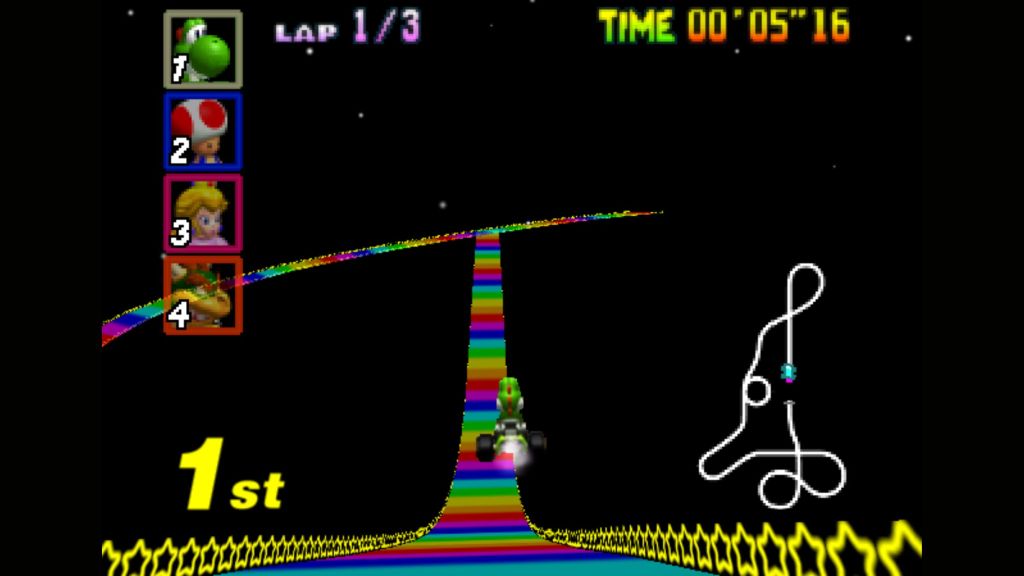
Mario Kart 64 debuted in North America on February 10, 1997. The second entry in the series moved the action into 3D, following the 2D original. One of the first games to be announced for the console, Mario Kart 64 was a hit with critics — and an absolute phenomenon with players, staving off competition like GoldenEye 007 and The Legend of Zelda: Ocarina of Time to remain the second best-selling game for the N64. The trick was that the developer used the new processing power provided by the console to deliver a smooth gameplay experience, with an emphasis on tight controls over flashy gimmicks. The bright colors and creative landscapes of the Mario franchise gave the title a bit of additional visual sheen, making up for the greater focus on gameplay over graphical pushes.
Clever innovations, such as rendering the characters in 2D helped smooth out any potential visual hiccups. A big motivation for that focus was the desire to provide a slick, effective four-player experience that didn’t suffer from lag. While some critics at the time were frustrated by the graphics and track design, the game received a solid 83/100 cumulative score on Metacritic. That focus on multiplayer helped make the game a hit with players, with countless birthday parties, sleepovers, and college dorms dominated by the game. While Mario Kart had been successful on the Super Nintendo, the N64 entry in the series was a massive hit for Nintendo and helped cement Mario Kart as one of their primary multiplayer franchises.
Nintendo Has Refined Mario Kart In Some Key Ways Over The Years

Decades later, it’s easy to look at Mario Kart 64 with rose-tinted glasses. The game remains a blast to play, but it’s hard to deny the effectiveness of quality-of-life upgrades that have come with subsequent releases in the series. The larger tracks, wider selection of items, and tighter gameplay tweaks have made games like Mario Kart 8 and Mario Kart World more impressive on a technical scale.
However, it’s hard to argue against the effective lean elements of Mario Kart 64. While there’s always going to be a certain amount of nostalgia clouding the judgment of any player who grew up with the game, there’s an undeniable amount of tight gameplay design and craft behind the scenes. The scope might seem limited compared to the open-world elements of Mario Kart World, but that can also help the classic title feel more refined and less prone to unexpected chaos or network issues.
Mario Kart: Double Dash took everything about Mario Kart 64 and made it bigger, making it a strong contender for the top spot, while the streamlined gameplay of the GBA Mario Kart: Super Circuit or the plethora of options present in Mario Kart 8 Deluxe give it a certain edge over Mario Kart 64. Going by Metacritic scores, Mario Kart 64 isn’t even among the top five entries of the series. Ultimately, the series really grew over time, taking what worked about Mario Kart 64 and enhancing it with each subsequent generation. As a result, though, it’s hard to compare that classic game to modern iterations.
There’s just more to do and better gameplay present in something like Mario Kart 8 Deluxe, which had the benefit of more powerful consoles and decades of lessons that Mario Kart 64 didn’t have. While it may not be the best entry in the series, though, there’s still a lot to love about the stripped-down, entertainingly lean gameplay of Mario Kart 64. Plus, all those memories of playing the game on Saturday night hangouts will never go away. If anything, the success of that title gave Nintendo more confidence to invest in the series, setting it up for the new heights that it has found in the years since. While later Mario Kart games might have surpassed Mario Kart 64, they would have never gotten that far without the Nintendo 64 game laying out the track for them.