Resident Evil Requiem retains a classic element of the franchise’s game design and uses it better than any other entry in the series. Requiem is coming out the same year as the franchise’s thirtieth anniversary, so it makes sense that a certain amount of the game is reflective of the legacy of those games. The title brings back plenty of classic villains and references long-dead enemies, while also balancing new dangers and an open-ended future. One of the ways the game literalizes that concept is by focusing the narrative around a veteran of the series like Leon Kennedy and a relative rookie in Grace Ashcroft.
Videos by ComicBook.com
It’s far from the first time Resident Evil has used two playable characters to expand the narrative, with that trend going all the way back to players choosing to play as Chris or Jill as they explored the Spencer Mansion in Resident Evil. However, no game in the series has been able to use that separation to as good an effect as Resident Evil Requiem, which underscores a lot about the characters’ personal arcs in their differing playstyles. More than just allowing the game to be both survival-horror and action-horror, this approach does a great job of immersing players fully into the story.
Resident Evil Requiem’s Dual Leads Is Part Of A Long-Running Series Trend
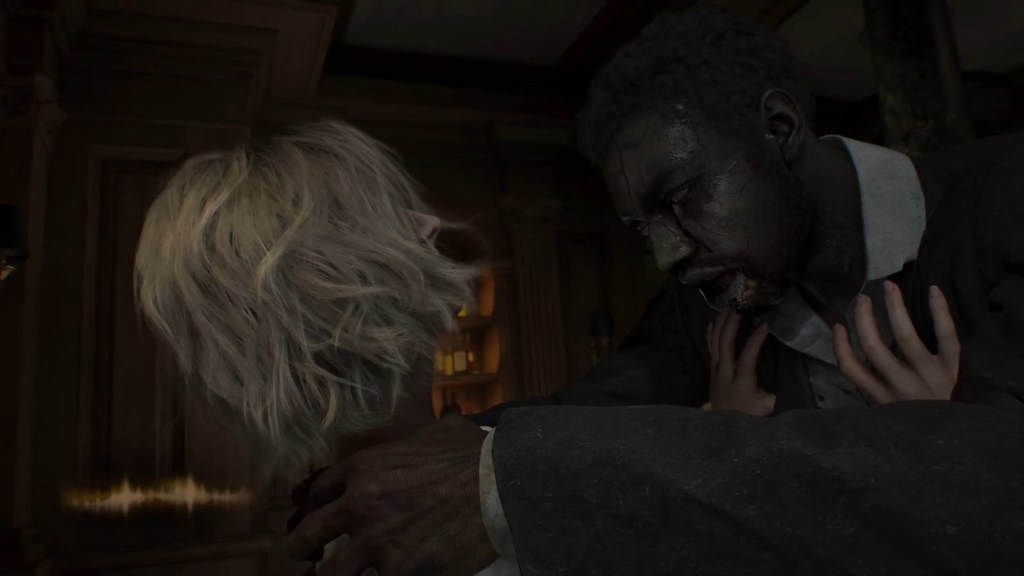
Resident Evil has always embraced having multiple playable protagonists, but none of them have used it to its advantage quite like Resident Evil Requiem. From the first level on, Requiem establishes that players will be alternating not just perspective but play style. Grace and Leon may have the same general controls, but they’re very much in different styles of horror adventure. Grace takes cues from the survival-horror games of recent years, with the recommended first-person perspective in a harrowing location recalling Ethan Winters’ more frightening moments in Biohazard and Village.
By contrast, Leon plays like the Leon Kennedy of Resident Evil 4 and Resident Evil 6, with roundhouse kicks and handaxe slashes that lean far more heavily into action. In previous Resident Evil games, there have been multiple protagonists, but the overall game experience has been similar. Chris and Jill, Leon and Claire, Rebecca and Billy, and plenty of other duos have been differentiated by some underlying elements like greater health or different items. While those differences created some unique elements to each route, the overall game still felt the same. That’s not what Requiem does. Instead, it roots the gameplay differences in the two distinct characters, using those tweaks to reflect their respective arcs in clever, immersive ways that go beyond simple gameplay tweaks.
The Character Swaps In Requiem Make The Characters Better

At first, the alternating approach to Leon and Grace comes across as a way for Requiem to be a bit of both worlds, reflecting the differing approaches to the series that have been used in the past. However, as the game progresses, those differences become more pronounced and reflective of character. Grace’s arc sees her confront her trauma and her past, growing more confident as the game progresses. As players adjust to her weaknesses and adapt their gameplay to her, they become just as skilled as she is. Revelations shake Grace, but her resolve grows – reflected naturally by her growing ability to craft weapons and upgrade her qualities. It’s a classic video game design trick, tying the character’s thematic growth to her developing abilities, but it’s an effective one in Requiem thanks to Angela Sant’Albano’s great performance in the role. Leon’s gameplay reflects his vast experience in dealing with bioweapons and horrifying situations, but also gradually feels the weight of age and the exhaustion caused by his infection.
As such, Leon’s action-heavy gameplay gradually becomes overwhelmed, leading to some of the game’s best fights as he still has to match massive enemies. It’s all a clever way to infuse their respective arcs into the underlying game design, and it all helps Resident Evil Requiem’s different sections genuinely feel different. Having two protagonists has been a common element of Resident Evil since the very beginning, but there’s something uniquely compelling about Requiem’s approach. The differences between the characters are clear from the way they handle their in-game responses to events. Their interactions underscore their differences, especially as Grace grows more capable and Leon becomes more desperate. There’s a real sense that these are two very different characters, with two very different play styles – but neither of them feels disconnected from the other and actually highlights the different strengths that both characters have over the other. Their connection grows as the game continues, and the player really gets a feeling for both characters in how they play in contrast to one another. While Resident Evil has given players multiple characters before, it’s never been as effective as in Resident Evil Requiem.
More Gaming
-

Courtesy of Wizards of the Coast -

Image Courtesy of Kwalee