In past generations of gaming, it was easier for critics to dismiss the medium as lacking in the artistic potential of other forms. Just as other types of entertainment, such as film, had to convince the old guard, gaming has evolved over the decades, especially as a means for creatives to craft entire worlds defined by stylistic flourish and artistic depth. While it’s a much more accepted idea today, games like Rez were classic outliers in their eras.
Videos by ComicBook.com
Hitting the PlayStation 2 on January 8, 2002, after launching for the Dreamcast in Japan the previous year, Rez is a throwback rail shooter that sends players flying through a massive techno landscape and shooting down enemies. This tried-and-true game mechanic is elevated by the artistic intention of the developers, who infuse abstract art, subtle storytelling, and absorbing music to create a hypnotic experience. Even 24 years later, I’m still sad that the game was a commercial flop — but I’m glad Rez now gets the respect it has always deserved.
Rez Was Always Meant To Be Something Special
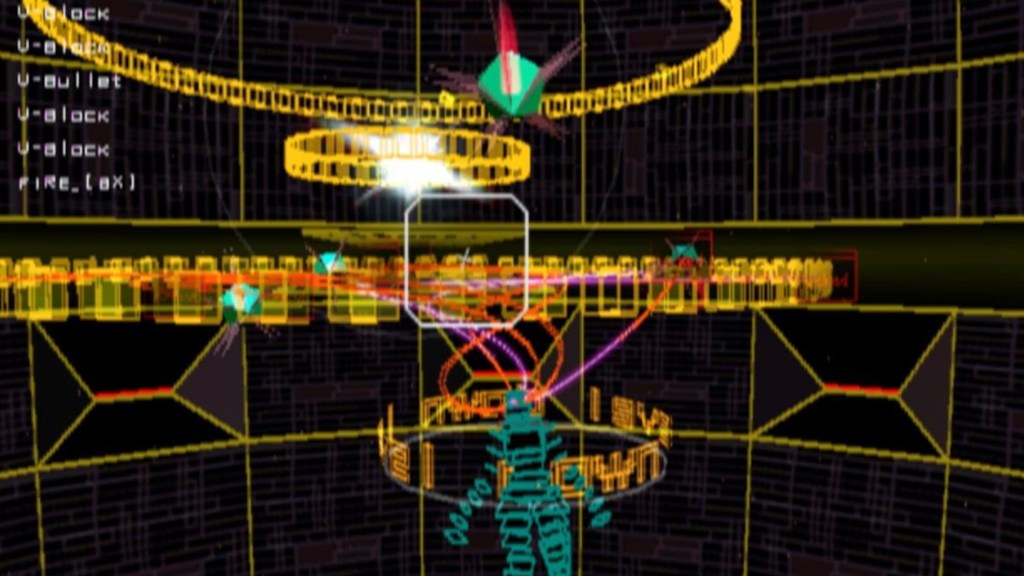
Over twenty years since it debuted, Rez is still one of the best examples of how a unique approach can create genuine works of art around established gameplay mechanics. Development on Rez was led by Tetsuya Mizuguchi, who had previously been largely known for his influential work on racing titles like Sega Rally Championship. Developing an interest in the impact of music and visuals could blend together to create new sensations during an experience. Mizuguchi co-created the memorable rhythm-based Dreamcast cult classic, Space Channel 5. Alongside the sequel to that game, Mizuguchi was also crucial to the development of Rez. At its very core, the game isn’t too far removed mechanically from older rail shooters like Star Fox. Players control a figure flying through an almost ethereal vision of cyberspace, shooting down viruses. The game’s narrative is loose, expressed through minimal descriptions and without any spoken dialogue.
Instead, the player is able to piece together the broad strokes of the sci-fi story, focusing on a hacker diving into the internet in an effort to awaken a long-dormant AI known as Eden. The real draw of Rez is the way it interweaves music, visuals, and gameplay. The gameplay is smooth, with players tracing their sights on targets. The use of digital avatars as the characters, both for the player and the enemy targets, pays dividends in multiple ways. It allows the game to reflect Mizuguchi’s desire to make a rail-shooter that was less violent in presentation and less punishing in gameplay. The purposefully abstract character models could move and blend with the music and the surrounding visuals, especially the player character. It’s that element that makes Rez something particularly special.
The advent of 3D graphics in video games has presented an interesting lesson in the importance of artistic style in game design. Clunky graphics that were cutting-edge 30 years ago can still be effective if presented with enough distinct personality, clear design, and particular color. Rez is a terrific example of that, with even the original PS2 version still visually arresting decades after the game debuted. The player’s success in shooting down passing viruses creates notes that fill out the song, encouraging you to find a natural rhythm in your gameplay.
Taking as much inspiration from club scenes of the era as it does from games like Panzer Dragoon, Rez can infuse the music into the gameplay in a way that feels natural and constructive. The entire experience, including the visual and audio elements, is dependent on the player’s talent and skill. It’s a game that makes finding the music and feeling it a key to success. Other rhythm games are more obvious about their connection to music and movement, while Rez uses it as part of a puzzle that also fits into an ever-shifting world and tight controls.
Rez Was A Commerical Flop, But An Important Part Of Gaming Art History
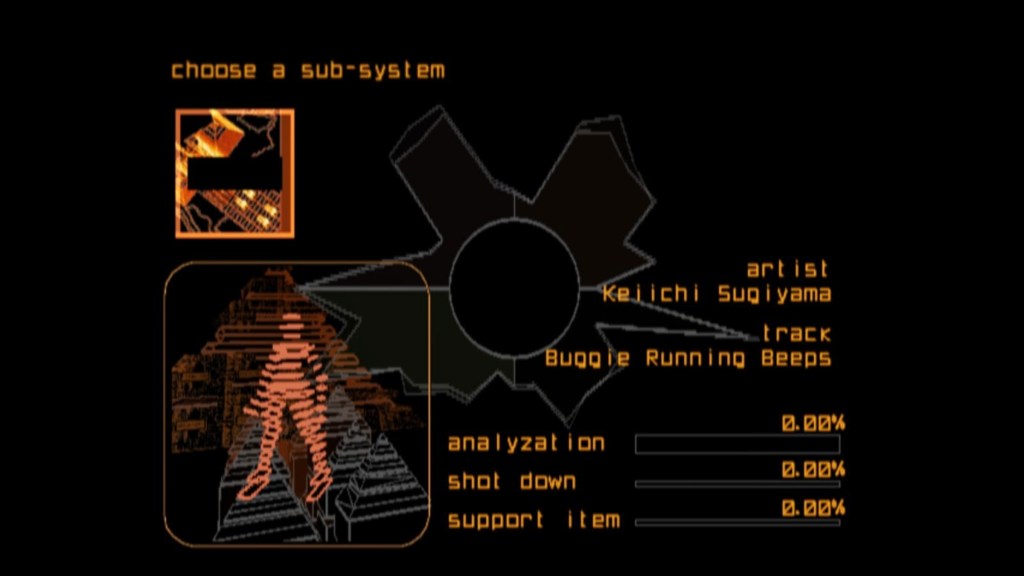
I wasn’t the only one who fell in love with Rez, with critics at the time largely celebrating the title for its unique approach to gameplay and distinct design. The biggest knocks against it were largely pointed at its very specific design, with many critics predicting that audiences would be alienated. They proved to be correct, as the game struggled to make a connection with players in North America. Initially intended as a swan song for the Dreamcast but released cross-platform on the PS2, Rez sold poorly, especially in North America. The abstract title languished for years in relative obscurity until it was brought back in the form of an HD remaster for the Xbox 360 in 2008.
In turn, the game was expanded again in 2015 for the PS4, with Rez Infinite compatible with VR devices. These releases, while adding layers and depth to the visuals, retain the abstract charm of the original — and speak to the timeless qualities of the game’s look. In the years since, Rez has inspired other titles (like the spiritual successor Child of Eden and games it influenced, like Guitar Hero) and been recognized as a wholly unique and well-constructed take on the rail-shooter.
More than anything, though, it remains a great example of games as art. Rez has been featured in the Smithsonian’s exhibition of the art found in video games, and it more than deserves it. The poor reception to the game meant that it remained something of a one-off, even as remasters and remakes have ensured new audiences get the chance to discover the game. It’s still sad looking back, though, at how sequels were planned that never came to light in part due to the weak sales and Sega’s shift away from a dedicated console to more of a game publisher. I’m still sad we never fully got Rez 2 or any other number of spin-offs, but I’m still glad we have one of the most visually compelling games of its era.
Most Viewed
-

Image Courtesy of Netflix -

Crunchyroll -

Image via HBO