Genuinely, Stranger Than Heaven has one of the oddest, but also one of the best combat systems I’ve seen in recent years. It’s what I imagine the general Yakuza series could’ve achieved if the franchise had revolutionized the main games (or remakes). Even then, beyond the fundamental combat, there’s a great deal under the hood of RGG Studio’s highly-anticipated game that should intrigue longtime RGG fans, and newcomers as well.
Videos by ComicBook.com
Sega and RGG recently shocked people by revealing the inclusion of the late iconic figures Bunta Sugawara and Tupac Shakur in Stranger Than Heaven. Even though the studio received approval from both of their family estates, it’s still… weird. Even having Snoop Dogg in the game has been strange enough. But we won’t know the full extent of what RGG is planning until the game comes out. In the meantime, we do know a bit about the combat and time periods.
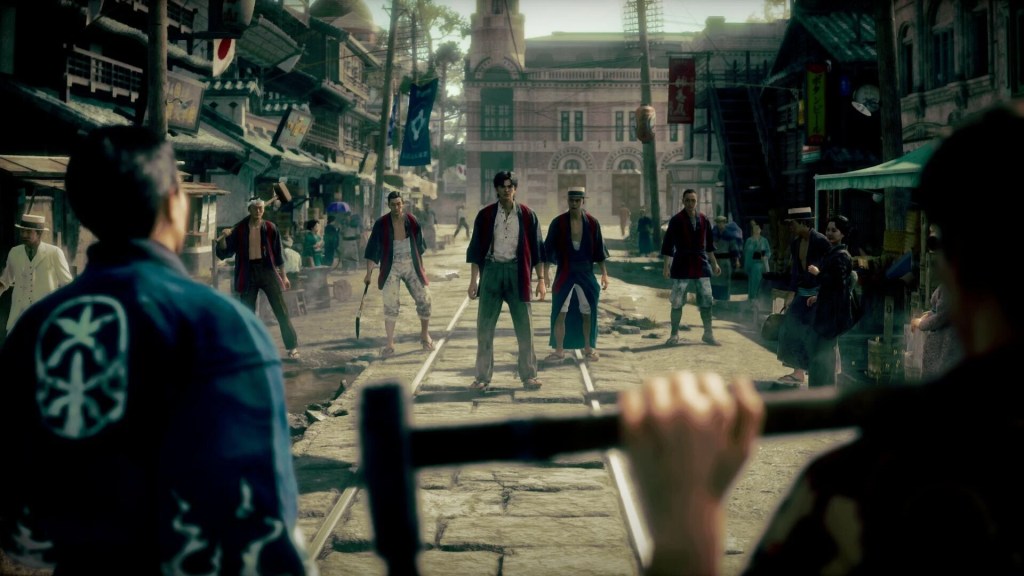
I had the chance to go hands-on with Stranger Than Heaven at Summer Game Fest 2026, briefly playing through three settings over the course of about 30 minutes. The goal was to showcase how the game evolves from the early 1900s to the mid-1900s. First, I fought a group of enemies in 1915, then another stronger group in 1929, and finally a boss in 1943. In each setting, I was given the opportunity to use my character’s fists, a crowbar, or a knife. Each one had its own pros and cons, and alternating throughout a fight was best.
To best explain Stranger Than Heaven’s combat: there are light attacks and heavy attacks for each arm. You control your left arm with L1/L2 (or LB/LT) and your right arm with R1/R2 (or RB/RT), with the former being your light/quick attack and the latter being your heavy attack that can be sort of charged up. You also have to be mindful of both for blocking. So while you can hold down Circle (or B) to block, you have to actively use each side to block where your enemy is going to strike. Otherwise your stamina can be depleted and you’ll be hurt. This applies to all weapons, which means when you use a weapon like a knife, which remains in one hand, you have to remember to attack with the other hand from time to time – meaning, striking with a knife, and then combo-ing that with a few jabs with your fist.
It’s easy to dismiss this system has being straightforward (or even rudimentary), but it’s anything but. Stranger Than Heaven’s combat style is built entirely into mimicking a real fight. If your opponent is guarding their left side, you have to strike with the right, and vice versa. It brings a whole new level to everything from simple one-on-one fights to group fights to boss fights. At first, it was tough to get used to. Like everyone else, I felt invincible and thought I could easily take down a small group of fighters with my fists, but I failed the first time. After that, I respected the difficulty and level of focus required to stay alive, and then I succeeded. Sometimes that meant swapping between my knife and crowbar when multiple enemies were attacking at once.
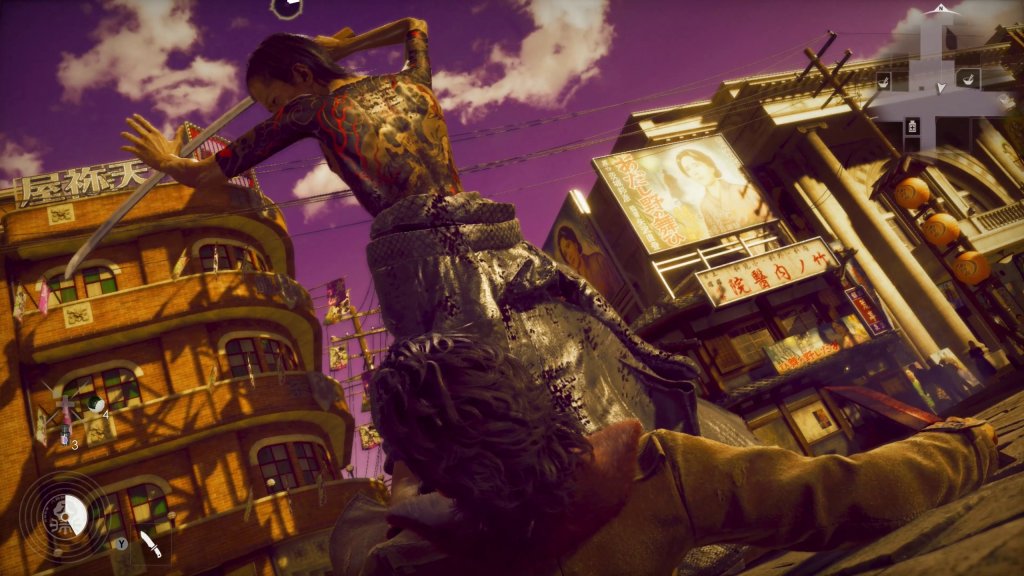
In general, Stranger Than Heaven requires reshaping your mind around combat. Nowadays, fighting is limited to one or maybe two buttons, primarily for quick and special attacks. Everything else is associated with dodging, parrying, and rolling. But for this game, it’s all connected, forcing you to think beyond light and heavy attacks and more on what your enemy is doing. This was especially true for defense. If you’re not careful and you get knocked down, you better hope you have enough stamina not only to get up but to get up in time before you’re attacked again. You can’t imagine how difficult that was with the boss in 1943.
Apparently this guy was so difficult that whenever somebody did beat the boss, the development team would give that person a round of applause. No one beat that guy on the first try – no one. What I had to do was attack with my knife and then follow it up with a few jabs, but because of my stamina and his quick attacks, I always needed to back off and reset. Throughout the fight, I often needed to dodge his takedown move, which seemed to deplete at least half my health if he landed it. Parrying was very difficult with him, but if I managed to successfully parry, I was able to stab him in the neck area and take out about a tenth of his health. Rinsed and repeated until he was defeated.
Some people tried to constantly attack with their knives and parry whenever the swordsman boss attacked, and it never worked for them. Variety is key, and outsmarting your opponent is how you win, not through brute force. That will be the foundation of Stranger Than Heaven.
More Gaming
-

Courtesy of Unknown Worlds -
Final Fantasy VII Console Heroes Diorama -
Image courtesy of Square Enix