The RPG comes in sorts of styles. Some developers want to make their adventures a deliberate, story-based experience, while others go for a more gung-ho, action-driven adventure. While the turn-based approach was the standard in older generations of games, modern approaches can utilize the full processing power of their platforms to allow for free movement (and combat) across a larger space. That’s not a judgment call against either style, with both working better for different games.
Videos by ComicBook.com
Regardless of which is your preference, there has been a notable shift in modern gaming towards one style over another. It’s so pronounced that a director on the Final Fantasy VII remakes has taken note of the shifting attitudes among players and explained how it’s impacting game development. I’m worried he’s right, because it might mean we’re losing out on the potential of both styles.
FFVII Rebirth Director Thinks Modern Audiences Are Leaning More Towards Real-Time
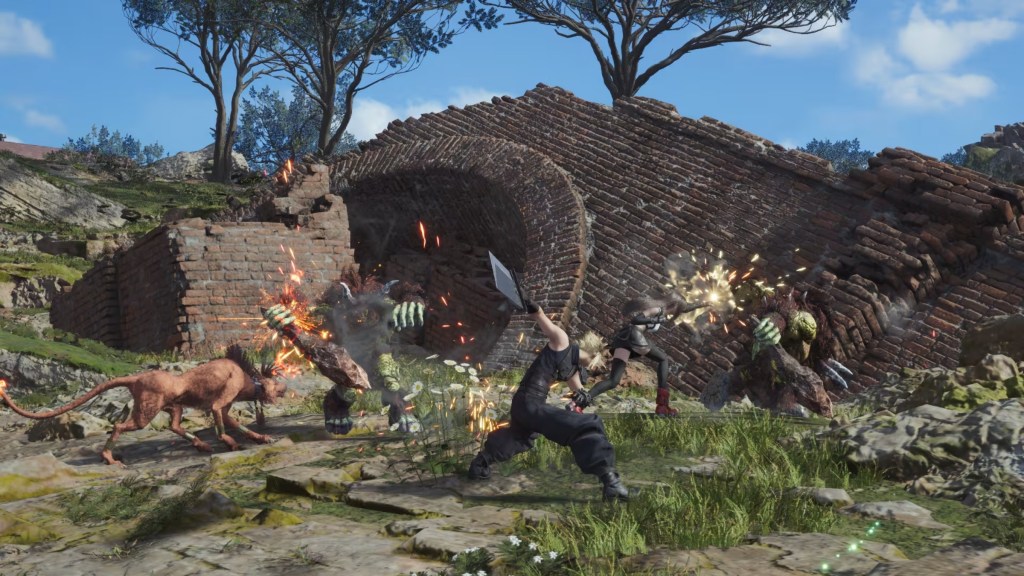
During an interview with Game Informer, Final Fantasy VII Rebirth and Remake director Naoki Hamaguchi was asked about the way the two games (and presumably the upcoming conclusion to the trilogy) blend turn-based combat with more proactive real-time action. According to Hamaguchi, it’s because younger generations of gamers are more attracted to the pacing and investment of more action-heavy games.
While he still believes there is a place in the current gaming space for turn-based RPGs that are more deliberate in their battle systems, “when we look at younger players, they increasingly favor more real-time experiences in games. I believe they’re a generation that’s naturally accustomed to receiving instant feedback upon input. With that context in mind, it may have been inevitable for turn-based games that incorporate real-time decision-making through action elements to gain prominence. I think this reflects players’ desire for both the excitement of strategy and the immediacy of response.”
This has been borne out across various recent hits in the gaming space, even beyond the Final Fantasy VII reimaginings. Clair Obscur: Expedition 33 in particular speaks to the popularity, along with other recent hits like Path of Exile 2, Diablo IV, and Kingdom Come: Deliverance 2. That’s not even diving into the plethora of franchises that blend typical RPG world-building and character development with more high-octane FPS-style action like Mass Effect, Cyberpunk 2077, or Fallout. All of these franchises have become increasingly popular over the years, while the more traditional turn-based approach to the RPG has fallen more by the wayside.
Even If Most Games Are Turning To Real-Time Action, I Still Want Some Turn-Based Games

There’s nothing wrong with real-time action RPGs. In fact, depending on the title, it can be a major element of the fun. Even the fusions of the two, while ambitious and sometimes overcomplicated, can add a lot of layers to the combat that would otherwise be missing. The Final Fantasy VII remake does this well enough, making the fights feel lively and cinematic even while players maneuver quickly through menus for specific commands and plans. However, there’s something uniquely gratifying about turn-based combat that I feel is missing from these types of games.
The frantic speed of those combat encounters can undercut the deliberate pacing of other RPGs. There’s something to be said for the more specific approach that most of those kinds of games can take in their combat, allowing the player to really hone in on their approach to battles and their own unique style to it. Take games like Paper Mario: The Thousand-Year Door and People of Note, which have found ways to incorporate more proactive approaches to defense that add a bit more excitement to the turn-based approach.
Then there is stuff like Baldur’s Gate 3, which puts complete focus on the turn-based approach — and in doing so, highlights the sheer vast number of options players have in that style of gameplay. All of these games are more in line with classic turn-based RPGs, putting an emphasis on a slower, more specific approach to combat that can feel especially rewarding once you take your time and figure out which approach is the right one. It’s a different feeling of success than what you get when you’re playing an RPG that uses real-time combat, where the actual act of dodging an attack and landing a move in response adds to the thrill.
Even though they’re both ultimately RPGs, it speaks to how both approaches create very different experiences. Mass Effect 3 and Baldur’s Gate 3 play completely differently in the moment-to-moment combat encounters, but they fundamentally share core aspects like level-up systems, interpersonal party relationships, and large-scale worldbuilding. I love both approaches for different reasons — sometimes I want to be my FPS wanderer in the burnt-out carcass of a world that makes up Fallout 4, doing my best to avoid enemies while landing precise shots.
Other times, I want to embrace something like People of Note, where a big part of the fun is found in the personal timing, specific strategy, and precise moves you make during your turn. What worries me about Hamaguchi’s perspective is that he’s right in saying many older franchises, once thoroughly turn-based games, have become either hybrid approaches like the FFVII remakes or outright action games. I want there to be a space for both styles of RPG, but one is very much overtaking the other in modern gaming. It would be a shame to lose the turn-based RPG as a style of game.
More Gaming
-

Image Courtesy of AdHoc Studio -

Courtesy of IllFonic