The Final Fantasy VII Remake series has been a big hit for Square Enix, with the expanded reimagining of the classic JRPG bringing the story of Cloud to an entirely new generation of gamers. While fans have been eagerly awaiting announcements for the third and final entry in the trilogy, more players got the chance to explore Midgard thanks to the publisher porting Final Fantasy VII Remake over to the Nintendo Switch 2 and the Xbox Series X/S earlier this year. Now, the next chapter in the remake trilogy is set to debut on the Nintendo and Microsoft platforms, with Final Fantasy VII Rebirth coming to the consoles in June.
Videos by ComicBook.com
Of course, it wasn’t just as simple as moving one game to another console. The inherent differences between the processing power of the Switch 2 and the PlayStation 5 mean that Final Fantasy VII Rebirth had to go through some subtle changes to work on the console — and in the end, gave the team more confidence about their approach to the finale of the trilogy. Ahead of Final Fantasy VII Rebirth‘s arrival on the Switch 2 and Xbox Series X/S, Game Director Naoki Hamaguchi spoke with ComicBook.com about that process.
CB: How much did the development team need to change/tweak Rebirth to make it work for the Switch 2 — was there specific work needed to accommodate that console’s unique elements?
Naoki Hamaguchi: Rather than a significant overhaul, our refinements primarily focused on fleshing out “how we could make the experience work.” Because Rebirth features large-scale fields, with heavy processing loads on rendering and streaming, it couldn’t be ported to the Switch 2 as is. That led us to take a step back and reassess things, from our approach to rendering techniques, lighting, and background streaming. We were especially keen on ensuring that switching between handheld and docked modes never made players feel like they were playing a different game.
We prioritized stability and consistency of experience, exploring sensible solutions while keeping how games were played on the Switch 2 in mind. Through that process, we gained a very clear sense that an open-world experience of this scale can truly work across different environments. That realization isn’t limited to Rebirth; it serves as a major source of validation for us as we take this series to its finish line as a trilogy.
Are there any elements that are unique to the ports of FFVII Rebirth, or will it be the same game that is currently available on the PS5?
Naoki Hamaguchi: There is no platform-exclusive content to the story or gameplay itself. Our fundamental philosophy is that the core experience of Final Fantasy VII Rebirth should remain consistent no matter where it’s played. At the same time, we’ve made adjustments to performance, rendering, and controls that match each platform. Rather than creating differences with separate content, our decision was to craft the experience in a way that would naturally hold up in that environment, without feeling forced.
The rest of our interview with Naoki Hamaguchi continues below, as we discussed how the team has balanced nostalgia with innovation, the addictive gameplay of Queen’s Blood, and teased the status of the final entry in the FFVII Remake trilogy.
ComicBook: What was the process like of bringing Final Fantasy VII Rebirth to the Switch 2 and Xbox S/X? Was that something the team had in mind during development, or was that something that came about over time?
Naoki Hamaguchi: We didn’t have specific platforms in mind at the start of development. That said, in recent years, gaming has moved beyond a single environment, and it’s become standard for players to choose how and where they play based on their individual lifestyles. We felt the game wouldn’t hold up if we were to ignore that assumption on the content side. The Final Fantasy VII Remake series has always been driven by the goal of delivering this story properly to as many players as possible.
Because of that, since the relatively early stages of development, we began asking ourselves what format would allow us to realize the same experience, even across different platforms. It didn’t feel like the decisions to port the game to the Switch 2 and Xbox Series X|S were made later or abruptly; rather, they feel like a natural outcome we settled on as a result of continuing to refine our thinking around how to respond to evolving play styles while building on the experience we gained from Remake.
The Switch 2 seems like the perfect platform for Queen’s Blood. What was the development process like bringing a fully realized TCG strategy game into your massive fantasy epic?
Naoki Hamaguchi: From the very beginning, Queen’s Blood wasn’t designed to be just a mini‑game, but rather a strong, standalone gameplay experience within the world of Rebirth. As players progress through their open-world RPG journey, an early focus for us was finding ways to integrate immersive moments, even during shorter stretches of play. A trading card game was one answer to that, and we paid special attention to ensure that everything — including its strategic depth and interplay — didn’t feel half-baked.
You’ll probably understand what I mean if you play the game on the Switch 2, but what starts as “just one match” naturally flows into another. Picking up the game in handheld mode seamlessly imbues that cadence of gameplay right into your everyday life. While Queen’s Blood is a part of Rebirth‘s broader epic fantasy, it also simultaneously stands on its own. The fact that we were able to strike that intentional balance is something I feel particularly confident about in this game.
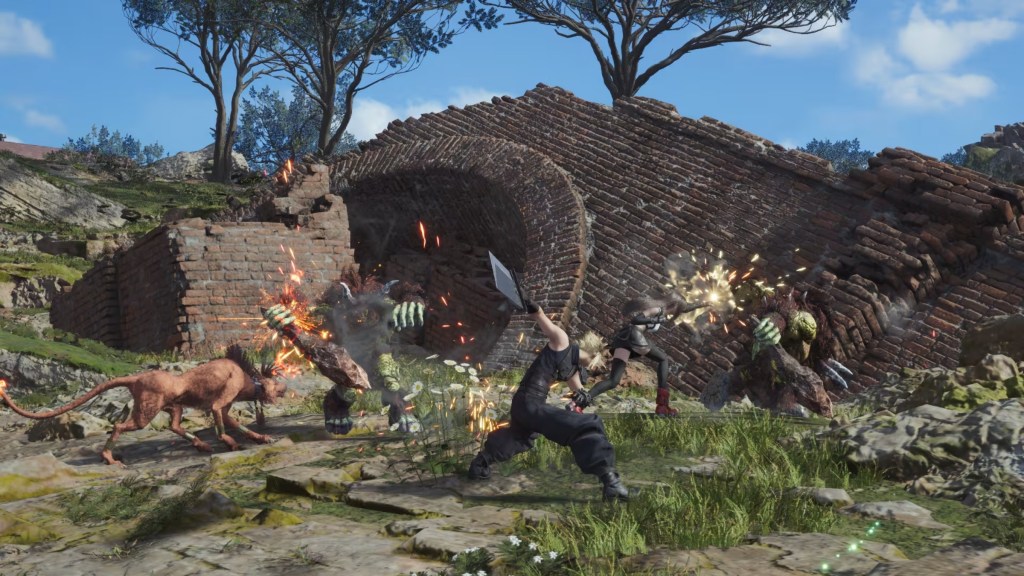
What has been the greatest challenge of updating FFVII for the modern generation of gamers — and how have you balanced that with appealing to the older players who grew up with the original?
Naoki Hamaguchi: The greatest challenge was thoughtfully evaluating, title by title, how far to push “nostalgia” and “innovation,” respectively, so they could work in balance. For players familiar with the original game, I think what matters goes beyond the story arc itself — it’s the relationships between the characters and the emotions they felt upon discovering this world. Those are elements we can’t afford to treat lightly.
At the same time, for players discovering FFVII today, we needed to update the presentation and design to align with modern sensibilities; otherwise, the experience itself simply wouldn’t resonate. For this reason, we adopted modern approaches to visual expression while preserving the emotional core and character relationships that were beloved by many in the original game. Rather than framing this as a simple binary of whether to “preserve or change” something, we’ve continuously reevaluated how to interpret these notions of “nostalgia” and “innovation” and how to express them. That’s our approach to making the Final Fantasy VII Remake series as a whole.
These modern reimaginings have done a great job of staying true to the spirit of the original while offering fresh takes on the characters. What has been your personal change/tweak/update to the overarching story and cast?
Naoki Hamaguchi: When it comes to the overarching story, I place my trust in what Kazushige Nojima writes and have no intention of altering that based on my judgment. However, with the significant increase in visual fidelity in these remakes, arranging events and the passage of time exactly as they were in the original game can sometimes result in scenes that feel implausible. When changes in time or dates don’t feel convincing, it also breaks the player’s emotional engagement.
This time in particular, we took a very critical look at questions surrounding whether a given emotion truly makes sense at a certain point in time or how much emotional groundwork the player would realistically have if a certain event were to occur. It wasn’t so much a matter of adding or changing the story, but rather adjusting things in a way that ensured that the player’s emotional pacing aligned with the flow of time. That process required revisiting scenes again and again, and honestly, it was one of the aspects of development we were most sensitive about.
What lessons from the rest of the FFVII remake saga have proven to be the most important to you as a developer, and how are they impacting the third entry in the saga?
Naoki Hamaguchi: Across the entire remake project, the guiding philosophy has been to progressively expand the scale of the gameplay experience with each entry, rather than repeat the same experience. Final Fantasy VII Remake established an experience centered on engaging deeply with story and characters, while Rebirth moved toward an even more expansive experience that includes the world map. This series isn’t about rehashing the same gameplay just because it’s a remake.
I consider this project where we’ve pushed ourselves to ask, “How much further can we expand the experience?” with each new entry. For the third installment, we’re not thinking about simply wrapping up everything we’ve built until this point. Rather, we’re focused on how the full scale of the series we’ve been aiming for could ultimately be realized as a complete experience. That way of thinking is deeply reflected in our current development process. I think you could also look forward to the Highwind, which I know many people are curious about [Laughter].
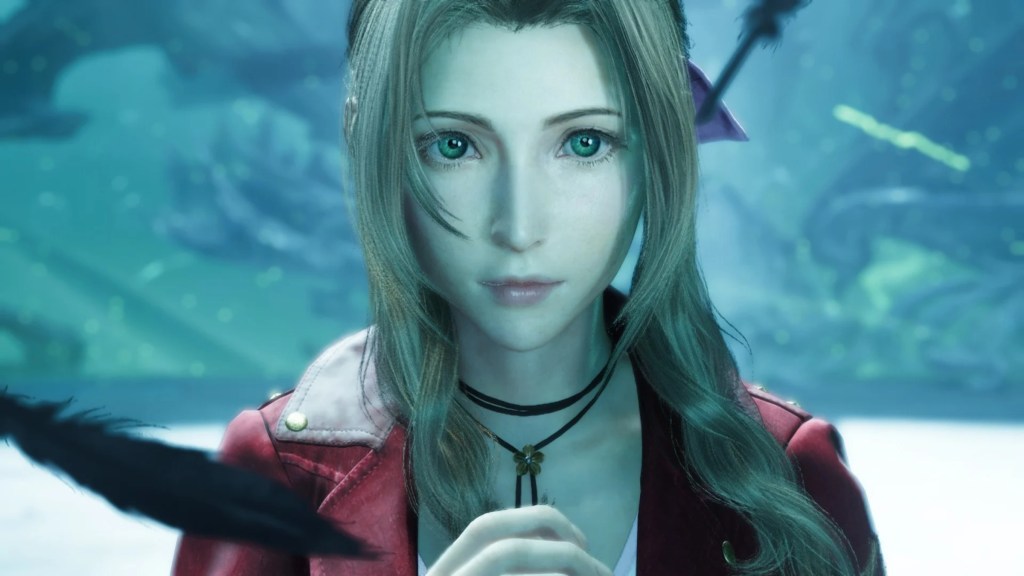
What can you tease about that next entry in the trilogy?
Naoki Hamaguchi: I’m unable to share concrete details at this time. What I can say is that development itself is proceeding on time and on schedule. We believe it’ll become a title we can deliver with confidence as the culmination of the trilogy. We know many fans are eagerly waiting, and preparations toward the announcement are steadily underway. Please look forward to it just a little longer.
Given the natural surprises that occur during development cycles, what has surprised you the most about the FFVII remakes and how they have come together?
Naoki Hamaguchi: Spending more than a decade working on the same AAA title is an extremely rare experience for a developer. Even now, I’m taken aback to know that more than ten years have passed without me realizing it since I first began working on the FFVII REMAKE series. At the same time, now that the end of the trilogy is clearly in sight, I feel a strong sense that we’ll be able to deliver this final installment with confidence. I’m also struck by the fact that, even after dedicating over a decade of my career to this project, I feel no negativity about that time at all. I simply feel a renewed sense of gratitude toward FFVII for giving me the opportunity to work on something truly worthy of this level of time and commitment.
Final Fantasy VII: Rebirth comes to Nintendo Switch 2 and Xbox Series X/S on June 3, 2026.
More Gaming
-
Paramount – Legendary Pictures -

Courtesy of Evil Empire -
Courtesy of Saber Interactive