Composed of developers from a plethora of major companies like Riot, Blizzard, CD Projekt Red, Guerrilla, Respawn, Treyarch, and ZeniMax, Chaos Manufacturing is taking a bold first step as a company by launching with SOL Shogunate. Still in active development, the sci-fi samurai title throws players into a universe of possibilities, with gorgeous visuals and tight combat at the center of the experience. Set for a PlayStation 5 release, the title’s newly released trailer showcases a vast universe for players to explore and fight their way through.
Videos by ComicBook.com
Bringing the game to life wasn’t easy for the team, who looked back at the history of shogunate power bases in the Middle Ages for inspiration while also finding the right balance of action and RPG mechanics. Chaos Manufacturing CEO Guy Costantini sat down for an interview with ComicBook.com to discuss the origins of SOL Shogunate, bringing Japanese history and art into a cosmic space, and the craft that goes into chiseling a good concept into a great game.
The Next Frontier
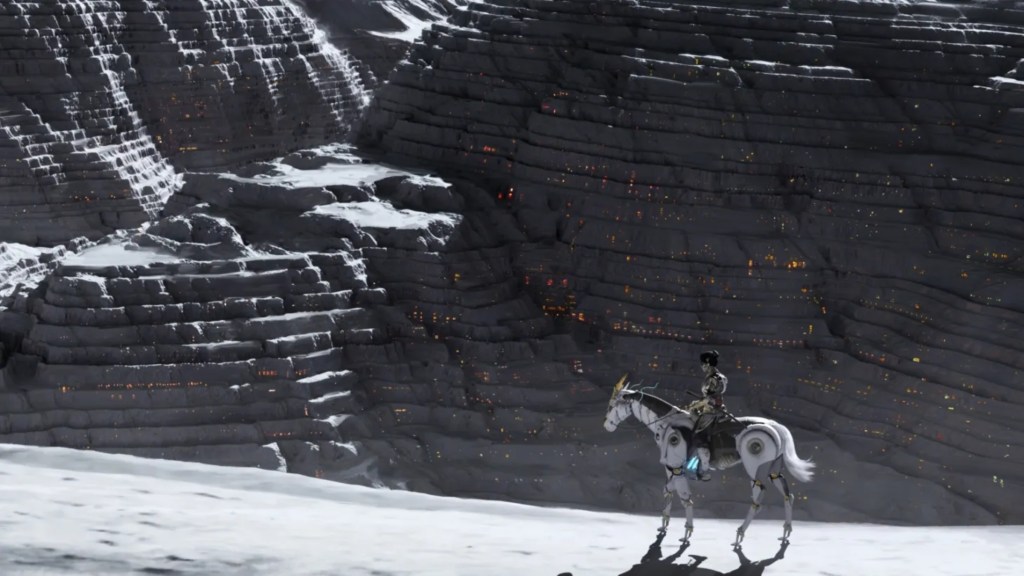
Looking back at the origins of the samurai space opera, Guy Costantini explained that “I’ve been a fan of samurai fiction for the longest time. I was also on the search for a space that I felt hadn’t been properly explored, because the general maxim is that people will do cyberpunk in future streets of whatever. I felt those spaces were well explored. I’m a huge fan of both genres, but I wanted to see if we could find a new angle on that. I thought that we could do something that feels just like near-term sci-fi, where it can be believable but also this alternate universe, surreal thing. We really wanted people to be surprised by the mix. So we landed on the idea, what if we had feudal Japan in space? What is a believable feudal Japan in space, and then we worked back from there.”
“We took our time, working with some fantastic Japanese writers and writers that worked on Walking Dead, some of my friends from the gaming industry, and we all got together, were like ‘Alright, let’s figure out this new IP.’ We decided to start in the Meiji Restoration, where different things happen, and go all the way into World War Two. [In this world], there was a different ending to World War II, where Japan got an armistice. After that, they took a bunch of the scientists out of Nazi Germany, and ended up being really set up to win the space race. The US and USSR continued on, while Asia actually developed technologically. Asia becomes the center of innovation, led by Japanese technology. Then you end up going to space as humanity becomes multi-planetary and into this hundred-year golden age, and we all owe it to this Eastern way of thinking.”
“Because of that, you end up with a humanity where the cultural export, instead of being western, is eastern, with everything that that entails. Music, philosophy, architecture, and religion, all of that has been imagined with hundreds of years of humanity embracing it. Of course, people are people, and they always fight over stuff. We were just starting to build free energy for everyone, with a Dyson sphere around the sun, and that gets repurposed as a super weapon. Out of the ashes of that conflict comes the SOL Shogunate, which is this very militaristic caste system inspired by feudal Japan, but rebuilt now with the technology that allows it to rule over the planets of the solar system. We felt, all right, that is a good place to start our story.”
That attention to the lore and worldbuilding is a core element of the Chaos Manufacturing ethos, according to Costantini, with the primary focus being on producing a “really solid foundation” to build new universes on. To achieve that, Costantini admitted that “I needed to find really good artists and collaborators. I needed to make something cool enough that I could convince someone not to do some other cool thing and come help me on this. Luckily, I spent a bunch of time taking games to market and convincing people to try stuff out. That was the beginning of the journey.” Part of that process involved recruiting Leszek Szczepański, whose experience working in the Metal Gear, Castlevania, Mortal Kombat, Killzone, and Horizon franchises was crucial to the development of the series.
Szczepański is a co-founder of Chaos Manufacturing and Game Director on SOL Shogunate. “Leszek is the Yin to my Yang,” Costantini explained. “He’s worked on really scrappy start-ups and large AAA endeavors. Together, we wanted to see if we could build the game company we always wanted to work for, something that can punch above its weight quality-wise but still be really tight when it comes to the number of people involved. We’re big believers in the idea that some games these days are just too big. They’re daunting! A lot of people look at them, and they’re like, ‘Oh my God, another one of these 100+ hour things. No hate for those games, some people make incredible 100+ hour games. I just think people want something they can binge in a weekend or play over the course of a month. I wanted to build something like that, that keeps you coming back for more because it has the juice from an idea perspective.“
At the core of SOL Shogunate is a big swing from the new company, with a gameplay loop that fuses elements of RPGs and action games with a grandiose setting and sci-fi innovations. “We recognized very early on that we’re trying to do a couple of pretty ambitious things. We wanted to reduce the number of things we were doing to the ones that we felt we could be really great at. We’re going to focus on this single-player experience, where combat exists at the center, and it’s really satisfying, but you can have these moments of awe where you get to experience this world. If we can do that correctly, if we can create the fantasy of what it is to be a genetically modified space samurai, if we can get people to fall in love with that, then we’re off to the races. A lot of our goal was to really deliver on that fantasy and let people play around with it.“
That helps separate SOL Shogunate from a lot of other titles, which can focus more on a wide-ranging approach that features more gameplay mechanics but doesn’t necessarily master any of them. That was a key element of the intent for the game for Costantini, who noted that “in our industry, there are games that really focus on the world-building, and depending on their level of funding, they have all these complicated internal systems. We wanted to keep things tighter. That being said, games that focus only on combat are almost exclusively combat, and they decide the story is an afterthought. We thought we could do a powerful story with rewarding combat.” This approach ensures that SOL Shogunate‘s plot remains central to the experience, while allowing the player to move the story along through their actions.
The gameplay also takes cues from past generations of gaming, with Costantini specifically citing mechanics like Metal Gear Solid deploying character dynamics and exposition through mid-combat communications as something that inspired their approach to fusing action gameplay with a central narrative, helping give the game “this massive cinematic energy… I just think that games does it in a way that really accelerates your ability to create these universes that you can experience across different forms of media, because you are involved in the experience and very much interacting with the experience. It’s definitely not for the faint of heart when it comes to building this stuff. But we are undeterred.”
The Lone Samurai
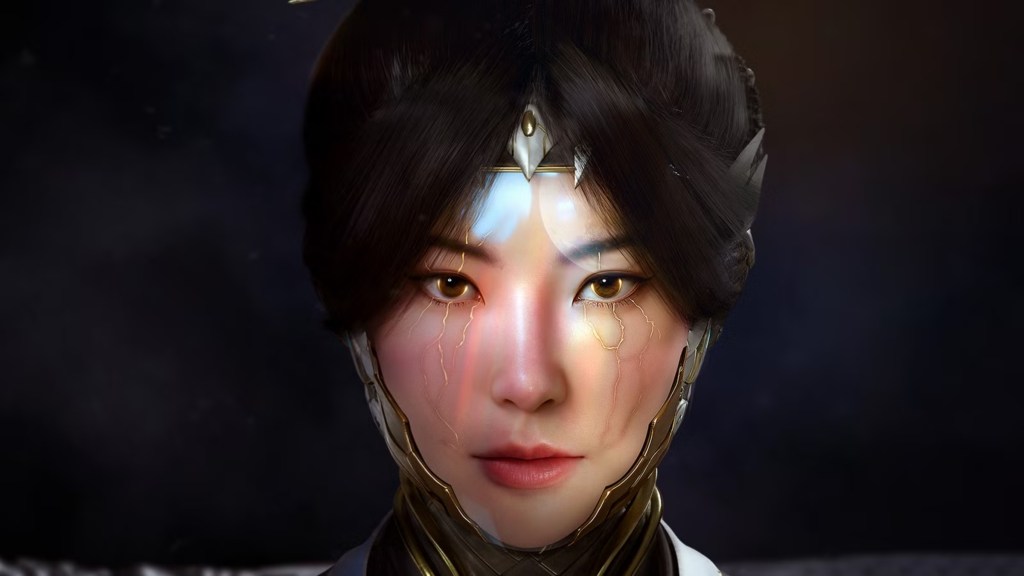
The game focuses on Yuzuki, the last survivor of a samurai family that was largely massacred before the events of the game. Having become a wandering ronin in the years since, Yuzuki now seeks revenge across the lunar frontier, using her blade to take vengeance on the clan that destroyed her family. Citing the Book of Five Rings as a chief inspiration, Costantini broke down how “the point of being a Samurai is to become the Ultimate Warrior. We asked ourselves, what does that mean in a future where there is so much more technology that allows you to become that? How will you approach a battlefield that has different kinds of gravity and different kinds of tool kits?”
This led to the decision to make Yuzuki genetically modified with bioceramic skin. On top of giving her a distinct visual aesthetic that separates Yuzuki from other video game protagonists, her modified body allows her to be in the vacuum of space and not suffer from radiation or temperature changes. “She can be very dynamic in a space where others are not able to be. The Samurai caste is the only one that has access to this technology, but the painful process of ascension that makes people almost gods amongst men comes with advantages and disadvantages. Yuzuki has had to go through it earlier than most because of a bunch of things in her backstory. She’s experienced trauma, but it’s made her strong. That’s why her skin looks like it’s made of Kintsugi, which is the Japanese art of pottery repair with gold. If she were in a room with us, she would look like a normal person, but with a little bit of gold in her musculature. If she goes outside, her skin hardens and becomes bioceramic, very visibly.”
This visual aesthetic also plays into the gameplay, as the players have the ability to modify Yuzuki and give her different attributes and gear. Other gadgets that Costantini cited as important to the adventure are a set of thrusters that propel her around her low-gravity environments and a set of nanofiber cables that can be used to move Yuzuki through space. “All these things together make her load out, so her load out ends up being something changeable and flexible. You have to adapt to the type of enemies that you’re going to fight, which is very Samurai of her. If you have read about Samurai, sometimes they use a bow when combat requires it. I’m going to use things from my envrioment, if I want to be the victor. That’s something we found in writings about a lot of influential Samurai of the past, and we really wanted to deliver on the fantasy of what these people are idolizing.”
That influence of the past on the future is a key element to the art design and visual direction of SOL Shogunate, as evidenced by the armored warlords and mechanical horses seen outside of mining lunar cities. This all plays into the game’s narrative about a caste system that has elevated the upper class at the expense of the unseen workers, toiling away on colonies for riches they’ll never have access to. “The people in charge use the technology available to them to give themselves the fantasy they want… There are all these layers of meaning in this world that we built based on cultural differences and how they affect all of humanity. It was a really fun space to explore.“
Looking back at the development and the title and what surprised him about the experience of bringing SOL Shogunate to life, Costantini described the experience as analogous to sculpting. “I’m not a sculptor, but I have observed and admired sculptures. The process of sculpting is the process of removal. When you’re done removing everything unnecessary, you have a sculpture. I feel like that is the part — I knew how games were like that. But as I undertook the process of building a team and trying to get to where we ended up with these fantastic ideas, we had to slowly get into them and chip away at it. It can feel painful to remove things that, because they’re part of your idea, they can feel like your baby. At the same time, when you look back where you were at from day one to day 30 to day 366, you end up really noticing all the improvements that have come from cutting things.”
“We had so many mechanics that I was in love with, and we had to cut them for a bunch of reasons. Later, I could recognize how it makes it so much better. That’s probably the most surprising thing. Dead ends, design-wise, require discipline to give up. You can have this fantasy in your head of what it should feel like, then you build a prototype, and you play it, and it doesn’t feel like it was in your head. But if you tweak it, you can make it better. Sometimes you tweak and tweak, and it still isn’t working. That’s true of a lot of technology. People end up falling in love with technology because it’s innovative and sparks joy, but sometimes you have to realize it’s got to go. We need to rethink it and come at it from a new angle. We did that, and it made the game better. I think it’s given me a renewed appreciation for that part of creative media.”
SOL Shogunate does not currently have a release date, but it can be wish-listed on Steam and will also be available for Xbox One and PlayStation 5.
Most Viewed
-
Image courtesy of Daybreak Game Company -

Image courtesy of MAPPA