RPGs have always been a tricky genre to get right. Too much emphasis on the gameplay mechanics can quickly drown the player in options, while a focus entirely on the storytelling can leave the actual experience of playing the adventure drab. MMORPGs take on an additional level of challenge in that regard, forced to keep their established worlds from ever feeling too samey or predictable so as to keep players engaged.
Videos by ComicBook.com
It’s a challenge that only a handful of MMORPGs have been able to endure, with mainstays like World of Warcraft going on to define the genre for decades. A rival to World of Warcraft, which debuted fourteen years ago, had some of the best potential to upset the standard approach and deliver an MMORPG that built on a successful single-player experience on a larger scale. Unfortunately, that game ended up stumbling on the hang-ups that come with the genre, making it one of my biggest gaming disappointments ever.
How Knights Of The Old Republic Became A Success For BioWare
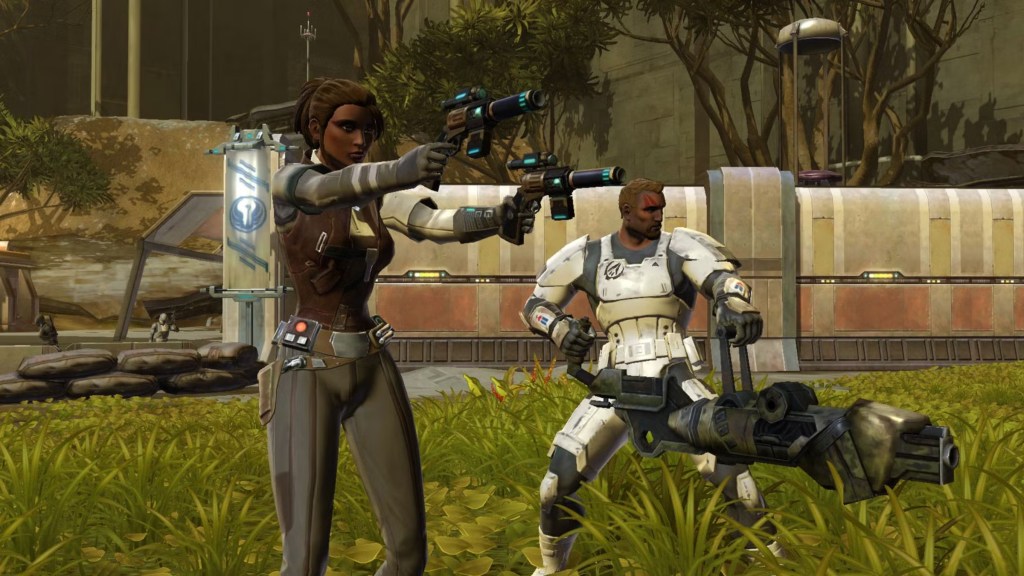
The first BioWare attempt at the MMORPG, Star Wars: The Old Republic, was a well-designed and compelling RPG — that also couldn’t escape the hangups of the genre to really stand out on its own. The Old Republic was a major release for BioWare. Meant to build on the massive success of the Knights of the Old Republic RPG from a decade earlier, The Old Republic was very much meant to be an MMORPG that could justify a live-service subscription model by providing the depth of a single-player experience. A team of writers was brought on to flesh out the game’s storylines, with each archetype given its own three-act arc for the player to experience firsthand.
It was an ambitious experiment, one that cost the studio in the range of $200 million to bring to life. Released on December 20, 2011, the game remains an impressive effort that has, over fourteen years, earned EA more than a billion dollars in overall revenue. The game was also well-received by critics upon release, who complimented the storytelling and worldbuilding while drawing attention to the standard hang-ups of the MMORPG game design. However, despite a loyal fanbase and a number of solid story-centric expansions over the years, the game never quite matched the impact of something like World of Warcraft. In fact, that initial million players who signed on day one isn’t as impressive a feat in retrospect, given how many players ended up leaving the title not long after.
You Were Supposed To Be The Chosen One
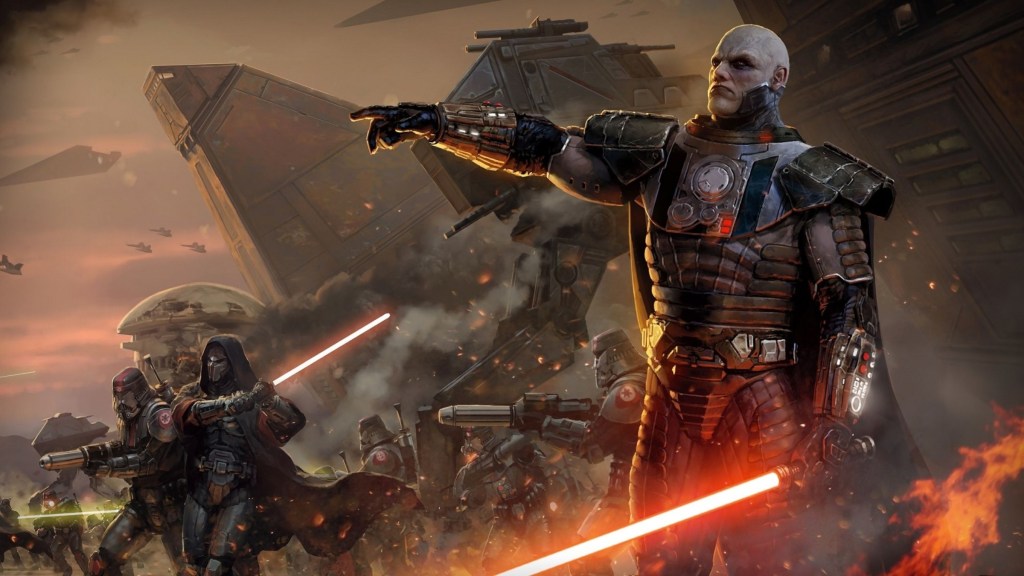
One of those players was this writer. Star Wars: The Old Republic was a great concept that didn’t quite land the way I was hoping for. As someone who had tried (and failed) to really connect with MMORPGs on a genre level, I was especially excited for The Old Republic when it was announced. The slick CGI cinematics and riff on the Knights of the Old Republic gameplay set the stage for an experience that could feel like a single-player experience in a vast galaxy. It had all the ingredients for me to dive into it, and I was among the record-breaking million players who jumped at the chance to enter the space, creating a cybernetic smuggler who could live out my lifelong Han Solo fantasies.
While the writing was solid and the worldbuilding was great, I quickly found myself frustrated once again by the MMO mechanics. The character dynamics were interesting, but the combat became a slog, with dungeon crawls taking up most of my time. The arrival of other players broke the immersion of the story, which suggests the player character is meant to be an important figure rather than one in a million citizens of the galaxy. Games like World of Warcraft were always good at that aspect of the experience, crafting a wide-open world where players could feel confident in making someone legendary who nevertheless didn’t define the world on their own. It created an immersive world that didn’t break the worldbuilding by having events take place outside of your control.
The Old Republic is meant to evoke the specific depth of a self-contained single-player experience, but that bristles unnaturally against the nature of the MMORPG design. The Old Republic had a greater challenge keeping itself within the confines of the Star Wars tone without breaking the immersion. Quests quickly felt repetitive, the character advancement felt broad enough to fit all sorts of player approaches, and the differences between campaigns didn’t feel strong enough to justify going through multiple playthroughs. It had all the hangups of an MMORPG, which just frustrated me when I wanted to dive fully into the story. The result was a game that would have probably been a very fun single-player experience, bogged down by all the bells and whistles that come with an MMO.
These types of games live and die on their engagement with players. Massive player bases are necessary to justify the amount of processing power that goes into keeping these massive landscapes going, with a level of engagement. However, once those core story arcs were completed, I felt confident leaving the game to move onto a new one. My experience felt complete, and I’ve never really felt the need to return. Even the other expansions, which tend to catch my interest on a conceptual level, don’t offer up enough variety to entice me to actually return. The team behind Old Republic are strong developers, and the game retains a consistent fan base, but it still makes me sad that the game couldn’t escape the hang-ups that have sunk plenty of promising MMORPGs.