Some anniversaries in gaming feel nostalgic, but in this, it goes beyond that. 27 years ago, one of the most monumental and influential games of all time was released, proving to be one of, if not the best, Nintendo 64 games ever made. It changed the course of 3D adventure design forever. Even now, decades later, it remains a benchmark moment in gaming history, one that continues to shape discussions about world-building, mechanics, storytelling, and what a console-defining title should look like.
Videos by ComicBook.com
The late ’90s were a golden era for innovation, but they were also a period of transition. Players were still adjusting to 3D movement, new camera systems, and no game showcased this like The Legend of Zelda: Ocarina of Time. It didn’t just navigate the challenges of early 3D game development; it mastered them. And for many of us, it wasn’t just a great game. It was the moment gaming became something magical, something new, something unforgettable.
What Made The Legend of Zelda: Ocarina of Time So Good
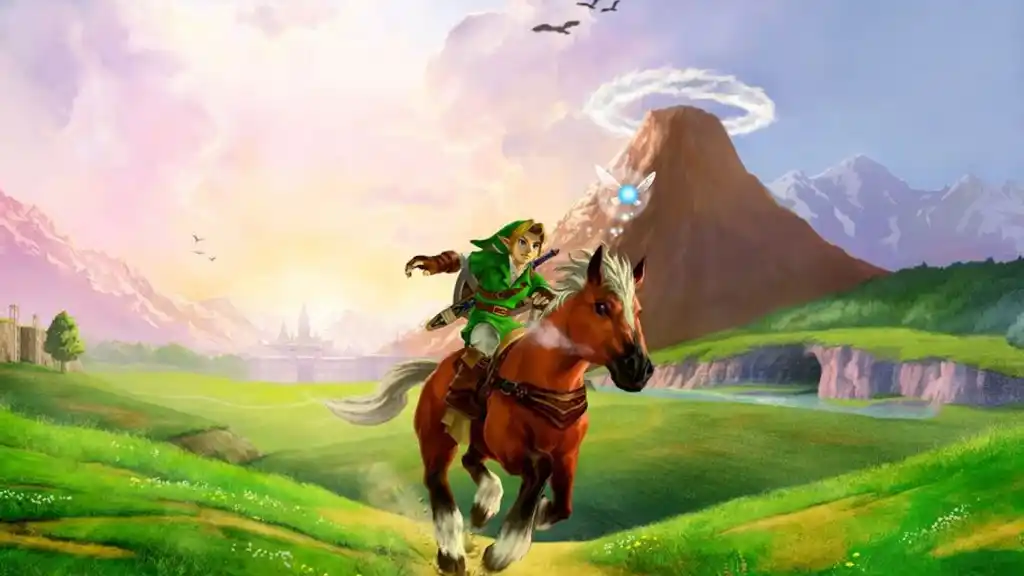
The Legend of Zelda: Ocarina of Time wasn’t just another Nintendo 64 release: it was a masterpiece. From the very first moments stepping out onto Hyrule Field, the game felt impossibly vast, alive, and full of potential. For me and many others, this was our first true open-world experience, long before the term became an industry buzzword. Nintendo crafted a world that felt cohesive, interactive, and narratively driven without sacrificing adventure or freedom.
One of the game’s greatest achievements was its sense of scale. Not in terms of raw size, by today’s standards, Hyrule is modest, but in atmosphere. Locations had personality. Kokiri Forest felt warm and safe. Dodongo’s Cavern felt oppressive and dangerous. The Temple of Time evoked reverence and mystery. Every zone served a narrative purpose as much as a gameplay one, reinforcing themes of innocence, growth, courage, and destiny.
Then came the mechanics. The Z-targeting system, still used in modern action-adventure games today, changed combat forever. Puzzle solving blended seamlessly with dungeon navigation. Time travel between childhood and adulthood wasn’t just a gimmick; it reshaped the world, quests, and character relationships in meaningful ways. And at the center was an unforgettable emotional arc, one that guided Link from young, curious adventurer to hardened hero.
Add to that Koji Kondo’s legendary soundtrack, and you have an experience that felt mythic, timeless, and deeply personal. Ocarina of Time wasn’t simply good for its era; it was a masterwork that redefined what video games could be and continues to show that, even today, despite its age.
Ocarina of Time Influenced the Future of Games

Games today still echo design ideas pioneered by Ocarina of Time. Its impact extends far beyond Nintendo franchises, shaping the very foundation of modern action-adventure design. The Z-targeting system became the template for 3D combat in everything from Devil May Cry to Dark Souls. Its dungeon design, large, interconnected spaces filled with themed puzzles, became a guiding principle for countless future titles, even Santa Monica Studio’s God of War.
But perhaps its most significant influence is in how it balanced exploration with storytelling. Before its release, many games struggled to merge narrative progression with freeform world design. Ocarina of Time showed developers that a world could be both open and directed, that emotional storytelling could coexist with adventurous discovery. This blueprint became a core structure for series like Fable, Kingdom Hearts, Dragon Age, Shadow of the Colossus, and nearly every major action RPG of the 2000s and 2010s.
Its musical system, the use of the ocarina not just as an item but as a narrative tool, foreshadowed mechanics-centered storytelling seen in Bioshock’s plasmids, The Last of Us’s crafting, and countless environmental puzzle systems in modern games. Even cinematic design owes a debt to it; its cutscenes and camera work set standards for how 3D moments could be staged with drama and clarity long before gaming adopted film language wholesale.
And of course, its emphasis on world interactivity paved the way for immersive sim elements that would later show up in Elden Ring, Breath of the Wild, and other genre-defining titles. Put simply, the entire gaming industry absorbed lessons from Ocarina of Time, and we’re still feeling its influence today.
Ocarina of Time Needs a New Remake for the Switch 2
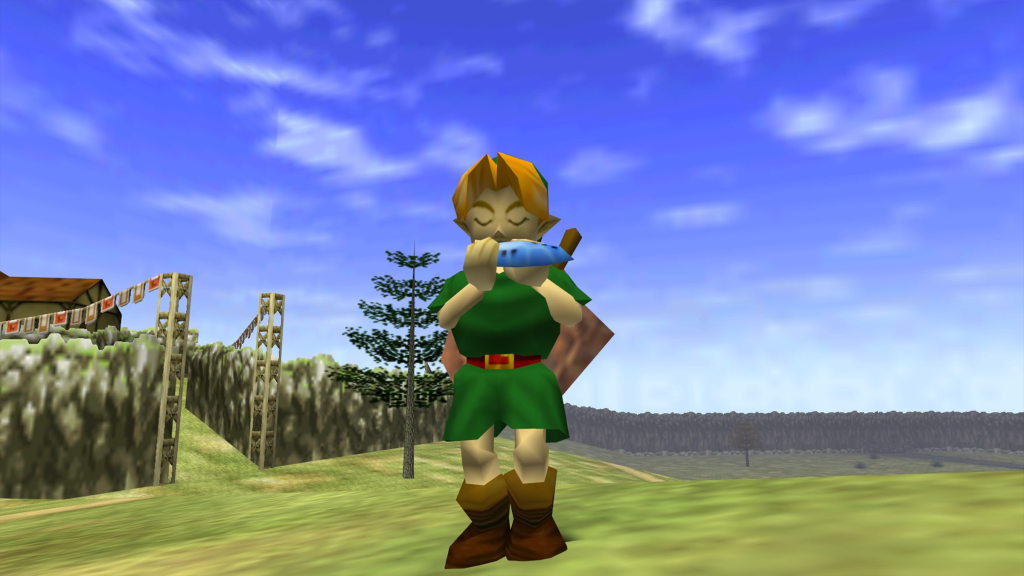
The legacy of Ocarina of Time is secure, but one truth remains: modern players deserve to experience it in a form that reflects its importance. The original holds up in spirit, but its visuals, controls, and technical limitations show their age. The Nintendo 3DS remake revitalized many aspects, but that version is trapped on hardware that is no longer widely accessible, and even then, today’s standards have come so much further. What the game needs now is a full, ground-up remake built for the Switch 2. One that preserves the heart but reimagines the world with modern artistry and fidelity.
Imagine stepping into a fully realized Hyrule with dense forests, dynamic lighting across Lake Hylia, bustling marketplaces in Hyrule Castle Town, and atmospheric weather that enhances every region’s tone. Dungeons are redesigned with contemporary puzzle logic, physics, and environmental interaction while still maintaining their iconic layouts and themes. With a full remake, the storytelling is elevated with expressive animations, richer character performances, a world that feels even more alive, and perhaps even voice acting like Breath of the Wild.
But the goal shouldn’t be excess. Ocarina of Time works because of clarity, pacing, and restraint: qualities a remake should protect. The Switch 2 represents the perfect opportunity to bridge nostalgia and innovation, bringing one of gaming’s greatest adventures into the modern era without transforming its essence. Fans often debate which Zelda games should get major remakes next, but the answer seems obvious. With its anniversary reminding us how important it is, there has never been a better moment to give Ocarina of Time the definitive version it has always deserved.
What do you think? Leave a comment below and join the conversation now in the ComicBook Forum!
Most Viewed
-

Image Courtesy of Netflix -

Image courtesy of Warner Bros. Pictures -
Image Courtesy of Ufotable -

Warner Bros. Pictures -
Image Courtesy of Netflix -

image courtesy of Studio Ghibli