I feel it is fair to say that The Elder Scrolls VI faces a lot of pretty significant issues long before it even releases. Retaining player interest will always prove difficult for a game announced far too early, as will meeting player expectations when it inevitably launches. However, by far the biggest issue that TESVI faces is proving that the storied series it is a part of still deserves the praise, hype, and love it routinely gets. It has been 15 years since Skyrim was released, and the few Elder Scrolls-related media that have come out since then have done little to maintain the series’ position as one of gaming’s best. It therefore lies squarely on the shoulders of the next mainline game to deliver an experience worthy of the Elder Scrolls moniker.
Videos by ComicBook.com
That’s a rather challenging goal to obtain, one frankly I’m not all that convinced it will achieve. Even if The Elder Scrolls VI manages to eschew much of the criticism it is expected to receive, I somehow doubt it’ll live up to the lofty expectations established by its predecessor. The continued use of the Creation Engine, the vast leaps in RPG design since Skyrim came out, and the many failures of practically every Bethesda game since Skyrim would make it seem there’s a lot going against TESVI succeeding. However, this could all have been avoided had Bethesda used an obvious solution, one it has used before to great effect. The Elder Scrolls needs more spin-off games akin to Fallout: New Vegas, and it needs them sooner rather than later.
We Need More Elder Scrolls Spin-Offs
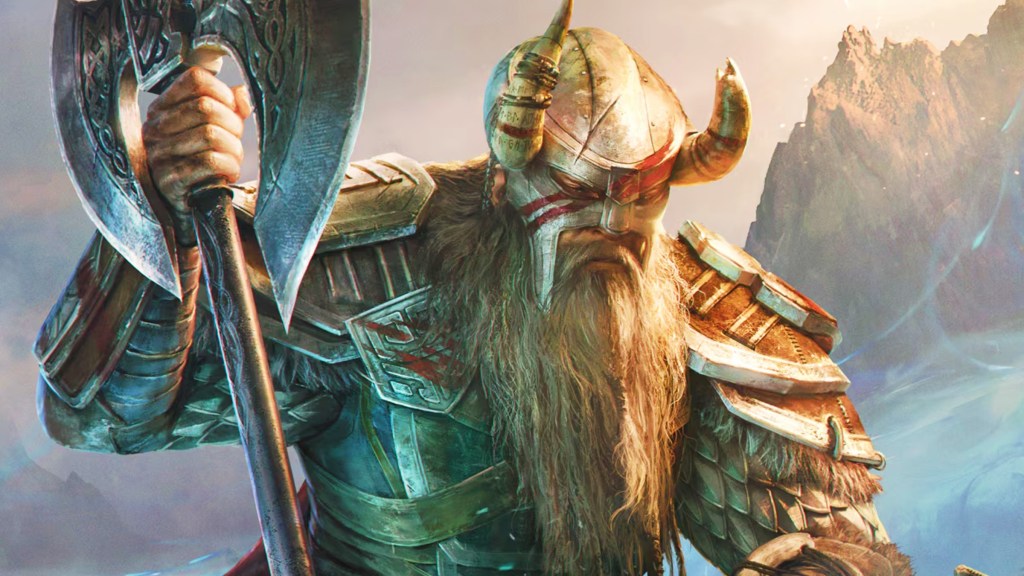
I find it somewhat baffling that since Skyrim’s release in 2011, we’ve had so few Elder Scrolls spin-offs. Sure, there’s the still surprisingly excellent Elder Scrolls Online that sells itself as the definitive TES experience. However, that only really caters to the MMORPG audience, and not what I’d imagine is The Elder Scrolls’ primary fanbase: single-player RPG enthusiasts. There was the rather dreadful Elder Scrolls Blades, but not only was that a pitiful excuse of a game, but it also barely offered anything akin to what one would experience in a fully-fledged TES title.
Prior to Skyrim, The Elder Scrolls series has always been somewhat consistent with its release dates, and that has ensured that fans are catered to and the series’ legacy is maintained. Arena launched in 1994, and Daggerfall two years later in 1996. Then there was Morrowind in 2002 and Oblivion four years after that in 2006. Finally, Skyrim launched in 2011, putting just five years between it and its predecessor. There have been 15 years since the last mainline TES game, which is roughly the same length of time between Arena and Skyrim. Of course, The Elder Scrolls 6 won’t release for another few years, meaning we won’t have had a traditional Elder Scrolls experience for nearly two decades.

Of course, Bethesda is a busy studio, and development timelines have increased exponentially. No one wants Bethesda to rush The Elder Scrolls VI, and no one wants it to neglect the Fallout franchise or abandon any new IP either. Which is exactly why it needs to start outsourcing The Elder Scrolls to other studios, much like how it did with Fallout back in 2010. While Bethesda Game Studios was busy developing Skyrim, it contracted Obsidian Entertainment to create Fallout: New Vegas, thus bridging the gap between new releases and ensuring fans were kept happy. Inexplicably, Bethesda has failed to utilize this strategy since, at least to the same effect.
Crucially, doing so would mitigate the need to seek out the best Elder Scrolls competitors, of which there is a rapidly growing number. These indie and AA adversaries are implementing ideas that far outclass what Skyrim managed to achieve 15 years ago, while also retaining a lot of what makes Bethesda’s brand of RPGs so special. By avoiding handing out the Elder Scrolls brand to other studios, Bethesda is ostensibly enabling other studios to take its place as the leader in innovative and immersive fantasy RPGs and, as a result, further raising expectations of The Elder Scrolls VI to an unprecedented degree.
Bethesda Game Studios Is Ill-Equipped To Handle Both Fallout & The Elder Scrolls
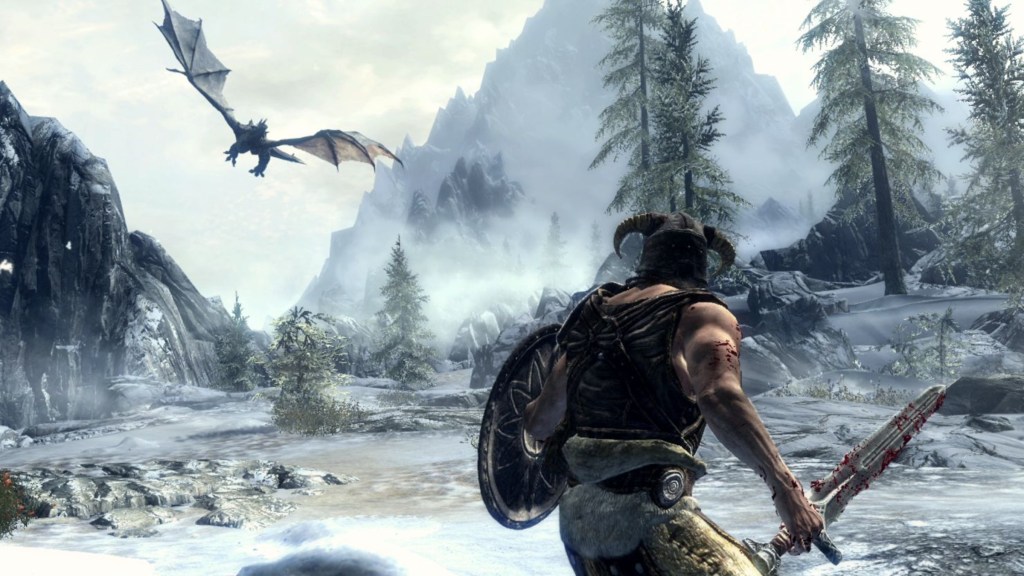
It is clear that Bethesda Game Studios is incapable of handling development on new entries in both the Fallout and Elder Scrolls series, as well as creating new IP like Starfield. That isn’t a slight against Bethesda, truly. With game development taking far longer than ever before, single-handedly managing so many iconic franchises is an insurmountable and impossible task. You’d need to constantly flip between each series, taking upwards of five to six years at a time, meaning that you’d get a game in either series every 10 to 12 years, and that’s without factoring in any other games Bethesda may like to make.
Even if it divides its team between multiple projects, it still seems implausible that it’ll manage to release genuinely great games in each franchise at a consistent rate. It also seems like Bethesda Game Studios doesn’t make a habit of doing that either, as Todd Howard recently stated that almost all of BGS is working on The Elder Scrolls VI in addition to their partner studios. Bethesda needs to offload some of the responsibility to other talented developers to ensure that the rich and storied legacies of each series continue while empowering it to pursue unrelated passion projects.

Allowing other studios to take over every once in a while would afford Bethesda the breathing room it needs, allow that studio to add its own unique flair to TES while earning a steady stream of income to help keep it afloat between its own projects, and stop fans like myself from complaining when it takes nearly 20 years to get a new game in a beloved franchise. Frankly, I wish this model were adopted by more developers, as there are several high-profile franchises that either need reinventing or new releases, both of which a separate developer would be able to assist with.
The issue is that Bethesda won’t take this approach any time soon. Not only would it have done years ago, were it to have seen the interminable length of time between Elder Scrolls games as an issue, but it also does not need to now with The Elder Scrolls VI so far into development. Still, I sincerely hope that Bethesda looks to outsourcing The Elder Scrolls post the sixth entry, especially as it’ll have finally released its own more modern take on the series, and will be able to hand over the new and improved Creation Engine 3 by that point to prospective developers. The Elder Scrolls is too good to be left to fester for two decades at a time, so perhaps now, in the immortal words of Samwise Gamgee, it is time for Bethesda to share the load.
Who do you think should make an Elder Scrolls spin-off game? Leave a comment below and join the conversation now in the ComicBook Forum!
Most Viewed
-

Courtesy of Cartoon Network -

Image Courtesy of A-1 Pictures