Most competitive multiplayer games live or die on whether players actually understand what they are doing from one minute to the next. When the flow makes sense, even losses feel instructive. When it does not, confusion sets in fast, and frustration follows. Highguard lands somewhere in the middle, with a clear structure that the game does not always surface cleanly to the player.
Videos by ComicBook.com
That makes understanding how Highguard match phases actually progress more important than any tooltip or onboarding prompt. From the opening buy phase to the final Core explosion, every match follows a repeatable loop built around preparation, escalation, and decisive objectives. Once that loop is understood, the match flow becomes easier to read, even if the execution still feels uneven at times.
Understanding Each Phase of a Highguard Match
Every match begins with a reinforcement phase, where players spend the first minute or so reinforcing their base with improved walls and sorting out their starting loadout. It is straightforward and familiar to something like Rainbow Six Siege, which works in its favor. The problem is less about the system itself and more about clarity, since new players are often unsure what walls should be reinforced or which weapons to use in the long term. Still, this phase quietly sets the tone for everything that follows.
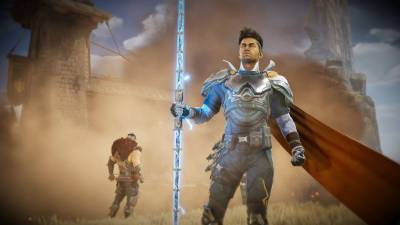
After the buy phase, teams move into the loot hunt. This is where players spread across the map, collecting resources and gear that feed future upgrades and power. On paper, this phase encourages smart rotations and early skirmishes. In reality, coordination determines whether it feels purposeful or scattered. Teams that loot efficiently tend to carry a noticeable edge into the next stage.
That edge becomes critical once the Stormbreaker comes into play. After the loot hunt, both teams are pushed toward a major teamfight over the Stormbreaker objective. Winning this fight does not end the match, but it determines who controls the pace going forward. Which ever teams managed to claim the Stormbreaker is immediately put into an advantageous state. The Stormbreaker acts as a gateway, deciding which team gets to attack and which is forced to defend.
Mastering Momentum Across Highguard Match Phases
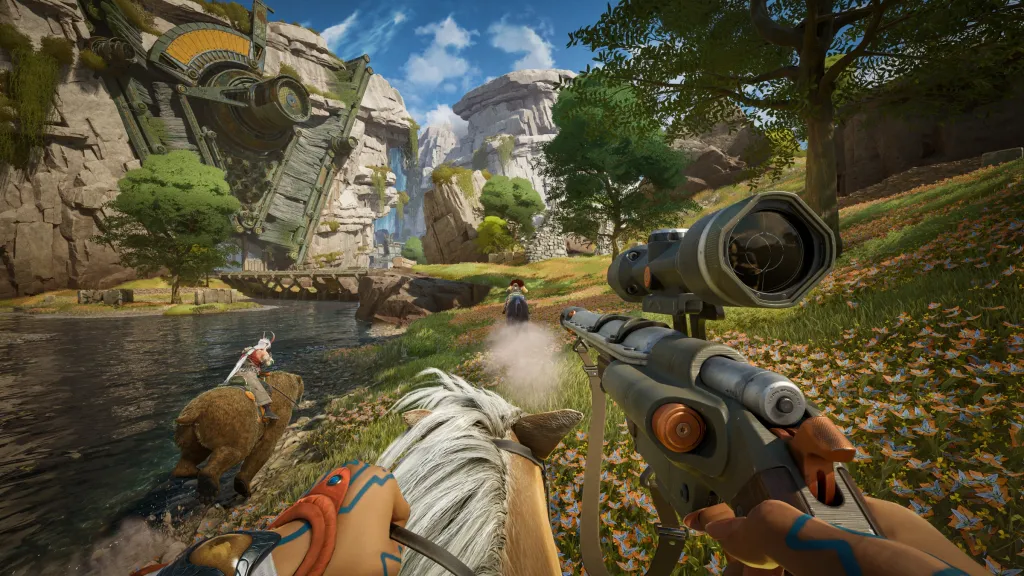
If overtime hits during the Stormbreaker phase, the team holding the Stormbreaker at the end of it, determined by which team is still alive during it, earns the right to initiate a base raid. If the Stormbreaker is used at the enemy base, the defending team is immediately put on the back foot. This phase shift is one of Highguard’s clearest moments, transitioning from open skirmishes into structured attack and defense.
Base raids revolve around objectives rather than raw eliminations. Each base contains two generators and a Core, and attackers must plant bombs in a system that closely resembles Counter-Strike. Attackers defend planted bombs, defenders attempt to defuse, and attackers are limited by a finite number of lives. Planting a bomb on the Core takes longer, but if it detonates, the defending team instantly loses the match.
If the Core survives, the base still takes damage, reducing overall base HP and pushing the match closer to its conclusion. After the attack phase resolves, the game resets back into its loop. Teams return to another buy phase, followed by loot, another Stormbreaker fight, and another potential base raid. This cycle repeats until one team’s base HP finally hits zero.
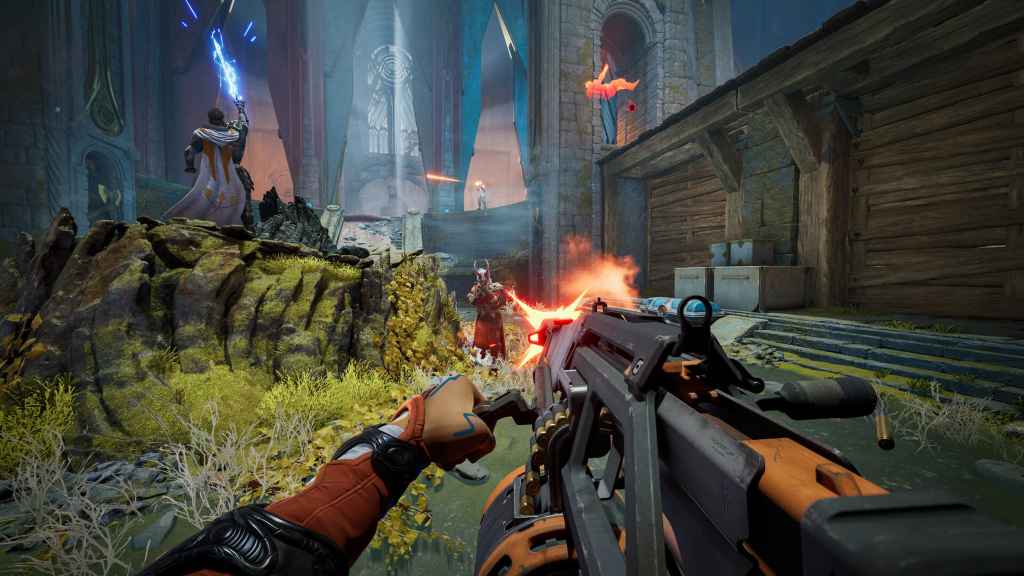
What Highguard is clearly aiming for is momentum built through sequencing rather than constant fighting. Each phase feeds the next, and skipping one usually weakens the following stage. Teams that ignore looting struggle in Stormbreaker fights. Teams that lose Stormbreaker are forced into defense, whether they are prepared or not.
Stormbreaker control remains the single biggest momentum lever in the match. Holding it gives your team agency and dictates the flow of play. Losing it means reacting instead of planning, which Highguard rarely rewards. The generator phase also matters more than it appears, with teams that rush the Core often failing because they skipped the necessary setup.
The repetition of match phases creates a steady escalation. Each loop raises the stakes, making mistakes more costly and successes more impactful. When base HP starts to run low, even small wins feel amplified. Highguard does not always explain this rhythm well, but once understood, the match flow reveals itself clearly. From start to finish, this is how Highguard matches progress, whether the game spells it out or not.
What do you think? Leave a comment below and join the conversation now in the ComicBook Forum!
More Gaming
-
Courtesy of DC Comics -

Courtesy of Insomniac Games -

Courtesy of Hello Games