Exploration has always been the heart of a good RPG, but it’s easy for open worlds to fall into a familiar rhythm, especially if you’ve played your share of them over the years. You run through towns and skip past background chatter because most NPCs don’t matter, and this is a well-established fact modern RPGs continue to peddle. They’re set dressing. And when they do offer something useful, it’s usually buried behind a quest marker or a dialogue wheel that feels more like a checklist than an actual exchange. Open worlds keep getting bigger, but the people inside them often feel like static props rather than interactive parts of the adventure.
Videos by ComicBook.com
Where Winds Meet breaks that pattern with something deceptively simple: an AI-driven NPC chat system that changes how you approach even the smallest moments of exploration. Instead of breezing past every lantern-lit street or busy marketplace, you may find yourself starting to slow down, because anyone might be worth talking to. The feature isn’t flashy at first glance, but the more it is used, the more it becomes obvious why it’s such a big deal. It adds a spark of unpredictability and curiosity to the experience, something RPGs need to break the monotony and provide the unexpected.
Why AI NPC Chats Feel So Different From Standard Dialogue
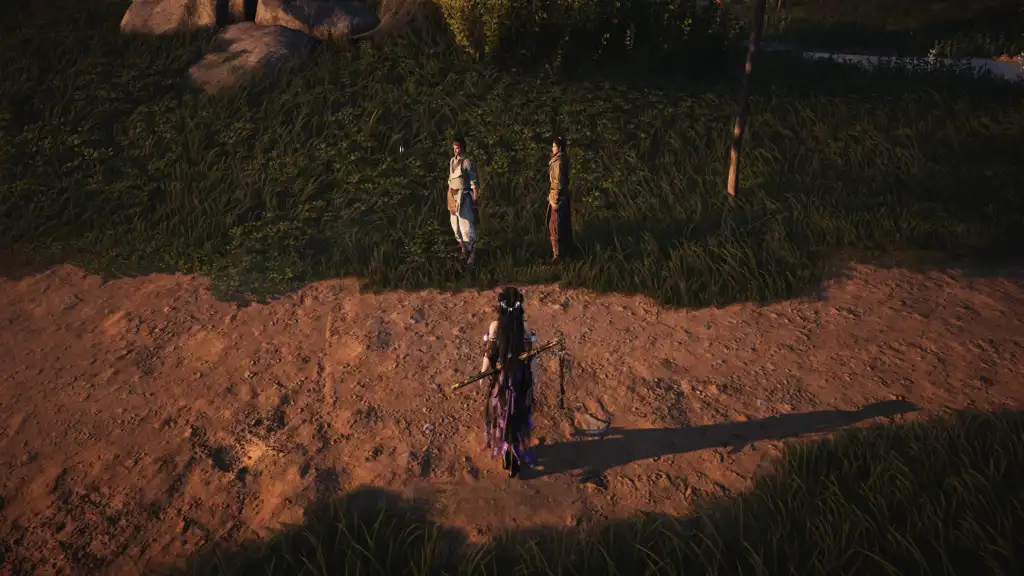
Most RPGs rely on rigid dialogue trees that, while functional, limit conversations to a handful of pre-written options. It’s predictable: walk up, press a button, pick from three or four lines, and accept (or decline) whatever that person is programmed to give. Where Winds Meet is far from void of this setup, but it does take a different approach by letting you talk to NPCs, important or not, through a freeform AI chat system. It’s still controlled and safe, but it feels far more natural, as though you are actually speaking with someone who lives in the world rather than clicking through stock phrases. The difference is obvious almost immediately, because the flow of conversation doesn’t follow the typical, formulaic design.

The system invites curiosity. Instead of relying on preset prompts, you can try asking an NPC anything relevant to the situation: where they’ve been, what they’re doing, who they know, what rumours they’ve heard, or even what they’re afraid of. Sometimes NPCs become nervous, other times they reveal something unexpected. The conversations don’t feel like they were built to funnel you toward a single outcome. There’s room to poke around, improvise a little, and push topics that normally wouldn’t exist in a scripted game. It’s surprising how much that subtle shift makes the world feel more interesting.
It also changes your relationship with the environment. Where Winds Meet’s world is already dense with detail, but the AI chat system encourages you to treat NPCs as more than atmospheric clutter. A villager sweeping a porch might point someone toward a shortcut. A traveller on the road might share a location that isn’t marked on the map. Even if nothing meaningful comes out of it, you still get a moment of connection that adds flavour and immersion. It’s not perfect. You can create some pretty fantastical stories to get through many of these NPC conversations. But the idea has a lot of room to evolve in Where Winds Meet and in future games.
The Surprise Moments That Come From Freeform Conversations

What really makes this mechanic stand out are the unpredictable moments that come from using it. Because you can steer conversations in widely different directions that actually affect the bottom line. The results can be funny, weird, tense, or surprisingly useful. Someone might casually mention a hidden path that leads to treasure. Another might blurt out something suspicious when pressed too hard, sending you down an unplanned rabbit hole. These little moments pile up and create a sense that the world isn’t just reacting to you. These seemingly unimportant people live here.
Where Winds Meet also doesn’t shy away from the more aggressive side of communication. You can threaten NPCs, and the game doesn’t treat it as a throwaway option. Threaten the wrong person, and they might run, cry out, or straight-up attack you. Threaten someone who’s actually hiding something, and they might slip up and reveal a clue they would’ve otherwise kept quiet. It’s not about being cruel. That’s not the point. What’s significant here is recognising that the system supports different tones of interaction. It’s rare for an RPG to allow social pressure to feel like an actual mechanic rather than a menu option.
The best part is that none of these interactions feel forced. They’re not tied to major quests, nor do they constantly funnel you toward the same results. The feature shines in the small moments: a quick chat on a bridge, a tense exchange outside a camp, a surprisingly warm conversation with a stranger who gives genuine, helpful insight. These moments build personality into the world in a way that scripted dialogue simply can’t match. Even players who normally ignore side NPCs may find themselves checking in with people just out of curiosity, wondering what they might miss if they don’t.
What do you think? Leave a comment below and join the conversation now in the ComicBook Forum!
Most Viewed
-

Image Courtesy of Marvel -

Image courtesy of Netflix -

Image Courtesy of Netflix -

Courtesy of Netflix -

Image courtesy of Prime Video