Although hard to believe for some, 1996 was three decades ago, when arcade games where still at their height and releasing some truly excellent titles. From evolution of established fighting game series to revolutionary rail shooters, there are some iconic arcade experiences that are still remembered fondly today. On the other hand, there are some arcade titles you likely don’t remember from this era either, despite how beloved they may have been at the time.
Videos by ComicBook.com
The late ’90’s marked a time in arcades were beginning to shift from 2D sprites to 3D polygons, giving rise to more detailed experiences that players were drawn to. The biggest example of this game with fighting games, one of the biggest arcade genres that was starting to lose steam. Games like Dead or Alive or Tekken began to challenge mainstays like Street Fighter or Mortal Kombat, with each series dipping in 3D later to catch up to the trend that defined arcades in 1996 and later years.
4. Metal Slug
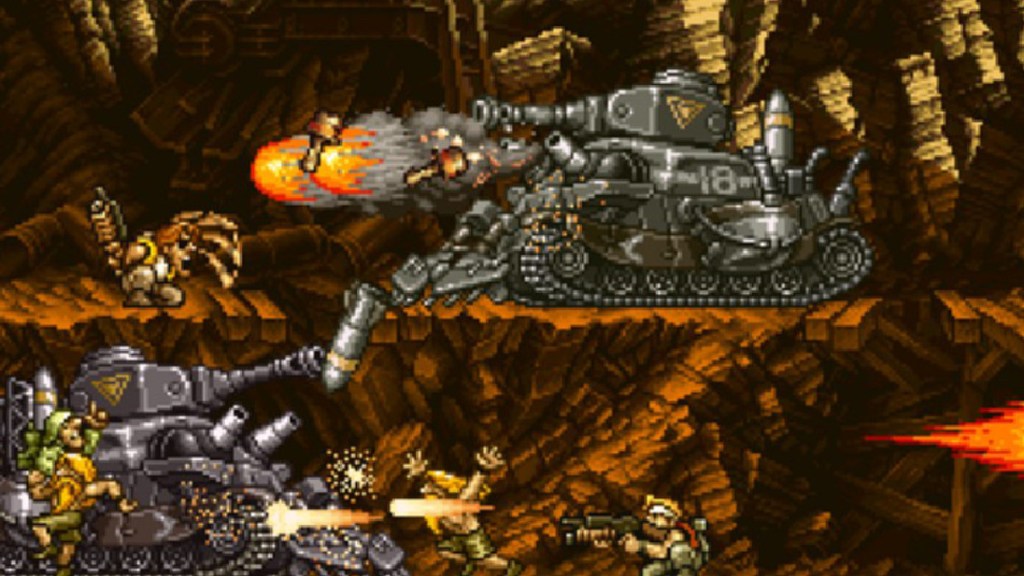
Developer SNK’s Metal Slug is a series you may not have forgotten due to its sequels, or the fact that characters from the franchise have shown up in modern games like The King of Fighters 15. That being said, the original arcade classic is special even by comparison to its follow-ups, with dynamic side scrolling action that was far more chaotic than similar games of the same genre. When looked at side-by-side with classics like Contra, Metal Slug takes every idea from a side scroller shooter and amplifies it to new heights.
The graphics and sounds of Metal Slug are top notch, perfectly capturing the arcade feel from its era with incredibly detailed sprite work and animations for characters and enemies. The bombastic levels of Metal Slug are amazing with another player, with plenty of fascinating situations that will leave you laughing at the absurdity of the game’s frantic pace. There’s nothing quite like operating heavy vehicles or finding an incredibly powerful weapon to blow up your enemies in an almost cartoonish fashion.
The fluid animation of Metal Slug gave rise to a number of imitators, but none come close to the first game’s appeal. If there was any game that captured a “pure arcade” vibe today, it would be this series for its brand of exaggerated action. The high-fidelity of the steampunk, futuristic military graphics gave Metal Slug a clear visual identity, and one that other arcade games failed to achieve during the same time. Although the original game has been somewhat forgotten due to its wealth of sequels, there’s almost no beating that first arcade experience.
3. Dungeons & Dragons: Shadows over Mystara

Capcom had a lot of excellent titles during the arcade era, but in 1996, Street Fighter Alpha 2 and Street Fighter 3: New Generation weren’t nearly as successful as games from that series’ past. As a result, other Capcom titles like Dungeons & Dragons: Shadows over Mystara stood out for being a fascinating collaboration between arcade games and the TTRPG that was already becoming incredibly popular. Unlike any attempts to make a D&D game in the past, Capcom created perhaps the most polished iteration of the tabletop experience.
Shadows over Mystara combined beat-em-up style side scrolling with several RPG mechanics reminiscent of D&D, creating a game that was far more detailed than others releasing the arcades around the same time. Among the D&D or other RPG systems within the game, here are some of the most striking examples:
- Real-time Inventory management
- Weapon switching mechanics (dynamic like later Devil May Cry games)
- Character Class systems for party synergy
- Branching narrative paths based on player choices
- Magic items with special abilities
Multiple endings to this D&D arcade title also reflects the consequences of player actions that are often found in the tabletop game. Shadows over Mystara is also more mindful than other arcade games that came out at the same time, with detailed mechanics beyond just “move and shoot” gameplay. Unlike a variety of other side scrollers that were in arcades at the time, Shadows over Mystara added a fighting game’s layer of depth to this D&D game, with each character class capable of executing different techniques with a special command input.
In many ways, this game helped evolve the beat-em-up genre from what it was limited to before, even by Capcom’s own standards. Instead of the simplicity of Final Fight or Alien vs. Predator, Shadows of Mystara has many secrets to discover. This added replayability to the arcade title, making it a long-lasting experience you might still see in modern arcades today.
2. San Francisco Rush
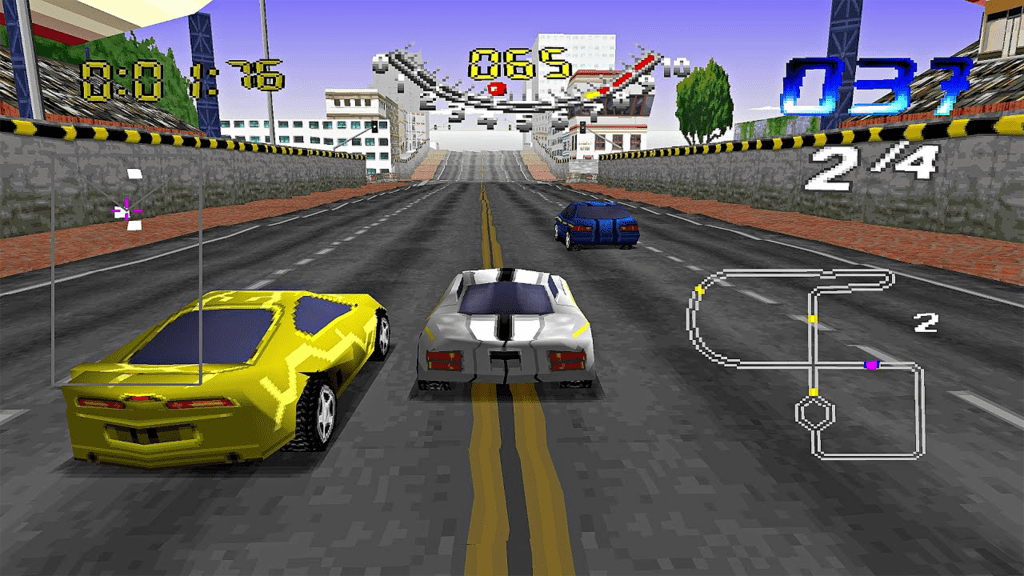
While 1996 saw the rise of the original PlayStation and other home consoles, it was still a long time before experiences like Mario Kart would take players by storm, leaving some of the best racing titles still in arcades. One such high-speed racing game was San Francisco Rush, a truly over-the-top project that may have laid the groundwork for many others. The physics features of this title are ridiculously dynamic, with players knocking into each other and crashing often in 3D racing environments that were ahead of their time.
San Francisco Rush was popular for a number of reasons back in 1996, including the way that its racing levels had multiple shortcuts that only veteran players would know when competing. Improvisation and plenty of adaptation defined this title, with much of the same appeal as you would find in modern racing games with a flair for the dramatic. At the same time, cars fly into the air from jumps, flip out on sharp turns, and swerve sharply if touched, giving San Francisco Rush a surprising amount of realism for even greater tension than most racing games.
The chaos of this game was great in arcades and on the other systems it was ported to, like the N64 and PlayStation. The hidden paths in San Francisco Rush would act as inspiration for other racing games that followed it, but for the game alone, this factor gave it replayability similar to D&D: Shadows over Mystara. Much like Metal Slug as well through exaggerated graphics, the additional large 3D world of this game made it an enduring arcade classic, gaining more ports and sequels that players still remember fondly.
1. House of the Dead
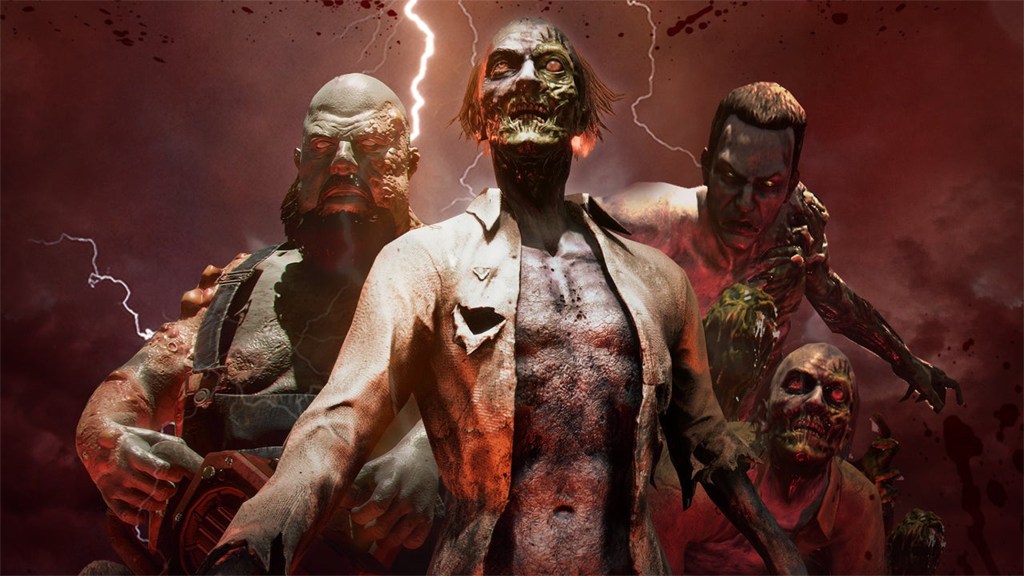
House of the Dead is almost the quintessential rail shooter, almost meant for arcades more than anywhere else. This isn’t just one of the best arcade games of 1996, but one of the most iconic arcade titles of all time, with Time Crisis perhaps coming close to its spot. This game saw you and a friend take up guns and defend each other from waves of undead, while also trying to save endangered civilians from the apocalyptic nightmare the game presented. At no point does this game fall into generic zombie tropes, as it acts more like Resident Evil in its execution.
Three years before the first Resident Evil game was created, House of the Dead introduced players to a variety of undead enemy types that challenged their ability to assess threats and take down foes. This game has multiple branching paths too, with players changing their journey based on where they choose to go. Much like some of the other games on this list, the replayability of House of the Dead gave it a large audience, with players eager to figure out where certain routes changed and what the opposite choice would bring.
With intense 3D graphics that were highly advanced at its time, House of the Dead is a game that you could forget, but easily remember the moment you see any rail shooter in an arcade today. Despite being released in arcades 30 years ago, House of the Dead still remains an incredibly nostalgic title that many players from that time period likely remember in some way.
More Gaming
-
Courtesy of Legendary Pictures -

Courtesy of Nintendo -

Image Courtesy of Sony Interactive Entertainment