Somewhere between a patch note and a punch to the gut, something familiar stops working the way you remember it. You load in expecting muscle memory to carry you, but the timing is off, the damage is different, the comfort is gone. Nothing is loudly broken, which is somehow worse. It just feels wrong in a way you cannot immediately prove, only notice once it is already too late.
Videos by ComicBook.com
That is the quiet danger of balancing updates. They usually do not destroy games in an instant. Instead, they reshape them in increments so small they almost feel invisible on paper, yet unmistakable in play. One day you are playing what you know. The next, you are negotiating with something that only resembles it. Balancing patches are supposed to be acts of stewardship, but in these cases they became the spark that turned familiarity into fracture, turning loyalty into uproar, even if momentarily in some case.
5. Mortal Kombat 11

Mortal Kombat 11 breathes in frames and exhales precision. It is a game built on certainty, where timing becomes identity and repetition becomes mastery. Players do not simply learn characters, they inhabit them. Each input becomes a reflex that feels earned rather than taught. There is comfort in that kind of structure, even when the violence is anything but comfortable.
Then, in August of 2019, NetherRealm released a major balance update with the intent of reducing teleport abuse and tightening competitive clarity around Scorpion’s Hell Port. However, though initially received middling, the adjustment dulled something fundamental in the rhythm players had internalized, and that feeling grew over time. The move still existed, but its meaning had shifted, as if a familiar word had been quietly reassigned a new definition. The change lingered in every match that followed, what had once been instinct now required recalculation. Many were not happy about this, hence the review wave that followed soon after.
Despite these changes, Mortal Kombat 11 fully recovered and holds a “Very Positive” rating on Steam currently.
4. Tekken 8

Tekken 8 arrived with forward momentum carved into its design. The Heat system pushed aggression into the spotlight, treading new grounds for the series with focus on such forward momentum being a focus. Heat turning hesitation into a liability and rewarded players who committed to pressure. Matches gained a kind of controlled volatility, where every exchange felt like it might tilt the entire outcome. While the system was mixed even from its most humble beginnings, many in the game’s community liked the addition.
Then, in the spring of 2024, that momentum began to splinter. Between the introduction of the Tekken Shop in April and the v1.04 balance update in May, the game shifted under its own weight. Bandai Namco framed the changes as refinement, an effort to reduce dominance at the top and restore variety to character viability. But the adjustments to recovery, aggression, and Heat interactions did not feel like refinement to many players. They felt like friction added where flow once existed.
What followed was a highly uneven pressure. Certain matchups accelerated beyond control while others stalled into defensiveness that felt unrewarded. The community response did not arrive as a single explosion. It accumulated. First in commentary, then in the review scores. The Heat system still burned, but not always in ways that felt intentional. Tekken 8’s reception ultimately cracked into visible discontent on Steam, where it remains marked as “Mixed,” with recent reviews still skewing “Mostly Negative.”
3. Slay the Spire 2

Slay the Spire 2 thrives on discovery, on those rare moments when a run turns into something absurdly powerful. A deck clicks into place and suddenly the rules bend in your favor. It feels earned. It feels clever. It feels like you got away with something. The game almost encourages that mischief. It rewards curiosity with beautiful, broken outcomes. Those moments are what players chase run after run.
Then the v0.100 beta patch, released in March 2026, arrived with the stated goal of removing overpowered infinite deck synergies that had emerged during early access runs. Infinite builds, those delicate accidents of system interaction, were brought back within defined boundaries.
The change was optional, which made its presence more unsettling rather than less. Even when untouched, it altered perception. The suggestion that limits were now part of the conversation was enough to change how players read possibility itself. What followed was a wave negative reviews criticizing the changes, despite it being a totally optional patch. Fortunately for the game, it had been “Overwhelming Positive” for quite sometime so the damage was not immense, but still notable.
2. Warhammer 40,000: Darktide
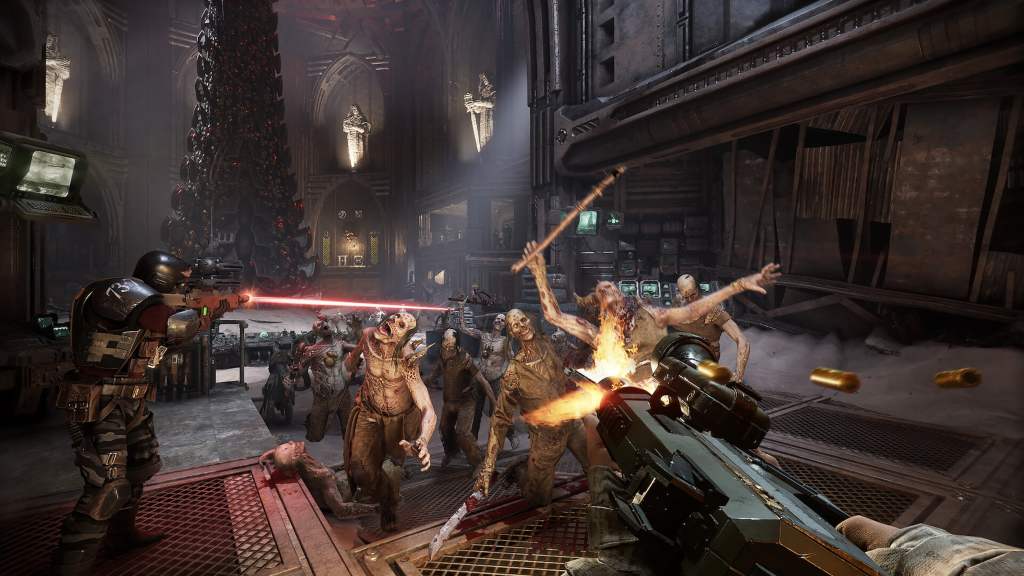
Darktide is built on weight. Every swing lands like it means something beyond animation. Every encounter feels like resistance against a world that does not negotiate. There is rhythm in that resistance, harsh but readable, and players learn to trust it even when it punishes them. Survival is not granted. It is extracted through persistence.
In February 2023, following a turbulent launch, Fatshark released the Blessings of the Omnissiah update with the intent of delivering long-promised crafting systems and refining weapon balance under endgame difficulty demands. It was framed as a step toward completeness, a way to finally stabilize systems that had launched in an unfinished and questionable useful state. Yet for many players already carrying fatigue from earlier gaps, the update did not feel like resolution. It felt like continuation of the same sentiments as prior.
Some weapons improved, others shifted, but the broader structure of progression still carried the texture of friction. The systems around combat remained dense in ways that did not always feel purposeful. The experience became less about mastery and more about navigating layers of adjustment that never fully settled into clarity. Players felt it immediately. Reviews followed with a tone that was not angry so much as worn. The question repeated itself in different phrasing, but always pointed in the same direction. “Why does this still feel incomplete?”
1. Helldivers 2
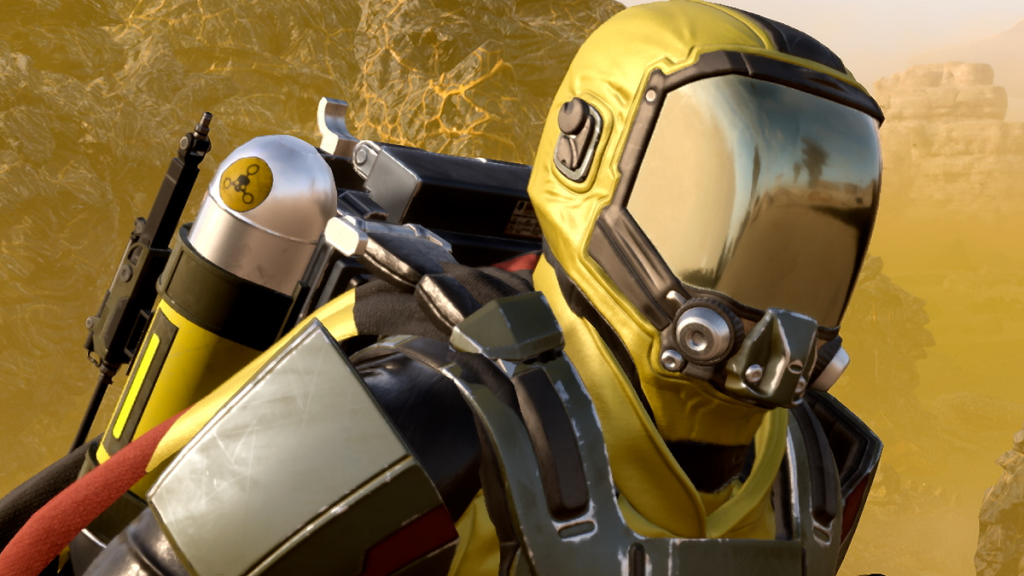
Helldivers 2 lives in the space between panic and power. It gives players tools that feel capable but never guaranteed, then surrounds them with situations that test that assumption without mercy. When everything aligns, it becomes kinetic storytelling at full volume. Every mission feels like something that should not have worked, but did.
Then, in March of 2024, Patch 0.100 arrived and adjusted the Railgun’s damage profile, specifically its armor penetration levels, something that was really important in the game’s early life. A reliable answer to overwhelming threats became uncertain in the exact moments it had once defined. The weapon still functioned, but required extra dangerous steps to match the performance is had before this update. The result began Helldivers 2 long and continuous erosion of trust that still continues to batter the game today.
That patch was not the end of it. Across its lifespan, Helldivers 2 has accumulated a pattern of updates that repeatedly tested the boundary between adjustment and destabilization. The Escalation of Freedom update in August 2024 removed or altered widely used tools ahead of a major content push, and the mandatory account linking requirement, triggered a massive wave of backlash that extended beyond balance alone. Each moment added another layer to a growing sense of instability and even today, Helldivers 2 continues to walk down this path.
What do you think? Leave a comment below and join the conversation now in the ComicBook Forum!
Most Viewed
-
Image Courtesy of Netflix -

Image courtesy of Warner Bros. Pictures -
Image Courtesy of Ufotable -

image courtesy of Studio Ghibli