Great Dungeons and Dragons adventures are defined by their heroes, but also the villains that they go up against throughout their campaign. Entities like the two-headed Demogorgon, the undead lich Vecna, and the vampire Strahd von Zarovich are iconic antagonists, defining some games from start to finish. However, these villains are almost used too often, making other figures worth using by Dungeon Masters who want to inject something unique into their stories.
Videos by ComicBook.com
D&D has a rich history of characters, settings, and lore that create dozens, if not hundreds, of villainous faces for players to face along their epic journeys. That being said, the most interesting villains are ones that are used sparingly, not only to prevent players from predicting their presence, but also to add something foreboding through how unknown that character could be. Underrated D&D villains can easily become iconic at your table, mainly due to how unpredictable they can be.
5. Juiblex, Demon Prince Of Ooze

Demon Princes like Demogorgon and Orcus are commonly used D&D villains, but there are a number of other demonic creatures that occupy the Lower Plane of The Abyss. One such demon is Juiblex, a mass of slime and ooze that is said to be the origin point of all ooze monsters throughout the multiverse. A shapeless mass of evil, Juiblex is an entity that represents demonic corruption as a whole, desiring nothing more than to spread itself over all creation.

Juiblex is a very straightforward kind of villain, with no plots or schemes in its empty mind. Although a minor demon lord, lower level parties will undoubtedly feel the horror this creature can command through its ooze minions, creating a disgusting yet memorable adventure trying to stop it in some way. Perhaps cultists trying to bring about a “clean slate” through Juiblex would create a campaign filled with body horror straight out of Hellraiser, with the demon acting as a final boss that tests a party to their physical and mental limits.
4. Gruumsh One-Eye
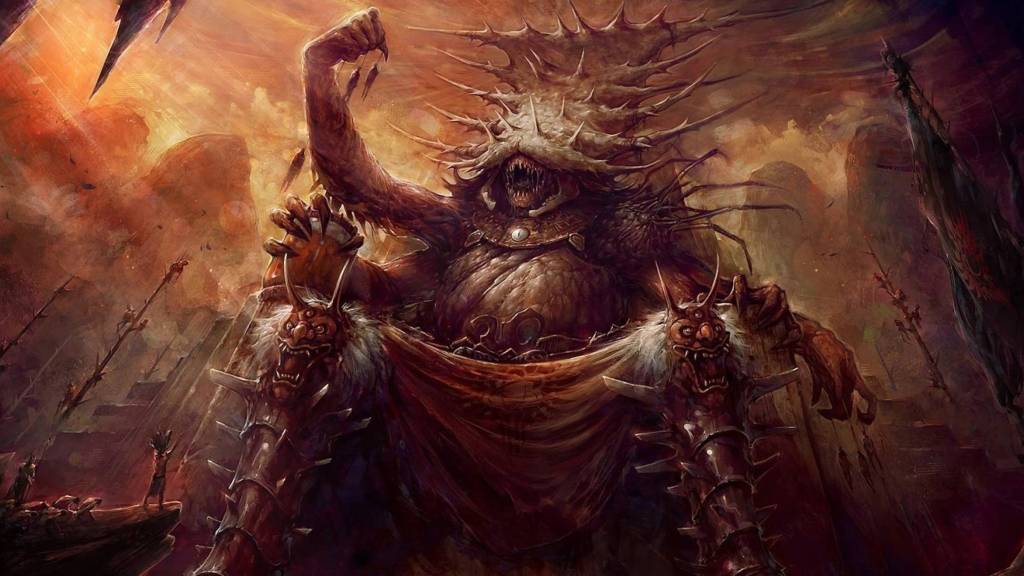
Gruumsh One-Eye is known as the patron god of the Orcs in D&D, commanding them as an unquestionable patriarch. At Gruumsh’s word, orcs are to wage endless holy wars in his name, leading to most Orcs to become brutal marauders, raiders, and warriors as they are commonly known. Most adventures with Orcs have at least a few of them loyal to Gruumsh’s goals, but few actually use that objective as the center of their plot.
Having Gruumsh as your campaign’s primary villain could help focus on that often unseen aspect of D&D‘s lore, building into Gruumsh getting close to their ultimate victory. High-level players might even be able to take on this god of war in battle, defeating him once and for all to stop his orcish incursions. Given that half-orcs are a common species in D&D, Orcs that rebel against Gruumsh or player characters with personal motivations against the god could also create compelling tales of grace in the face of brutality.
3. Death Knight Lord Soth

The Dragonlance setting from the 3.5 edition of D&D was once an infamous place for a dragon-themed adventure, featuring plenty of heroes and villains alike. Yet, over time, the name Lord Soth has fallen into more obscurity, even with a reprinting of the Dragonlance setting within 5th edition. Considered the first true Death Knight ever created for the TTRPG, Lord Soth is a legendary figure that never gets as much attention as they should for the archetype they created.
Lord Soth is a fallen knight who still retains some semblance of honor despite their undead status. Riding a dragon of similar evil magic into battle, Lord Soth’s imagery alone is enough to inspire a truly unforgettable villain in your campaign. What makes Lord Soth fascinating is not just his strength, but his refusal to go back on ideas of chivalry. He doesn’t ambush characters, nor attack them before they are ready. A tragic backstory defines an otherwise stoic character, creating a villain players can look at with some sympathy.
Despite this, Lord Soth is one of the deadliest enemies in the game, representing a classic idea of a dark-fantasy evil that you would see on a heavy metal album cover. Deadly magic and might combine to easily create one of D&D strongest characters, whose attacks could TPK a party that isn’t ready to face down Lord Soth in a grueling battle to the death.
2. Former Archdevil Levistus
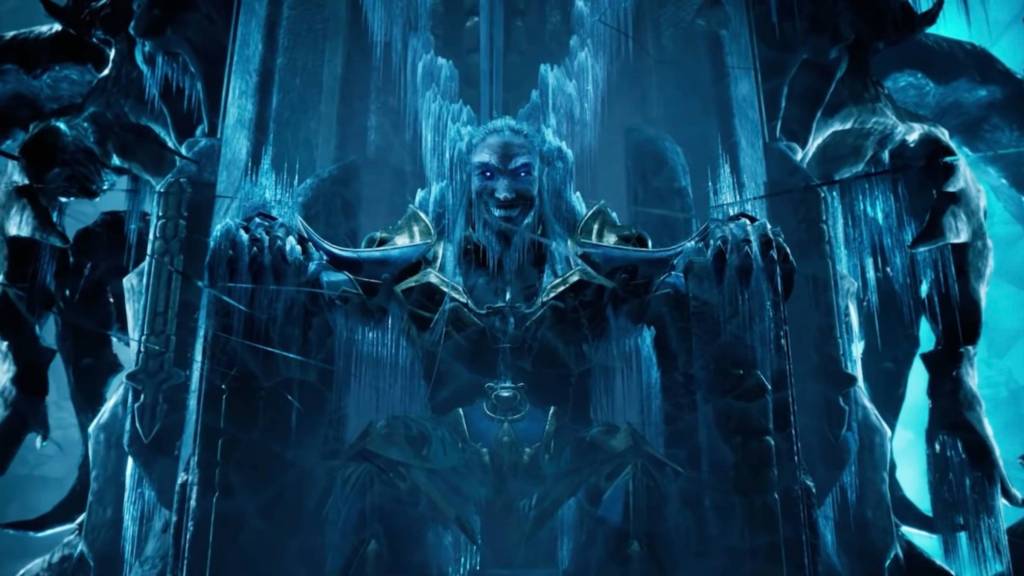
Archdevils of the Nine Hells are great villains, such as Zariel in 5e’s published Descent into Avernus campaign. Asmodeus, Moloch, or Dispater all make for fantastic evils for parties to interact with, as devil contracts and dealings could immediately add tension to grand adventures. With Nine Hells, though, there are devils whose names are only whispered, such as Levistus. Once the ruler of the layer called Stygia, Levistus is a devil hated among devils, representing perhaps the most cunning of the evil creatures in existence.
Levistus, according to D&D lore, is trapped on a throne of ice in Stygia. This archdevil once commanded the cold, representing the idea of “hell freezing over” better than anyone. Constant schemes and treachery put him in this spot, as even the dark dealings of other devils couldn’t stand Levistus’ constant betrayals. In a way, this makes Levistus somewhat of a trickster, much like Loki from the Norse pantheon. Such a character might be a fantastic villain, connecting with characters through the shadows to put a spin on what they might expect from a “normal’ interaction with a devil.
1. Kyuss, The Worm That Walks

Kyuss is an Elder Evil, a creature of prophecy that even gods, devils, and demons fear to some degree. Representing an aberration like Mind Flayers, Beholders, and other classic D&D villains, Kyuss is known to be a harbinger of the end times, creating an apocalyptic antagonist that players could immediately find horrifying in their adventure. Kyuss is another figure from D&D‘s 3.5 edition, acting as a demigod of worms, undeath, and overall corruption that can spread at a moment’s notice.
Dark cults surrounding Kyuss’ arrival might create an interesting campaign filled with monuments to the evil entity. Given the character’s history, there could be plenty of dungeons and ruins of older civilizations that Kyuss has destroyed in the past, crafting a great D&D experience that builds a haunting atmosphere at every step. Undead villains are common within the TTRPG, but the gross nature of Kyuss makes him a character often skipped for more “traditional” figures who take up that role.
There’s something special in a villain that unifies almost every other force together in order to stop it. Among threatening characters in Dungeons and Dragons, Kyuss could be the figure that helps characters set aside their differences for a truly impactful adventure, which is what a good villain should do in the first place.
Who are your favorite D&D villains that no one really talks about? Leave a comment below or join the conversation in the ComicBook Forum!
Most Viewed
-

Courtesy of Sony Pictures Animation / McDonald's -

Image Courtesy of TMS Entertainment -

Image via Prime Video -

Courtesy of TOHO Animation -

Courtesy of Crunchyroll