The open world genre, while absolutely one of my favorites, has its fair share of problems. Even some of the greatest games within it suffer from a myriad of flaws inherent to the current design philosophy that has stuck to it like a leech. Ubisoft’s approach to open-world design has often been cited as the cause for much of the genre’s teething problems, but it undeniably goes beyond one studio’s choices. Games like The Witcher 3 and even more recent titles like Ghost of Yotei suffer from frustrating design that makes exploring their stunning worlds, occasionally, a chore.
Videos by ComicBook.com
However, every so often, a game comes along that attempts to innovate where few others have dared. These games, while not always perfect, offer up unique solutions to common problems that, if implemented across the board, could lead to more satisfying experiences. One such game is 2025’s incredibly underrated RPG, Hell Is Us. This semi-open world title offered a novel approach to open-world design that made exploring its hauntingly beautiful landscapes feel refreshing. It really could be the fix we’ve been searching for all this time, yet I’m not convinced other developers will follow suit.
Hell Is Us Takes A Hands-Off Approach To Open World Design
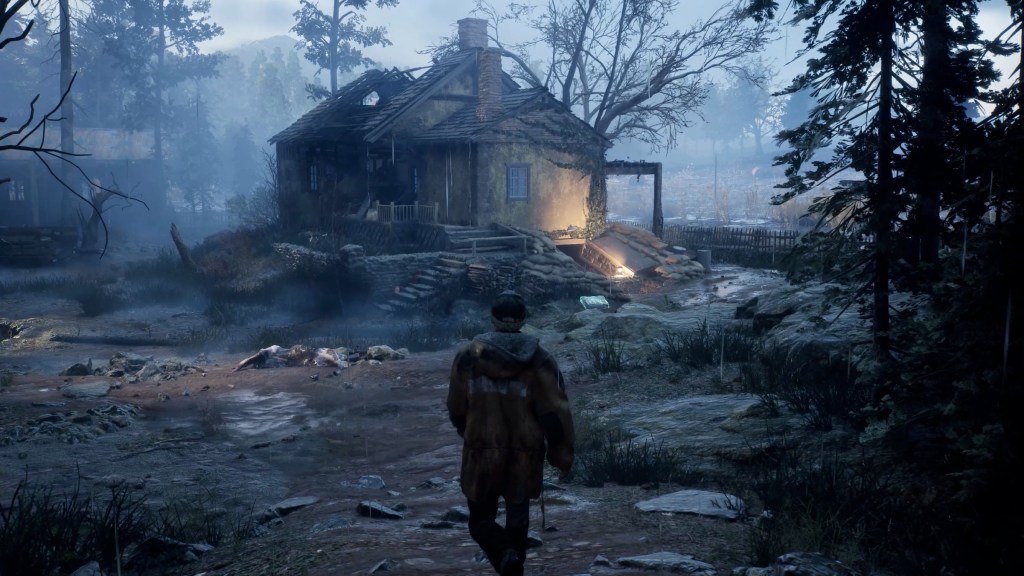
To be absolutely clear, Hell Is Us is not the first open-world game to take a hands-off approach to environmental design and exploration. However, it is one of a handful of games that have adopted such a refreshing take on a tired and tropey genre, and its implementation of said approach is certainly very unique. Rather than offer you an abundance of quest markers and pinpointing exactly where you need to go at all times, Hell Is Us assumes some level of intelligence from the player and delivers context clues through environmental clues and recognizable landmarks, as well as directions in the form of dialogue.
This more immersive and grounded approach is apparent from the very start of the game, which sees players attempt to navigate a forest based on the instructions given to them by a nearby villager. It is a system that works to Hell Is Us’ advantage, a game that delights in player freedom and actively encourages you to venture off the beaten path and see what secrets you can uncover. Were the game to outwardly illustrate exactly where you needed to go at any time, you’d struggle to get lost in its semi-open landscapes, and much of its haunting atmosphere would be wasted on you.

Hell Is Us’ approach to open-world design evokes the structure taken by older games in the genre, titles like Morrowind that were built with the understanding that the player had no other means of understanding where they were meant to go beyond what the game offered them. This type of limitation and restriction meant that developers had to better design environments to feature recognizable locations players could pinpoint in order to better orient themselves in the world. Similarly, developers could use NPCs to explain directions to the player, as one would naturally in real life, which only further helped to ground the player in the alien world they found themselves in. Both of these elements allowed us to become intimately familiar with these sprawling landscapes in a way that is far harder to achieve when being guided by a minimap or obtrusive UI elements.
Hell Is Us understands the value in this old-school development philosophy, and as a result, delivers a remarkably memorable world, one that you’ll find yourself mapping out mentally as you explore. I felt more connected to the frankly disturbing and at times horrifying war-torn world of Hell Is Us than I have with the majority of open-world games in recent memory. The same can be said of Breath of the Wild’s rendition of Hyrule or Elden Ring’s The Lands Between, spaces I was forced to get to understand on a far deeper level, as were I to avoid doing so, I’d merely find myself consistently lost. Sadly, as phenomenal as Hell Is Us’ execution of this idea was, it is unlikely to catch on in the way fans like myself hope.
The Gaming Industry Isn’t Ready For Hell Is Us’ Approach To Open-World Design
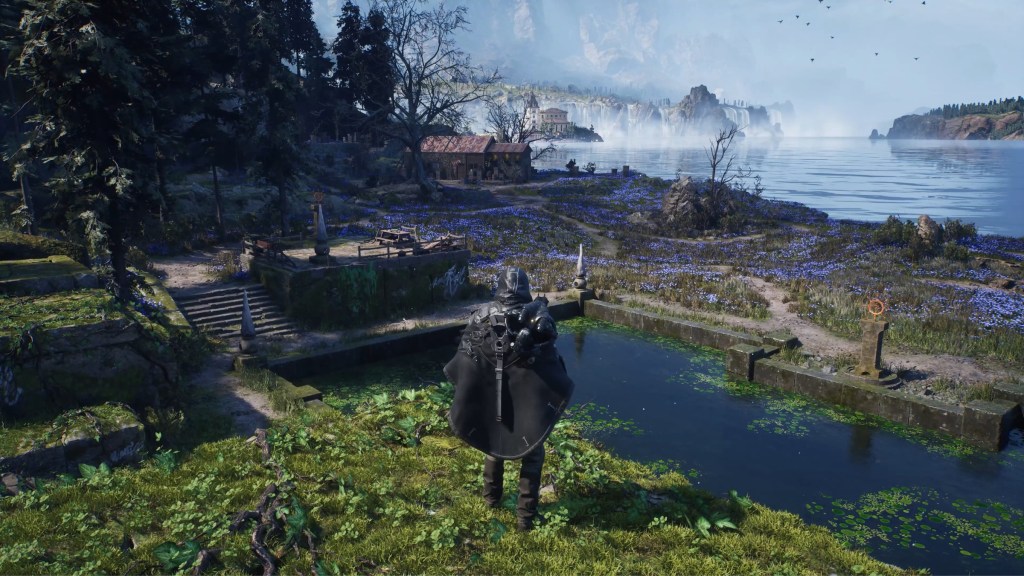
I’m not convinced that the gaming industry is quite as ready for Hell Is Us’ unique approach to open-world design as I would like it to be. Were I to have my way, every game would drop the proverbial bowling bumpers and encourage players to explore without the need for constant guidance. It is a rare treat to feel truly lost in a world, something I feel too many people are afraid to experience, as they either don’t want to waste time or worry they’ll have a bad time if they don’t know where to go at any given point. However, considering just how prevalent the traditional approach to open-world design is, I can’t imagine the AAA industry pushing for a completely different and ultimately hostile version instead.
Open-world games don’t demand enough of players, and we’ve all become accustomed to that. We expect quest markers and minimaps, even when they’re intrusive. Indeed, it has become increasingly popular to play with a reduced UI. However, I’d argue the majority of people still prefer being guided towards quests, if only for convenience’s sake, based on the sheer number of games that continue to add that functionality to their experience. Not even one of the best-selling games of all time, BOTW, could change the general approach to open-world design, as, since its release, only a handful have implemented its player-led approach to exploration.

It stands to reason, then, that a criminally underrated open-world RPG like Hell Is Us is unlikely to change the needle either. What needs to happen is for developers to slowly implement concepts like NPCs sharing directions to a location or using the environment to guide the player rather than UI elements, while still keeping the features players are used to as a viable secondary option. That way, every kind of player remains best served, while the genre can innovate further and deliver more groundbreaking and immersive experiences. Hell Is Us’ implementation of these novel open-world ideas is great, but there’s absolutely room to expand upon them. That can only happen if the industry does change, which I sincerely hope it does, as perpetually tweaking quest markers to exist but feel less intrusive will never be enough to free the genre from its proverbial shackles.
Do you think the gaming industry should adopt more of Hell Is Us’ ideas? Leave a comment below and join the conversation now in the ComicBook Forum!