Last year, the Overwatch 2 team at Blizzard dropped some of the biggest gameplay changes on players since the launch of the title in 2022. This included introducing Perks to the game, giving players customizable choices that enhance and change their hero based on their desired playstyle. Furthermore, it brought the new core game mode, Stadium, into the mix, offering players the chance to empower and upgrade their heroes in their wildest game mode. Overwatch 2 would go on to deliver even more that year, but now, in 2026, Blizzard’s latest spotlight for the game is arguably much bigger, more ambitious, and, frankly, jaw-dropping in scope.
Videos by ComicBook.com
Ahead of this week’s big Overwatch Spotlight reveal, ComicBook had the chance to visit Blizzard’s campus in Irvine, California, not only to learn in greater detail about their latest announcements but also to play all five of the brand-new heroes. What we discovered is a team that has been energized not only by their ambition and desire to swing even bigger, but also by updates to the game that are primed to continue shaking things up, making it exciting for longtime players and a must-try for newcomers. And that’s where we’ll start, as moving forward, it’s, once again, just Overwatch.
10) Why They’re Dropping the “2,” Just…Overwatch

Starting with the new season on February 10, Overwatch 2 will officially drop its numerical suffix and instead return to simply “Overwatch.” This is being done for a few reasons, but primarily because the game itself is making a splash this year with regards to its identity, including a major focus on the narrative side of the world, plus the introduction of five new heroes, and their hope for the title to be around for another decade. The Overwatch team at Blizzard confirmed that removing the “2” from the game is something they’ve been discussing internally for some time.
“What we hear from our players is that Overwatch is in the best state it’s ever been in, and in many ways we’ve ‘earned’ the two at this point,” Aaron Keller, Game Director for Overwatch, revealed. “Overwatch, we see it as a forever game. We don’t want players wondering when it’s going to get replaced by Overwatch 3… Dropping the two is our way of conveying to players that Overwatch isn’t something that you’re supposed to move on from; we want to gain players’ confidence. We want them to have trust in the game, in the team behind it, in the company that’s supporting it, so that they can look forward to continuing playing this game that’s always improving for years to come.”
Joanna Faris, President of Blizzard, further noted that Overwatch, as a flagship franchise for Blizzard, opens up further possibilities for the series down the line by removing the “2” from the title.
“This is by no means the capstone of what people should expect from the Overwatch universe in terms of how Blizzard’s going to wrap our arms around it,” Faris said at a press conference for Overwatch leadership. “So I loved that the teams all felt cross-functionally aligned to that decision, but it also kind of sets us up for a much broader conversation of where the future of this universe and these characters are going to go.”
9) How Narrative Arcs Will Shape Overwatch Year After Year
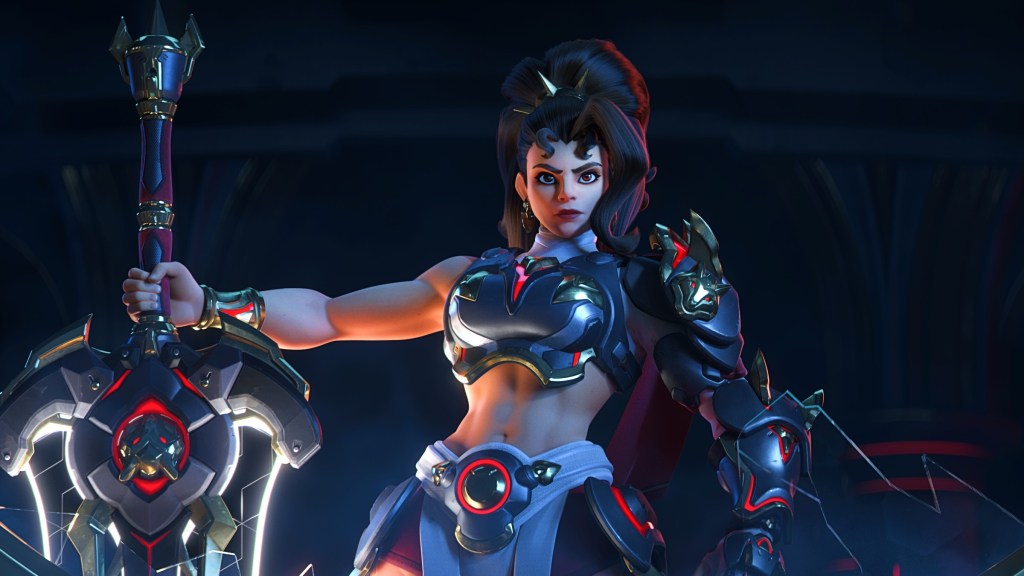
With Overwatch‘s big update in 2026, the team’s renewed focus on narrative will have major implications for the game itself. The first of these that is immediately noticeable is that the upcoming season, which many assumed would be “Season 21,” is now back to “Season 1.” This is because moving forward, Overwatch will be telling year-long story arcs, with 2026’s story arc being titled “Reign of Talon,” and Season 1 being subtitled “Conquest.” The storyline that began with the new cinematic in this year’s spotlight will carry on over the rest of the year and its six seasons, including hero trailers, comics, short stories, and more to offer a beginning, middle, and end for the storyline.
To make it clear to players how important the larger narrative really is, though, Overwatch won’t just have players viewing these extra materials in the narrative viewer. The ramifications of what happens in these story arcs will be felt and seen in the game. Not only will characters have all-new interactions with each other that reveal their thoughts on the developments of the story (like Vendetta usurping Doomfist as the leader of Talon), but it will also be seen in the maps. The finale of the Overwatch Spotlight 2026 saw Talon preparing to attack Watchpoint Gibraltar, with the map getting a refresh in-game that will reflect this attack, including new ramps, flank points, and openings created by the debris and fallout of this raid. Players should plan to keep up with the narrative not only because it’s fun and interesting, but because it will result in changes to the game itself.
8) Overwatch Is Getting Better at Making New Heroes
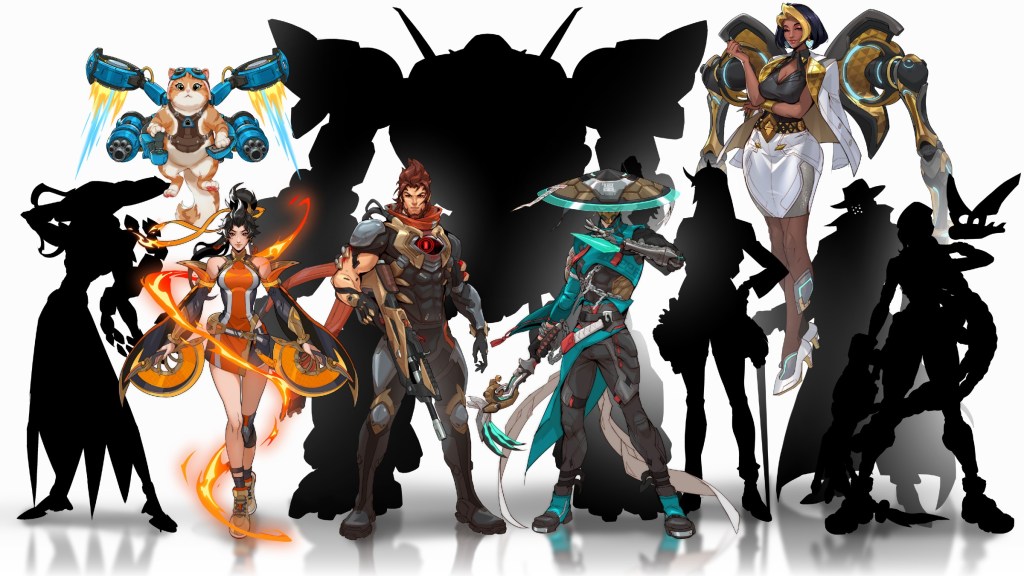
With the arrival of 2026’s Season 1, Overwatch will be dropping more heroes at one time in the new season than it did in the past year. Some fans may believe that this is a response to the fact that competition in the hero shooter space, like Marvel Rivals, has outpaced them in terms of character releases, but in truth, it’s because the team themselves have only gotten better at the pipeline for the development of new heroes. Kenny Hudson, Lead Hero Producer on Core Gameplay, revealed that the production timeline for heroes in Overwatch has been halved, confirming that what used to take about a year is now in the four to five-month range.
“A lot of that is through smart decision making, and lessons learned, and just experience growing on the team,” Hudson said. “A lot of us have run a lot of races, jumped over a lot of hurdles, and tripped over even more. Learning how not to trip on those hurdles, or learning what decisions need to be made earlier, or there are new ways that they think about animating things, and mistakes of the past.”
An example Hudson gave out of the new crop of heroes is the highly anticipated Jetpack Cat, the omnidirectional, always flying support. In the initial days of development, there may have been a question of “What if we make Jetpack Cat run in addition to flying?” But with the years of trial and error from other heroes in the game, they know that this would instead have created more work for the teams in terms of just sheer animation for the character.
“In the old days, that might have been something that we would have tested out for four to five months before we went, ‘nah, let’s cut that,’” Hudson added. “So, not wasting a lot of work, making smart decisions at smart times.”
After dropping five new heroes in Season 1, Overwatch is set to release one new hero every season for the rest of the year, a release cadence that the team expects to be able to keep up with in the future too.
7) New Overwatch Heroes are Forcing Changes on Old Heroes
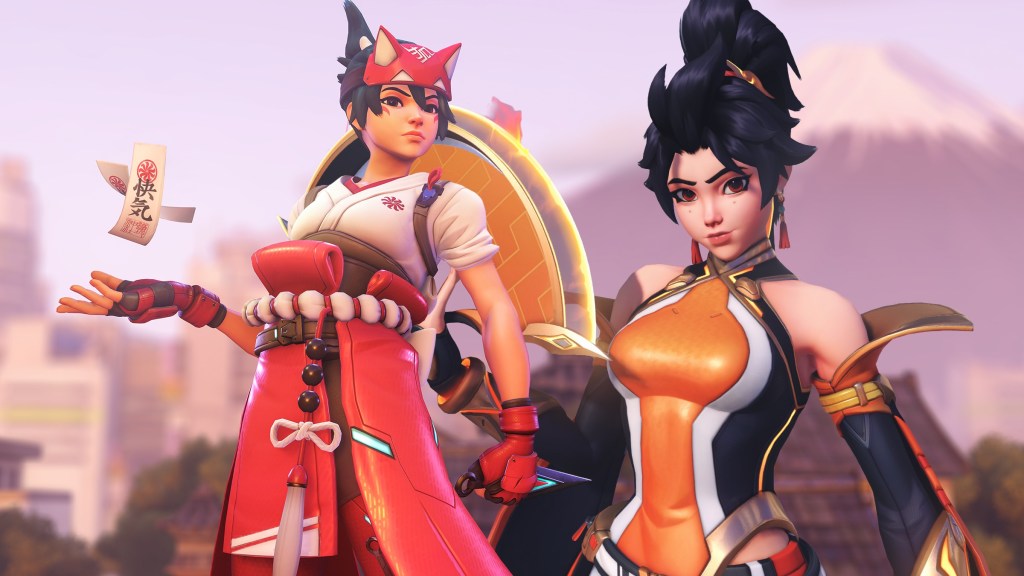
With the five new heroes coming to Overwatch on February 10, there’s a bit of overlap across their abilities with other heroes who have been in the game for some time, offering the team the chance to consider the consistency of these abilities. Two new heroes being introduced in Season 1, specifically, new DPS hero Anran and new support hero Mizuki, have abilities that made the team look at Kiriko and her teleport, bringing with it a change that will end up nerfing the hero a bit.
“We try and always keep the same form of logic and try and be consistent across the board,” Scott Kennedy, Hero Designer, said. “Kiriko has always cleansed herself with her teleport, but when we added Mizuki, he uses a similar kind of teleport, and Anran, when she’s phasing out, we were like, ‘The cleanse doesn’t make sense here. Should we go back and address the consistency across the roster?’ And that’s something that will be coming in Season 1….She will lose the self-cleanse in Season 1.”
6) Some Overwatch Characters Are About to Get Their Second Mythic Skins
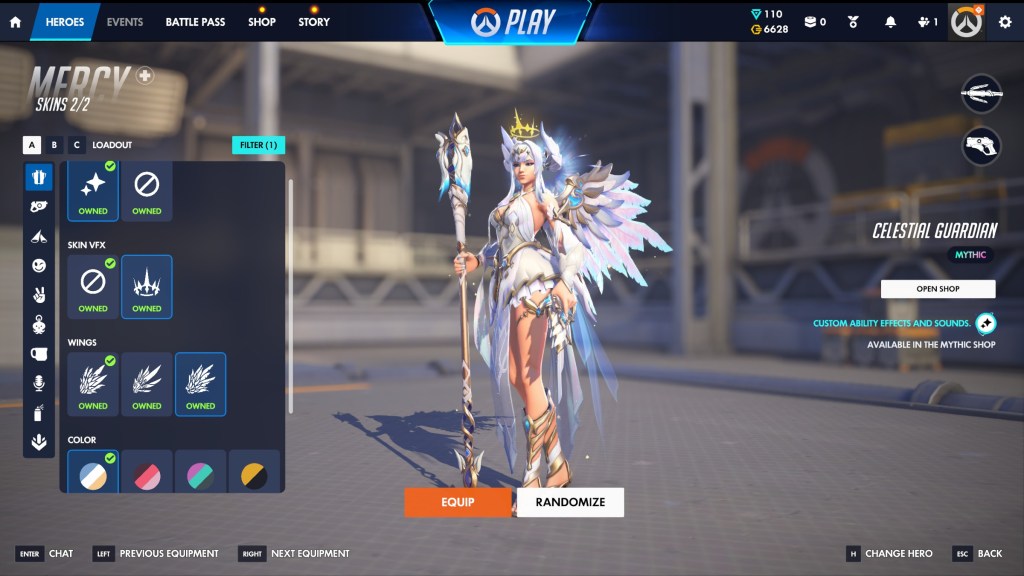
Mythic skins were one of the biggest new elements introduced to the game when it transitioned to become “Overwatch 2,” but with only one per season, it meant a limited number of characters got one. Eventually, the team got to a point where they began introducing not only the mythic weapon skins for characters, but also a second mythic skin per season, meaning more heroes were given the option to have their own at a much quicker cadence than fans initially predicted. That said, 2026 will bring with it the second mythic skins for several characters, before some characters even get their first.
Blizzard confirmed in the spotlight video that Season 1 will bring with it the Celestial Guardian Mercy Mythic, her second in the game (third if you include her weapon mythic). The mid-season mythic for Season 1 will go to Mei, getting her first ever, with the Season 1 mythic weapon going to Juno. Throughout the rest of the year, though, it will be a mix of some characters getting their first mythic skin, with Soldier: 76, Illari, and Mauga all confirmed to get their own; but we will also see others getting their second as well, like Ana and Genji.
“There’s no shortage of ideas on the team, and so generally if the team’s very passionate about a particular direction, we go with that,” Dion Rogers, Overwatch art director, revealed about deciding the distribution of cosmetics. “(With) Mercy, the team was very excited when someone was just doing some sketches of Mercy as a full angel. What would that fantasy be like? The team was so excited by this, we said, ‘Let’s do it.’ Obviously, she has a lot of skins already, but generally there’s a lot of philosophical discussions on the team, and we go with what the team is excited by, what players are asking for too.”
Confirmed mythic weapons for heroes in 2026 also include three heroes that already have their own mythic skins, with Genji, Hanzo, and Sojourn all set to receive mythic weapons.
“We’ll get to Lucio,” Rogers added with a laugh. “Winston’s one of my favorite characters in the game. I don’t want to let him down either.”
5) Overwatch Is Bringing Back Post-Game Cards With Improvements (And a Surprise)

When the game made the transition from Overwatch to Overwatch 2, one of the things that got dropped in that move was the post-game cards that shouted out key player contributions to the game. These would take the form of the player’s name, their character, and a major stat that they had, like eliminations, healing done, objective time, or many other metrics, all of which would be voted on by the entire lobby as a way of sportsmanship and shouting out all the players in the game.
Later in 2026, Overwatch is bringing these back, though they’ll be a little more dynamic. Now called Post-Match Accolades, these will once again improve on a feature that was previously beloved in the game but also offer players another place for expression. When they return, Post-Match Accolades will draw on the character’s victory poses chosen by players and be rendered in 3D on the screen, rather than the flat match cards of old. They’ll also interact as they’re voted on. Down the line, there may be even more customization, like choosing what emote your character does after they’ve been voted on by their fellow players.
When the Post-Match Accolades arrive, there will come another option, all-game voice chat. The Overwatch team was quick to clarify that this is not mandatory and is opt-in only for players who choose to use it, but they’ll have the chance to speak with enemy players in the post-game lobby while voting on the accolades. The hope for the team is this will build on the social moments of Overwatch, hoping that players opt in for that angle, not to be toxic.
4) In-Game Balance Can Be Tweaked Quickly
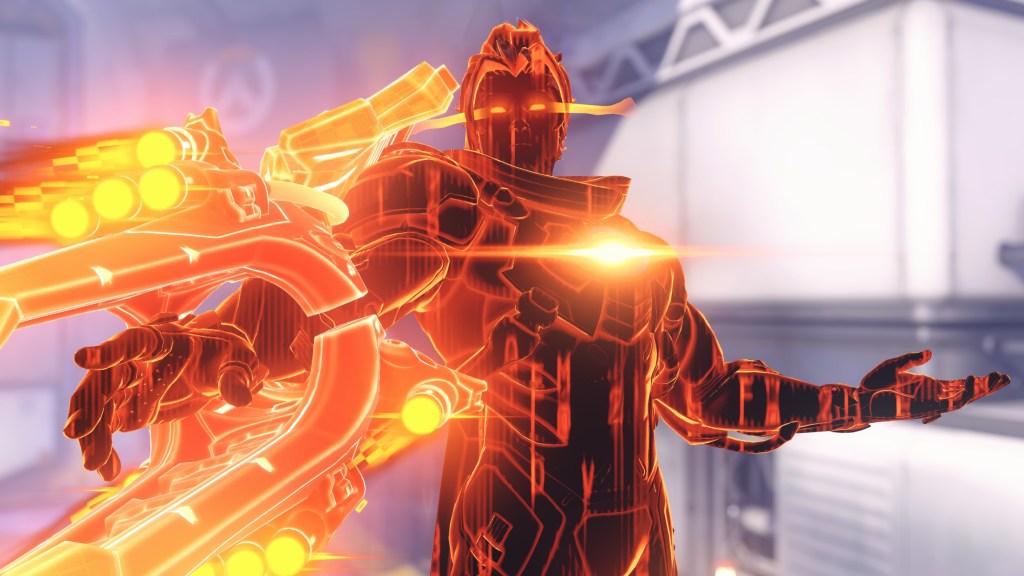
Overwatch dropping five new characters into the game at one time may seem immediately overwhelming to some players, especially when considering the fine-tuning that goes into the larger balance of the game. Furthermore, Overwatch is adding distinct subclasses across its three roles, subdividing heroes in these specific pools to have their own passive abilities (EG, “Bruiser” tanks like Mauga, Orisa, Roadhog, and Zarya have reduced critical damage received and increased movement speed at critical health). It’s a lot to add to the game, but the good news is that no one on the team is really that worried about it.
“Realistically, we’ve done a lot of work into trying to make sure that the balance of the heroes are within line,” Scott Kennedy, Hero Designer, said. “We’ve learned a lot over the last few hero releases of like how to add heroes…We’re just going to be really reactive with when the heroes go live, we have a lot of hotfix solutions of, ‘Hey, we think it’s in line,’ but anything that needs to be changed or can be quickly acted on, we’re going to be there for that. So we’re excited for it to come in and sort of add a fresh new take to the game…We’ve done a pretty good job about making sure that everything that we think is within a balanceable number is something that we can do on the fly and do quickly.”
Sub-roles being introduced into Overwatch were partially done because class-wide passives weren’t working the way that the team wanted. For example, some tanks felt like they needed a knockback reduction, while it didn’t make sense for others.
“Putting characters in these sub-roles, I think, is a better structure for us to have more vectors of change,” Alec Dawson, associate game director, said. “But also point players to how different characters might feel. If you like one hero that’s in the Flanker role, you might actually want to try another one in that Flanker role as well.”
As with scaling things balance-wise, the team also considers the subroles to be nebulous in nature, with changes expected throughout the year. This could take the form of heroes being swapped out to a different sub-role, or a sub-role being removed from the game entirely.
3) Overwatch‘s 2026 Roadmap Includes More Character Reworks and Changes to Map Voting
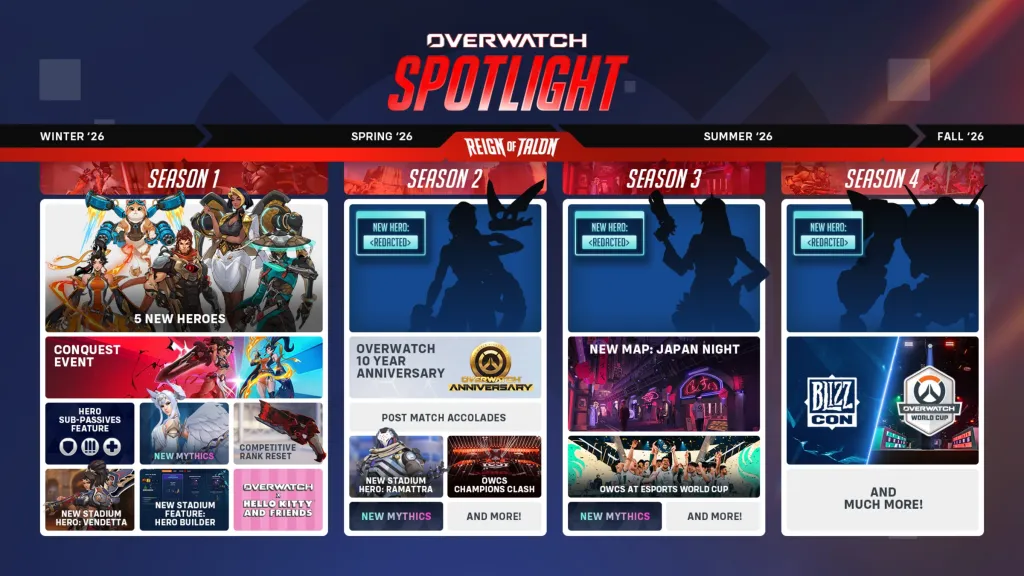
Though Overwatch is making a giant splash with Season 1 for 2026, they still have even more planned for the rest of the year. Not only does this include two new map modes and five more heroes, but fixes and changes to existing ones. The Overwatch team confirmed that the legendary Sombra rework remains on the table, but they’re still quite careful in how they approach these things despite still making them a priority. Players can likely expect a season mid-way through the year that is potentially more focused on the reworking of both heroes and maps.
“We’re really making sure that when we do it, it’s impactful and it feels a lot different,” Alec Dawson said. “I think some of our reworks have been successful. Some of them have been probably too light at times.”
Scott Kennedy noted that heroes end up on the list for a potential rework for a number of factors, ranging from how often they’re banned in competitive to how they’re performing in the game overall, but also the larger design philosophy of the game. “When you’re doing these reworks, you want to keep the identity of the hero somewhat intact, but how do you do that while making these reworks? And that’s going to be the goal for the heroes that do end up on the naughty list, and they end up do getting fixed. But I’m really excited to get the opportunity to sort of like take a crack at some of those heroes.”
Furthermore, map voting in the game will also get a change in 2026, “smoothing out” pain points as Dawson puts it. Currently, map voting in-game presents players with three pre-determined maps, then choosing from a weighted “dice roll” which map gets picked. This means nine players in the game could vote for one map, while one player who voted for another could very well still get their selection. Dawson didn’t specifically address what the changes would be, though he floated the idea of a “Random” voting option being added, and the consideration that lopsided votes might end up being more of a guarantee than actually allowing the 1 out of 10 to win.
2) The Start of Every Year Will Always Bring a Big Surprise From Overwatch
Overwatch made a big splash at the start of 2025 with Season 15 introducing Perks and Stadium, but the Overwatch Spotlight for 2026 arguably pushes the bar even higher and sets the stage for the game to continue this trend year after year. Naturally, this trend is baked into the game’s focus on narrative, with each new year starting a brand new story arc that will carry on over six seasons. Game director Aaron Keller calls this arrival an “expansion moment” for the game, one that signifies their larger strategy going forward.
“We want to have these really big annual moments that really resonate with players,” Keller said. “I think that when we look at future years i’m most excited for them to be all a little bit different from each other. And so while this year, one of the cornerstones of our release is five new heroes in Season 1, that doesn’t mean that’s going to be something that we do every year. I think it would be very exciting to change it up sometimes and deliver something like very ambitious, innovative game systems, for example.”
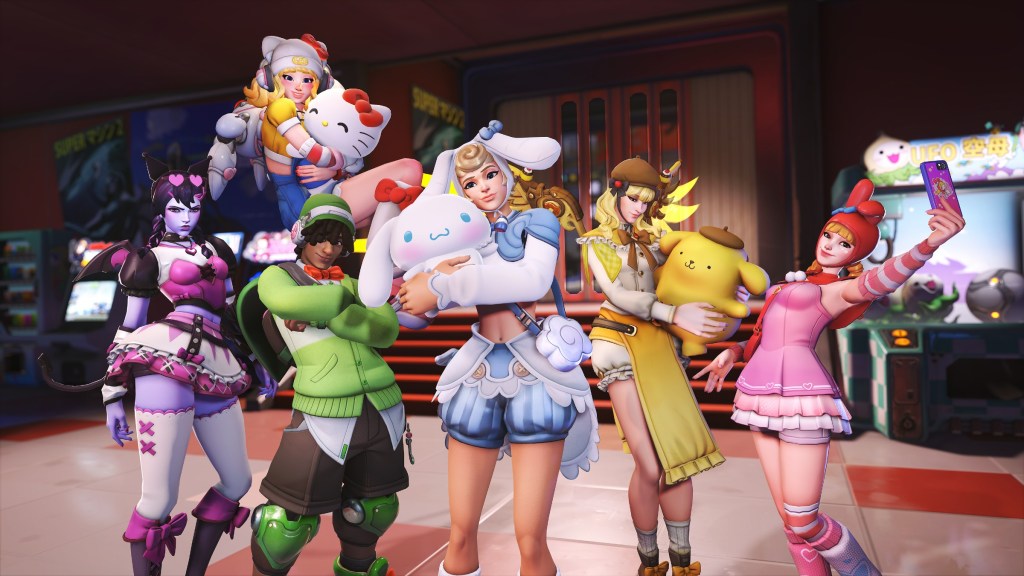
Another major element being added to Overwatch with Season 1 is one of their biggest collaborations to date, with Overwatch x Sanrio delivering the Hello Kitty & Friends Collaboration. Debuting when Season 1 launches on February 10, the collab will include Hello Kitty Juno and Keroppi Lucio, in addition to others. The collabs will continue to be a big piece of Overwatch, with a blend of franchises that appeal to any number of fans.
“There’s a very cool collab coming up still,” art director Dion Rogers revealed. “So there’s a balance of fun collab, silly collab, cool collab. So we have a ratio that we try to keep, or what makes sense for Overwatch.”
1) Team 4 Throws Nothing Out, Including Concepts From Overwatch’s Predecessor, Titan
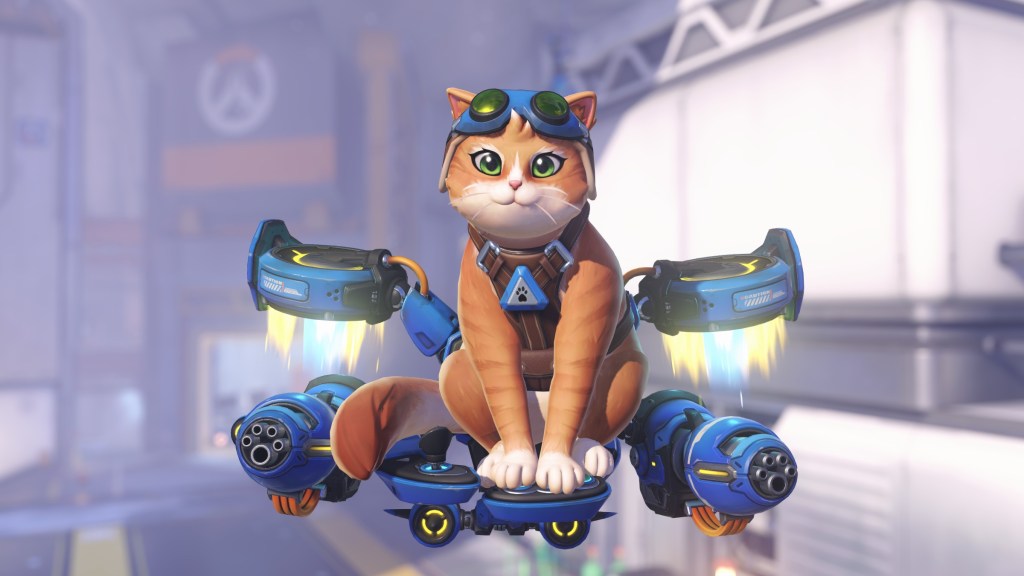
The most surprising new character that’s being added to Overwatch next week is the one that fans have been thinking about and dreaming of for almost ten years, Jetpack Cat. Initially revealed as a scrapped hero by former Overwatch director Jeff Kaplan, the idea of Jetpack Cat took on a life of its own with teases seeded in-game and even announcements for other heroes making reference to the idea.
“I think something really cool about working in game dev as a whole, it’s not just our team that does this, but I do think that we do it well are the things that we put away that don’t make it to the public,” Joshi Zhang, lead narrative designer for Overwatch, said. “We always draw on these things. We draw on that, and sometimes it does come to light…I think that in general, it’s safe to say players should be excited for the potential of more storytelling coming forward, and their faves coming to life someday.”
When asked if this extended to other concepts from Overwatch that were scrapped, like the fan-favorite Mama Hong, the team was quick to never say never.
“I want that to happen. Just put on the record, I want that to happen,” Melissa Kelly, 3D character artist for Overwatch. “That was one of my first projects when I was a student.
I did a bust sculpt of Mama Hong. I love her. There’s hope.”
Most Viewed
-

Image Courtesy of Netflix -

Image Courtesy of Hulu